English
 Português
 Español


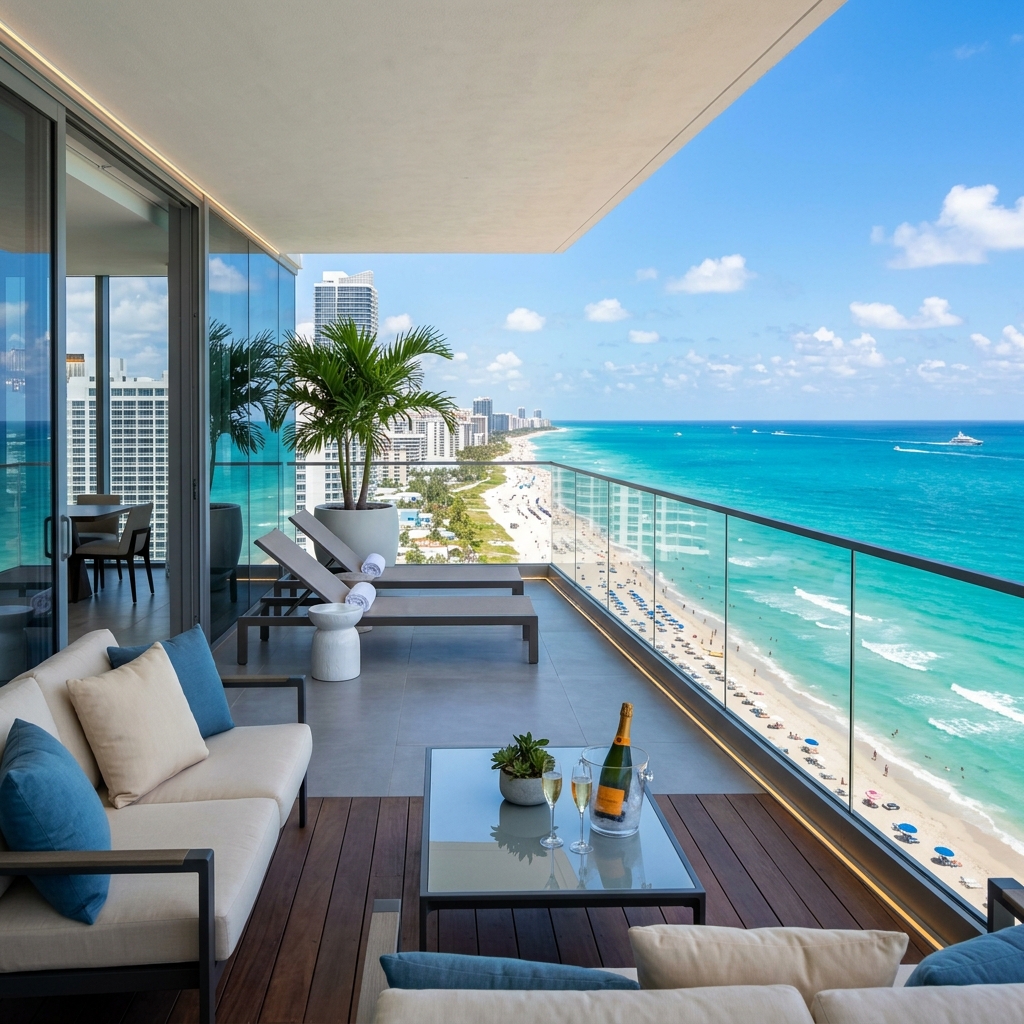
Miami has consolidated its position as one of the most attractive destinations in the world for international real estate investors. In 2025, foreign buyers moved $4.4 billion in residential real estate in South Florida-a 42% jump from $3.1 billion the previous year. For those looking to dollarize their assets and earn income in a strong currency, the city’s real estate market offers a rare combination of legal stability, constant demand, and easy access for non-residents.
Why Miami Attracts Investors
Miami’s appeal goes beyond its tropical climate and beaches. The city serves as a hub connecting the Americas, attracting constant rental demand from professionals, executives, and tourists from around the world. Florida does not charge state income tax, making rental yields more attractive compared to states like California or New York.
Foreigners have the same property rights as American citizens-there is no need for a visa, residency, or citizenship to acquire property in the United States. More than 51% of international transactions in South Florida are completed entirely in cash, demonstrating the profile of investors seeking asset security in dollars. The American title insurance system offers protection against ownership disputes, an important advantage for international buyers.
Real Estate Market in 2026
The Miami market in 2026 shows signs of stabilization after years of rapid growth. The median price of a single-family home in Miami-Dade reached $699,990 in January 2026, an appreciation of 3.7% compared to the previous year. Condos have an average price of approximately $420,000, while units in Brickell-the financial district-reach a median of $705,000.
Reference price ranges by property type:
- 1-bedroom condos: $450,000 to $650,000
- 2-bedroom condos: $650,000 to $1,200,000
- Single-family homes: starting at $700,000
The increase in available property inventory has given buyers more negotiating power, creating a favorable environment for those entering the market for the first time.
Best Neighborhoods to Invest In
The choice of location depends directly on the investor’s objective and desired risk profile.
Miami Beach and South Beach
Ideal for short-term rentals. High tourist demand ensures constant occupancy, especially in luxury properties with ocean views. The limited supply on the island contributes to consistent long-term appreciation. Yields from short-term rentals can exceed 6% per year in well-located and professionally managed properties.
Coral Gables and Pinecrest
Focused on families and long-term rentals. Tree-lined streets, excellent schools, and above-average safety attract residents seeking quality of life and stability. Rental demand is predictable and constant, making the area a more conservative option with lower volatility in returns.
Downtown and Brickell
The financial and urban heart of Miami. Luxury residential condos attract young professionals and executives, with annual rental yields between 5% and 7%. The concentration of corporate headquarters, restaurants, and entertainment options keeps occupancy rates high throughout the year.
How to Buy as a Foreigner
The process of buying property as a foreigner in the United States is straightforward and does not require a visa or specific immigration status. The main steps are:
- Define your objective: personal use, long-term rental, or short-term rental
- Hire a licensed real estate agent in Florida to navigate the local market
- Open a bank account in the US, necessary to process the transaction
- Arrange financing: American banks offer credit to foreigners, with a typical down payment of 30% to 50% of the property value
- Make a formal offer and, once accepted, conduct a full property inspection
- Complete the closing, which can be done remotely without physical presence in the US
For financing, the foreign buyer will need to provide proof of income, bank statements from recent months, and tax returns from their home country. The process is more extensive than for American residents, but perfectly feasible with organized documentation.
Costs Beyond the Property
Financial planning should include recurring expenses that significantly impact investment profitability:
- Property tax: Miami-Dade charges an average of 1.94% of the property value per year, the highest rate in Florida
- HOA fees: between $835 and $965 per month on average for condos in Miami-Dade, and can exceed $1,000 in luxury buildings. These fees have risen 59% since 2019 due to increasing insurance, maintenance, and new mandatory reserve law costs
- Property insurance: essential in Florida, with costs from $2,000 to $4,000 per year depending on location and hurricane coverage
- Acquisition costs (closing costs): 3% to 6% of the property value, including title insurance, registration fees, and legal fees
- Rental management: 8% to 12% of the monthly value if outsourced to a management company
What Is FIRPTA
FIRPTA (Foreign Investment in Real Property Tax Act) is a federal law that requires withholding 15% of the gross sale value when a foreigner sells a property in the United States. The buyer is legally required to withhold this percentage and send it to the IRS (the American tax authority) as a guarantee of payment of capital gains tax.
It is possible to request a partial or full refund of this amount when filing taxes the following year, if the tax actually owed is less than the withholding. This withholding should be considered from the time of purchase, as it directly impacts the net return when the investor decides to sell the property.
EB-5 and Real Estate Investment
It is essential to distinguish between investing in real estate and investing to obtain residency. Buying a property, by itself, does not grant any immigration rights in the United States. The EB-5 program is a completely different path: it requires a minimum investment of $800,000 in targeted employment areas (TEA) or $1,050,000 in other regions, invested in a project that creates at least 10 jobs for American workers.
These amounts are valid until at least early 2027, when an automatic adjustment based on the CPI-U is scheduled by law. The EB-5 can lead to a Green Card, but involves much longer timelines, higher risks, and greater complexity than a conventional real estate transaction. Those seeking permanent residency through investment should evaluate the program as a separate process, with its own documentation and proof requirements.
Miami remains one of the most accessible cities in the world for international real estate investors. With property rights equal to those of American citizens, purchase processes that can be completed remotely, and a market with a consistent history of appreciation, the city offers a solid gateway for those looking to diversify assets in dollars. Detailed financial planning-considering HOA, property tax, FIRPTA, and management costs-is the difference between a profitable investment and an unpleasant surprise.
Learn more about EB-5
- Type
- Investment Green Card
- Min. investment
- US$ 800,000
- Jobs created
- Minimum 10 (full-time)
- Processing
- 24-48 months
About the author

Victoria Harper
Editor-in-Chief
As a journalist and lead editor at Visto n’ Visa, Victoria helps ensure that immigration topics are covered in a clear, trustworthy, and easy-to-understand way. Her focus is on delivering useful, human, and relevant content for people exploring new paths abroad.