English
 Português
 Español


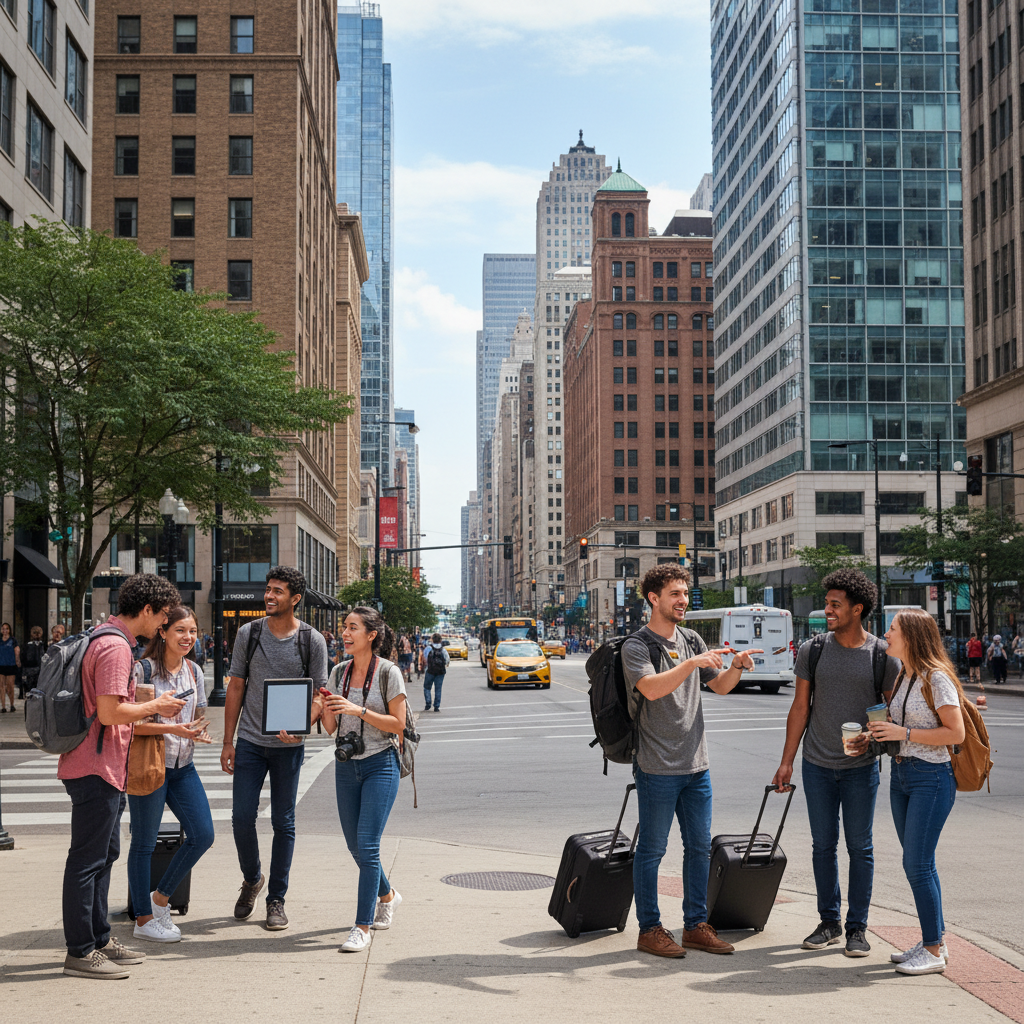
The J-1 visa is one of the most versatile tools in the American immigration system, designed to promote cultural, educational, and professional exchange between the United States and the rest of the world. Unlike the F-1, which is exclusively aimed at formal academic study, the J-1 covers everything from internships and corporate training to advanced research programs and teacher exchanges. As of April 2026, the program remains a strategic gateway for students, recent graduates, and professionals seeking international experience with the legal backing of the U.S. Department of State.
Administered entirely by sponsoring organizations (sponsors) designated by the Bureau of Educational and Cultural Affairs, the J-1 requires each participant to have an approved program and ongoing supervision throughout their stay in the U.S. The legal basis is found in section 101(a)(15)(J) of the Immigration and Nationality Act (INA), and detailed regulations are set out in 22 CFR Part 62.
J-1 Visa Categories
The J-1 program encompasses more than a dozen subcategories, each with specific rules regarding eligibility, duration, and permitted activities. The most sought-after include:
- Au Pair: work with a host family with an educational component, duration up to 12 months with the possibility of extension for another 6, 9, or 12 months
- Intern: for university students or recent graduates within 12 months of graduation, maximum duration of 12 months
- Trainee: for professionals with at least one year of experience in the field, up to 18 months
- Research Scholar: for researchers and academics, duration up to 5 years
- Professor: for faculty invited by U.S. institutions, up to 3 years with the possibility of extension for another 2 years
- Camp Counselor: for seasonal work at summer camps, up to 4 months
- Physician: for medical residency or fellowship, up to 7 years
Other categories include Short-Term Scholar, Specialist, Summer Work Travel, and Government Visitor, all regulated by 22 CFR 62.
Requirements and Documentation
Although each subcategory has its own requirements, the J-1 process follows a common structure that the applicant should understand before starting the application.
- Formal acceptance into a program approved by the U.S. Department of State
- Issuance of the DS-2019 Form (Certificate of Eligibility for Exchange Visitor Status) by the sponsor
- Payment of the SEVIS I-901 fee of US$ 220
- Completion of the DS-160 form (online visa application)
- Payment of the MRV (Machine Readable Visa) fee of US$ 185
- Consular interview at the U.S. embassy or consulate
In addition to the steps above, the applicant must prove sufficient financial resources for the duration of the program, maintain health insurance that meets the minimum requirements of 22 CFR 62.14, and demonstrate English proficiency compatible with the planned activities. The intention to return to the home country is a fundamental part of the consular evaluation.
Updated Costs in 2026
| Item | Amount (US$) |
|---|---|
| SEVIS I-901 Fee | 220 |
| MRV Fee (consular application) | 185 |
| Mandatory health insurance | 50 to 150/month |
| Sponsor fee (program fee) | Varies: 500 to 3,000+ |
The total cost including government fees, sponsor, and insurance typically ranges from US$ 1,500 to US$ 4,500, depending on the category and program chosen. Participants in programs funded by the U.S. government may be exempt from some fees.
Duration by Category
The authorized stay varies significantly depending on the program subcategory. Knowing these limits is essential for immigration planning.
| Category | Maximum Duration |
|---|---|
| Au Pair | 12 months (+extension up to 12 months) |
| Intern | 12 months |
| Trainee | 18 months |
| Research Scholar | 5 years |
| Professor | 3 years (+2-year extension) |
| Camp Counselor | 4 months |
| Physician | 7 years |
After the program ends, the participant has a grace period of 30 days to arrange their departure from the U.S. or, when applicable, apply for a transfer to another immigration status.
Two-Year Rule
One of the most impactful features of the J-1 visa is the Home Residency Requirement, provided for in INA §212(e). Participants subject to this rule must return to their country of nationality or last permanent residence for an aggregate period of at least two years before they can apply for a green card, H-1B visa, L-1 visa, or any change of immigration status in the U.S.
The requirement applies when the participant fits at least one of the following situations:
- Received government funding (from the home country or the U.S.)
- Worked in a field listed on the Exchange Visitor Skills List as needed in the home country
- Participated in a medical program sponsored by the ECFMG
- Had their program funded by an international organization
The verification appears directly on the DS-2019 and the issued J-1 visa. It is essential to confirm whether the restriction applies to your case before making long-term plans in the United States.
212(e) Rule Waiver
When the two-year rule applies, it is possible to request a waiver through the DS-3035 Form, processed by the Department of State. The five legal bases for the waiver are:
- No Objection Statement: statement from the government of the home country indicating it does not object to the participant remaining in the U.S.
- Interested Government Agency: request from a U.S. government agency demonstrating the need for the participant
- Persecution: well-founded risk of persecution due to race, religion, or political opinion in the home country
- Exceptional Hardship: proven exceptional hardship to a U.S. citizen or permanent resident spouse or child
- Conrad State 30: applicable to J-1 physicians who agree to work in medically underserved areas in the U.S.
The waiver process typically takes 4 to 12 months. Approval by the Department of State is a recommendation; the final decision rests with USCIS through Form I-612.
Strategy and Planning
The J-1 can serve as a springboard for more permanent paths in the United States, but it requires careful planning. Participants not subject to the 212(e) rule may, in certain circumstances, apply for a change of status to H-1B or another work visa at the end of the program. For those subject to the rule, the waiver should be planned in advance.
It is important to understand that the J-1 is not an immigration visa: it is a temporary authorization tied to a specific program and designated sponsor. The dependence on the sponsor means that losing the connection to the program can result in loss of immigration status. Transfers between sponsors are possible, but must follow the procedures of 22 CFR 62 and be approved before starting activities in the new program.
For professionals seeking to build an international career, the J-1 offers a rare combination of practical experience, institutional networking, and cultural immersion that few mobility programs can replicate.
Learn more about F-1
- Duration
- Duration of studies
- OPT (STEM)
- Up to 3 years of work
- CPT
- Work during studies
- Processing
- 2-8 weeks
About the author

Victoria Harper
Editor-in-Chief
As a journalist and lead editor at Visto n’ Visa, Victoria helps ensure that immigration topics are covered in a clear, trustworthy, and easy-to-understand way. Her focus is on delivering useful, human, and relevant content for people exploring new paths abroad.