English
 Português
 Español


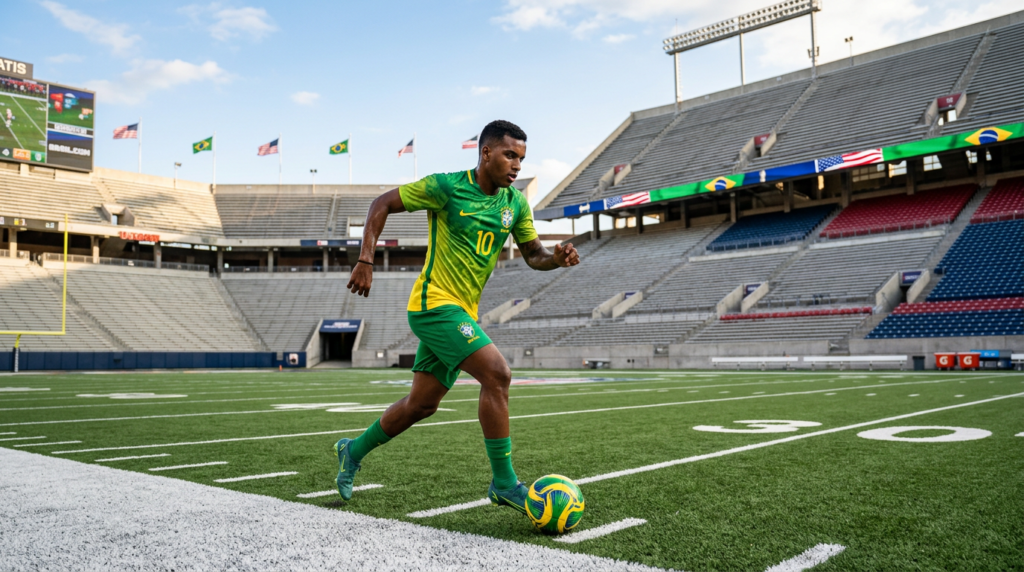
Professional sport has established itself as one of the most consolidated forms of international mobility for decades, and the United States remains among the main hubs for attracting athletic talent. Athletes of various nationalities, including Brazilians, Argentines, Africans, Europeans and Asians, find in the country a rare combination of training infrastructure, high-level competitions, media exposure and an immigration system that recognizes sporting performance as an autonomous category of eligibility. In 2026, this scenario continues to be shaped by regular updates from USCIS, the Department of State and the Department of Labor, which adjust evidentiary standards, fees and processing times.
This guide organizes, in a practical and legally based way, the main immigration routes available to foreign athletes. The objective is to show how the American system deals with everything from occasional participation in competitions to obtaining permanent residence based on extraordinary ability, going through the intermediate categories used by teams, leagues, academies and sports federations.
The presence of foreign athletes in the United States has deep roots. Emblematic cases throughout the 20th century, from football to basketball, from tennis to motorsport, helped to consolidate a culture of importing talent that is now reflected in leagues such as the NBA, MLS, MLB, NHL, UFC and universities linked to the NCAA. This legacy, built by decades of professionals arriving from different continents, created a mature regulatory framework, with visa categories designed specifically for the sports universe.
This history matters because it directly influences the evidentiary standard applied by USCIS. Adjudicators are familiar with rankings, federations, professional circuits and award structures for Olympic and non-Olympic sports. For the candidate athlete, this means that the documentation must relate to internationally recognized references (federations, leagues, continental or global awards), not just domestic prestige in the country of origin.
Athletes who intend to enter the United States have a catalog of options, each with its own legal basis, specific requirements and different duration. The choices are divided between non-immigrant visas (temporary) and immigrant visas (green card).
Among non-immigrants, the P-1A visa and the O-1A visa stand out. The P-1A, provided for in INA § 101(a)(15)(P) and regulated in 8 CFR § 214.2(p), is intended for internationally recognized individual athletes and teams competing at an international level. The O-1A, set forth in INA § 101(a)(15)(O) and regulated in 8 CFR § 214.2(o), is intended for individuals with extraordinary ability in science, education, business, or sports, requiring sustained national or international acclaim.
The B-1/B-2 visa, provided for in INA § 101(a)(15)(B), is an alternative for occasional participation in amateur competitions, exhibition events or contract negotiations, without remuneration coming from a US source (with specific exceptions such as prizes in tournaments). It does not replace P or O for paid professional activity and does not grant permanent residence.
For athletes linked to American universities, the F-1 visa allows them to study at higher education institutions and practice sports within the scope of the NCAA, with strict rules on amateurism and scholarships. The J-1 visa, in approved exchange programs, allows participation in specialized training, clinics and internships.
For permanent migration, employment-based visas, known as EB categories, offer solid pathways. The EB-1A (Extraordinary Ability), provided for in INA § 203(b)(1)(A) and regulated in 8 CFR § 204.5(h), allows self-petition via form I-140, without the need for a job offer or labor certification (PERM), as long as the athlete proves to be among the few at the absolute top of the sport. The EB-2 NIW (National Interest Waiver), provided for in INA § 203(b)(2)(B), is most commonly used by coaches, coaches and sports managers whose performance has substantial merit and proven national relevance, under the Matter of Dhanasar test.
Each category requires specific supporting documentation: medals, awards, federative rankings, contracts with recognized clubs or leagues, proof of salary above the market, coverage in the professional media, participation as a judge or evaluator, and letters from independent experts. Adjudication guidelines are published in the USCIS Policy Manual, Volume 2 (Nonimmigrant Workers) and Volume 6 (Immigrants), which should be consulted directly because they are frequently revised.
The O-1A and EB-1A share the same ten regulatory criteria, listed in 8 CFR § 214.2(o)(3)(iii) and 8 CFR § 204.5(h)(3), but apply different evaluation standards. For O-1A, all that is required is evidence of sustained national or international acclaim and that the athlete comes to the US to continue working in their field. For EB-1A, USCIS applies the Kazarian test in two steps: first it checks whether the petitioner meets at least three of the ten criteria; then performs a totality of the evidence analysis to determine whether the candidate truly is at the top of the field.
The ten criteria include: nationally or internationally recognized awards, membership in associations requiring exceptional merit, publications about the athlete in professional or widely circulated media, serving as a judge of the work of others, original contributions of major significance to the field, authorship of articles in professional publications, exposure of work in arts or similar venues, leadership role in prestigious organizations, salary substantially above market, and commercial success in the performing arts. For athletes, the most frequent criteria are prizes, rankings, media coverage, salaries and participation as an evaluator or commentator.
The American sports market is geographically dispersed, but some states concentrate specific opportunities. California is home to tennis, surfing, MMA and football academies, as well as professional teams in various sports. Florida leads in tennis, golf, football and water sports, with a strong presence of international academies. Texas combines football, baseball, basketball and MMA. New York and New Jersey are home to boxing, basketball and professional football. States like Georgia, Alabama and Louisiana invest heavily in NCAA college programs, opening up opportunities for student-athletes in F-1.
The choice of state affects not only sporting opportunities, but also tax issues, cost of living and availability of lawyers specializing in sports immigration. States without a state income tax (Florida, Texas, Tennessee, Washington, Nevada) tend to be more fiscally advantageous for athletes with high salaries or prizes.
For any category, the preparation of the evidentiary dossier is the critical point. The athlete must organize a portfolio that includes: complete competitive history (results, dates, locations, organizers), sponsorship contracts and letters, press materials in vehicles with verifiable circulation, proof of awards with explanatory letters from granting organizations, official rankings from recognized federations, and letters of recommendation from authority figures in the sport.
In parallel, official rates must be observed. USCIS filing fees for I-129 (non-immigrants such as O and P) and I-140 (immigrants such as EB-1A) are adjusted periodically and are available on the official USCIS Fee Schedule page. Premium processing, regulated in 8 CFR § 103.7(e), allows decision in accelerated time frames (generally 15 business days) for an additional fee, and is available for both I-129 and I-140 in the EB-1A, EB-1B, EB-2 (including NIW) and EB-3 categories.
Another often overlooked aspect is the coordination between the temporary visa and the green card. Many athletes enter with O-1A or P-1A and over time build the case for EB-1A. This two-step strategy is common because the O-1A does not require the same level of probation as the EB-1A, allowing the athlete to consolidate new achievements, awards, media citations and roles as a judge or commentator, strengthening the future green card petition.
The regulatory scenario continues to move. USCIS in recent years has published specific updates to the Policy Manual on how to evaluate athletes, coaches, esports professionals, and even retired athletes moving into coaching roles. There is growing recognition that a sports career is multilayered: the talent that competed yesterday today can be a coach, trainer, commentator, manager or sports entrepreneur, and the immigration system has started to accommodate these transitions.
Esports and emerging modalities (skateboarding, surfing, climbing, breakdancing, women’s MMA) have also expanded the concept of extraordinary ability. Athletes in these disciplines, once viewed with skepticism by adjudicators, now obtain regular O-1A and EB-1A approvals, provided they present solid evidence of international recognition.
The journey of international athletes towards the United States combines technical rigor, legal planning and career strategy. Visa options, from temporary models (B, F, J, P, O) to immigrants (EB-1A, EB-2 NIW), offer a spectrum that ranges from occasional participation in tournaments to permanent residence based on proven sporting merit.
For athletes from any country, the central challenge is translating their professional trajectory into the USCIS evidentiary language. Results in national federations need to be contextualized in continental or world rankings. Coverage in local media must be complemented by vehicles with an international reach. Letters of recommendation should come from figures with technical authority, not just personal relationships.
Staying informed about updates to the USCIS Policy Manual, the Federal Register, and AAO (Administrative Appeals Office) decisions is an essential part of planning. The rules adjust, but the principle remains: the American immigration system values excellent sporting talent and offers clear paths for those who can document this excellence in a consistent, technically and legally based way.
Learn more about EB-2 NIW
- Category
- EB-2 NIW Green Card
- Self-petition
- Allowed (no sponsor needed)
- PERM
- Waived
- Processing
- 12-36 months
About the author

Victoria Harper
Editor-in-Chief
As a journalist and lead editor at Visto n’ Visa, Victoria helps ensure that immigration topics are covered in a clear, trustworthy, and easy-to-understand way. Her focus is on delivering useful, human, and relevant content for people exploring new paths abroad.