English
 Português
 Español


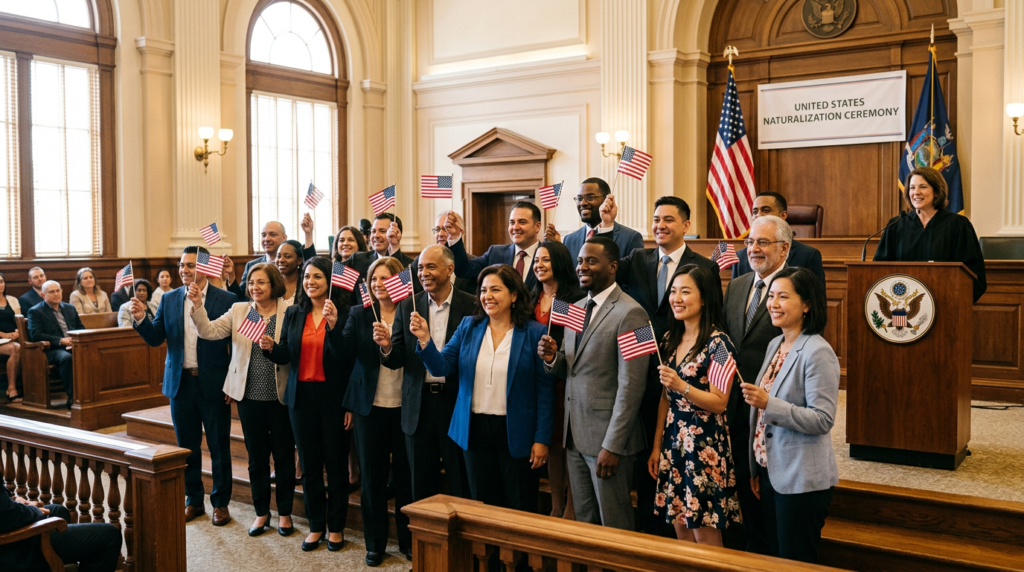
The dream of living and working in the United States continues to captivate millions of people. Among the various ways to achieve this goal, naturalization is a fundamental step for those who already have legal residency and wish to consolidate their stay, acquiring all the rights of an American citizen. This updated guide presents the current overview of the process, highlighting the legal requirements, necessary documentation, and particularities that can make a difference in the success of the application.
Obtaining American citizenship goes beyond the benefits of the Green Card, expanding access to political rights, professional opportunities, and legal security. However, the path to naturalization requires the fulfillment of rigorous steps, making it essential to be well-informed and prepared for each phase of the process. It is worth noting that, although the basic principles remain, data such as fees and deadlines may have changed since the original publication; therefore, it is crucial to consult official sources to confirm current values and requirements.
The following information describes, in a didactic way, what is currently expected from a candidate for naturalization in the United States, always considering that changes may occur and that constant verification with USCIS becomes an indispensable practice.
Legal Requirements
To apply for naturalization in the United States, some fundamental criteria must be observed, ensuring that the candidate is able to exercise the duties and rights of an American citizen.
- Legal Residency: The candidate must hold a Green Card and prove continuous and legal residence in the USA. Normally, it is necessary to have lived at least 30 months in the last 5 years. For spouses of American citizens, the required period is 18 months in the last 3 years.
- Minimum Age: It is essential to be 18 years old or older.
- Good Moral Character: The candidate must demonstrate good background, with no criminal records or conduct that could compromise eligibility.
- English Proficiency: Basic command of the language is required, as well as knowledge about the history, civic rights, and governmental structure of the USA.
- Tax Obligations: The applicant must be up to date with their tax responsibilities and obligations before the US government.
- Oath of Allegiance: At the end of the process, the candidate will take an oath committing to defend the principles and the American Constitution.
Required Documentation
Proper organization of documentation is essential to avoid delays and complications during the naturalization process. Preparation and clarity of documents demonstrate the candidate’s commitment to the procedure.
- Form N-400: This is the official document to apply for naturalization. It is essential to fill it out correctly and submit it according to USCIS guidelines.
- Proof of Residency: Includes a copy of the Green Card and other records that attest to continuous and legal residence in the United States.
- Personal Documents: Identification documents and, when necessary, certificates that prove family or marital ties, especially if the application is based on marriage to an American citizen.
- Application Fee: Submission of Form N-400 involves a fee. In 2020, the reported amount was USNULL, also covering fingerprint collection. However, this amount may have changed, so it is recommended to check the current fee directly on the official USCIS website.
The Application Process
After submitting the form and all necessary documentation, the naturalization process follows steps defined by USCIS. These steps generally include biometric data collection, scheduling interviews, and taking tests that assess knowledge about US history and political system.
During the interview, personal data and the compliance of the documents presented are verified. In some cases, it may be necessary to provide or supplement some documentation, always with the aim of confirming the candidate’s eligibility.
Processing times vary according to the jurisdiction of the responsible USCIS office. Therefore, monitoring the progress of the process through official channels is essential to resolve any issues quickly and efficiently.
Additional Aspects
There are nuances in the naturalization process that can influence the progress and outcome of the application. For example, candidates who have served in the US Armed Forces, during conflicts or for the defense of the country, may have access to differentiated procedures and shorter timeframes for the granting of citizenship.
Another important point is that the applicant must, as a rule, remain in the United States during the processing of the application. Prolonged international travel or absence from the country may jeopardize the continuity of the naturalization application.
Keeping records updated and organized is also crucial; any inconsistency or gap in the information can lead to delays or the need to resubmit documents.
Keeping Up with Information
Since immigration policies and legal requirements may change over time, it is advisable for candidates to periodically review the available information. The official USCIS website is the safest and most up-to-date source to check data on fees, deadlines, and conditions required for naturalization in the United States.
Staying informed is a preventive measure that helps avoid surprises and ensures that the process is in compliance with current regulations. Updates are common, and actively keeping up with legislative changes can make all the difference in the success of the application.
Tips for Success
To increase the chances of successful naturalization, candidates can adopt some important practices:
- Complete Documentation: Organize all documents clearly and chronologically, ensuring that each record is up to date and easily accessible during USCIS review.
- Interview Preparation: Dedicate time to study the topics covered in the citizenship test, such as history, rights, and responsibilities of American citizens. Good preparation can be decisive in the interview.
- Attention to Detail: Carefully check all information provided in forms and documents. Small errors or inconsistencies can lead to significant delays in processing the application.
- Process Monitoring: Use USCIS official channels to track the progress of your application. Promptly responding to any requests for additional information can speed up the process.
- Consult Official Sources: Amid conflicting information found on the internet, always prioritize data provided by government agencies, such as the USCIS website itself.
The path to naturalization requires dedication and organization, but it becomes a transformative opportunity for those who wish to consolidate their lives in the United States.
The process, although challenging, represents an important milestone for full integration into American society, allowing the new citizen to enjoy rights and benefits that go beyond mere residency. Fulfilling legal requirements, adequately preparing for the interview, and staying up to date with official information are essential measures for success in obtaining citizenship.
Finally, it is worth noting that, even with all the preparations, the reality of immigration is subject to change. Thus, regular consultation of official sources, especially the USCIS website, is indispensable to ensure that all procedures are aligned with current requirements and so that the dream of naturalization becomes a safe and successful achievement.
About the author

Victoria Harper
Editor-in-Chief
As a journalist and lead editor at Visto n’ Visa, Victoria helps ensure that immigration topics are covered in a clear, trustworthy, and easy-to-understand way. Her focus is on delivering useful, human, and relevant content for people exploring new paths abroad.