English
 Português
 Español


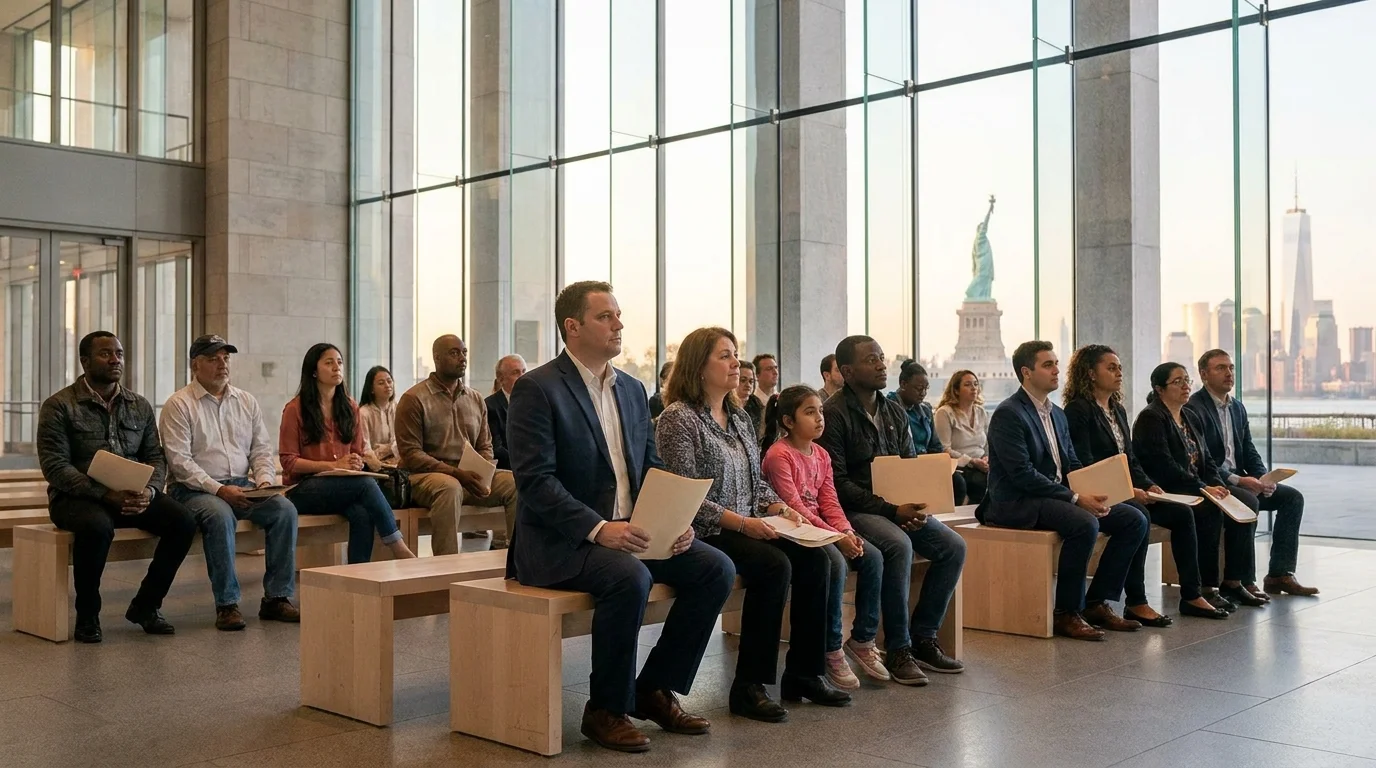
Living legally in the United States requires choosing a path that fits your profile – employment, family, investment, talent, or study – and completing each step in accordance with federal immigration law, the Immigration and Nationality Act (INA). There is no single door: the American system combines nonimmigrant visas, immigrant visas leading to a Green Card, naturalization processes, and humanitarian categories, each with its own rules, timelines, and costs. This guide organizes, in 2026, the main legal paths to living in the U.S. and shows how they connect to permanent residency and U.S. citizenship.
Before making any choice, it is worth understanding that immigration status is not static. A student visa can evolve into a work visa; a temporary worker can seek employer sponsorship for a Green Card; a permanent resident can, after the legal waiting period, naturalize as a citizen. Each transition depends on proven eligibility, maintenance of valid status, and, in almost all cases, completion of consular processing abroad or adjustment of status (Form I-485) through USCIS.
Legal Paths to Residency
The American legal framework groups the alternatives into four major blocks, each with specific subcategories:
- Employment-based visas: EB-1, EB-2, EB-2 NIW, EB-3, EB-4, and EB-5, all leading directly to a Green Card.
- Family-based visas: petitions filed by U.S. citizens or lawful permanent residents on behalf of spouses, children, parents, and siblings.
- Nonimmigrant visas: temporary work (H-1B, L-1, O-1, TN, E-2), study (F-1, M-1, J-1), or tourism (B-1/B-2).
- Humanitarian and special categories: asylum, refugee status, U visa for crime victims, T visa for human trafficking victims, and the Diversity Visa Lottery.
Permanent Work Visas
The employment-based categories are the most direct paths to a Green Card based on professional merit. They are subject to the State Department’s monthly Visa Bulletin, which indicates visa number availability by category and country of birth. Brazilians, in 2026, still enjoy relatively shorter queues compared to Indian and Chinese applicants in some categories.
EB-1 Extraordinary Ability
Reserved for professionals with extraordinary ability recognized nationally or internationally in sciences, arts, education, business, or athletics (EB-1A), as well as outstanding researchers and professors (EB-1B) and multinational executives transferred internationally (EB-1C). It does not require a labor certification (PERM) and has faster processing. Evidence must satisfy at least three of the ten criteria listed in 8 CFR 204.5(h)(3).
EB-2 and EB-2 NIW
The EB-2 is for professionals with an advanced degree (master’s, doctorate, or bachelor’s plus five years of progressive experience) or exceptional ability. The EB-2 NIW (National Interest Waiver) waives the job offer and PERM requirements when the applicant demonstrates that their work is in the national interest of the United States, according to the three-prong test established in Matter of Dhanasar (AAO, 2016): the merit and national importance of the proposed endeavor, the applicant’s position to advance it, and the benefit of waiving the job offer requirement.
EB-3 Skilled Workers
Covers three subcategories: skilled workers (at least two years of training or experience), professionals (minimum bachelor’s degree), and other workers (permanent unskilled labor). Requires PERM and a formal job offer in the U.S. The queue for other workers tends to be substantially longer than the others.
EB-5 Direct Investment
Following the EB-5 Reform and Integrity Act of 2022, the minimum investment increased to $1,050,000 for standard projects or $800,000 in Targeted Employment Areas (TEA – rural or high-unemployment areas). Ten direct or indirect jobs must be created within two years. The category grants a conditional Green Card to the investor, spouse, and unmarried children under 21, removable to permanent status after the requirements are verified.
Temporary Work Visas
When permanent residency is not yet viable, several nonimmigrant visas allow legal employment for defined periods:
- H-1B: specialty occupations requiring a bachelor’s degree; subject to an annual cap of 65,000 regular visas plus 20,000 reserved for holders of U.S. master’s or doctoral degrees.
- L-1: intracompany transfer for executives and managers (L-1A) or employees with specialized knowledge (L-1B).
- O-1: extraordinary ability in sciences, arts, education, business, or athletics; a frequent alternative for those who do not yet fully meet the EB-1 criteria.
- TN: exclusive to citizens of Canada and Mexico in occupations listed under the USMCA.
- E-2: treaty investor making a substantial capital investment in a U.S. business; Brazil does not have an E-2 treaty with the United States, so Brazilian nationals must acquire citizenship from a treaty country or structure the operation through another route.
Family-Based Paths and Spouses
The family-based system divides beneficiaries into immediate relatives of U.S. citizens (spouses, unmarried children under 21, and parents), with no annual numerical limit, and preference categories (F1 through F4) with caps and waiting times. U.S. citizens may petition for fiancés through the K-1 visa and for spouses awaiting processing through the K-3, although in practice the K-3 is rarely used due to the timing of CR-1 and IR-1 visas, which deliver a Green Card directly.
Tourist Visas Do Not Confer Residency
The B-1/B-2 visa is strictly temporary. It allows stays for tourism, medical treatment, or incidental business, typically for up to six months per entry. It does not authorize paid employment, does not by itself provide a path to a Green Card, and cannot be used with immigrant intent. Remaining beyond the authorized period (overstay) triggers three- or ten-year bars to reentry under Section 212(a)(9)(B) of the INA, and may jeopardize future petitions. Marriage to a U.S. citizen after a B-2 overstay may allow adjustment of status only for immediate relatives, and even then subject to rigorous scrutiny for consular fraud.
Green Card and Citizenship
The Green Card (Lawful Permanent Resident status) grants the right to live and work in the U.S. indefinitely, travel internationally, sponsor family members, and accumulate time toward naturalization eligibility. Permanent residents pay federal taxes like any citizen, may be subject to Selective Service registration, and retain their original citizenship. They cannot vote in federal elections and may lose their status through prolonged abandonment, fraud, or conviction of certain crimes (aggravated felonies, crimes of moral turpitude, among others).
U.S. citizenship, obtained by birth (jus soli or jus sanguinis) or by naturalization, is the most robust status. The naturalization process generally requires five years as a Green Card holder (three years when married to a U.S. citizen), demonstrated physical presence, good moral character, basic English proficiency, and passing the USCIS civics test. Citizens may vote, hold federal office, travel with a U.S. passport, transmit citizenship to children born abroad under certain conditions, and cannot be deported, except in rare cases of revocation for fraud in the process (denaturalization).
How to Choose Your Path
Choosing the right route depends on personal variables – education, profession, family ties, available capital, age, and desired processing time – as well as external factors such as the Visa Bulletin, regulatory changes, and U.S. immigration policy priorities. In 2026, three trends shape strategy: EB-2 NIW remains the preferred route for qualified professionals without employer sponsorship; EB-5 has renewed appeal following the 2022 reform; and consular processing timelines at posts in Sao Paulo and Rio de Janeiro remain elevated, requiring early planning for interviews.
Before initiating any petition, gather complete documentation, validate academic and professional credentials, organize evidence of ties where applicable, and seek specialized legal counsel in U.S. immigration law. Each route has its own pitfalls, and a poorly structured application can result in denial, additional costs, loss of investment in government fees, and even a temporary bar from entry.
Learn more about EB-2 NIW
- Category
- EB-2 NIW Green Card
- Self-petition
- Allowed (no sponsor needed)
- PERM
- Waived
- Processing
- 12-36 months
Tags
About the author

Victoria Harper
Editor-in-Chief
As a journalist and lead editor at Visto n’ Visa, Victoria helps ensure that immigration topics are covered in a clear, trustworthy, and easy-to-understand way. Her focus is on delivering useful, human, and relevant content for people exploring new paths abroad.