English
 Português
 Español


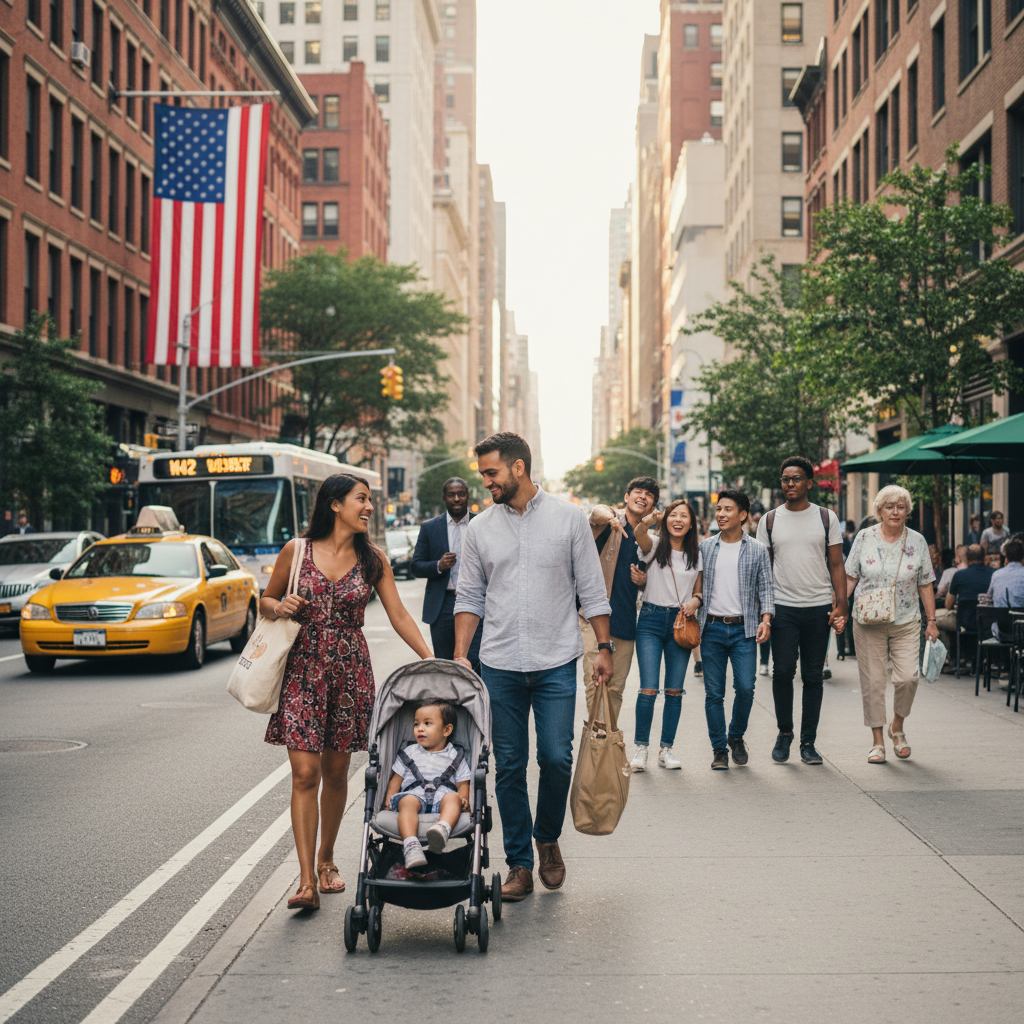
Moving from a temporary visa to permanent residency in the United States is not an automatic step. It is a process built on precise legal components, strict timelines, and application bases that must be chosen carefully. Those who enter on a tourist, student, or work visa and gradually realize that life in the U.S. has become a long-term plan do have legal paths available for this transition. What separates success from frustration is understanding exactly where you stand, which doors are open, and what the correct sequence of steps looks like.
Verifying eligibility based on current status
The starting point is your current immigration status. Not every temporary visa allows for adjustment of status directly in the United States through Form I-485. The B-1/B-2, for example, carries a nonimmigrant presumption, and using that visa to begin an adjustment can trigger the so-called 90-day rule from the State Department’s Foreign Affairs Manual, which presumes bad faith if immigrant intent is shown shortly after entry.
Visas such as F-1 student, J-1 with a two-year home residency requirement waiver, H-1B, L-1, and O-1 offer more solid footing. The H-1B and L-1 carry the express benefit of dual intent, meaning holders can maintain their temporary visa while pursuing a Green Card without compromising renewals or international travel. The F-1 does not have express dual intent and requires additional care during the transition.
Choosing the application basis
Once status is confirmed, you must choose under which immigrant category to file. Each category has distinct requirements, its own timelines, and varying degrees of exposure to Visa Bulletin backlogs.
Immediate relatives of U.S. citizens
Spouses, unmarried children under 21, and parents of U.S. citizens fall under the Immediate Relative category — no annual cap, no waiting line. The petitioning citizen files the I-130, and the beneficiary, if already in the U.S. in valid status, can file the I-485 concurrently. This is the fastest path among family-based options.
Employer sponsorship
EB-2 and EB-3 with a permanent job offer require PERM labor certification from the Department of Labor, followed by an I-140 petition, and finally an I-485 once the final action date in the Visa Bulletin is current for the beneficiary’s country of birth.
EB-2 NIW and EB-1 self-petition
The EB-2 NIW waives the job offer and PERM requirements, instead requiring a showing of substantial merit, national importance of the proposed work, and that the beneficiary is well-positioned to advance it. The EB-1A, for extraordinary ability, also allows self-petition. Both are the most agile routes for qualified professionals who do not want to depend on an employer.
Direct investment through EB-5
The EB-5 program requires a minimum investment of USD 800,000 in a Targeted Employment Area project or USD 1,050,000 in other areas, with the creation of at least ten direct or indirect jobs.
Marriage to a U.S. citizen
The spouse of a U.S. citizen may file the I-130 and I-485 simultaneously if already in the U.S. in valid status. An in-person interview is mandatory, and presenting strong evidence of a bona fide marriage is the critical point of the process.
Thorough document preparation
Adjustment of status is a documentation-intensive process. Required materials typically include proof of lawful entry, continuous maintenance of status, federal and state tax returns for the past three years, certified academic transcripts, employment contracts, professional qualifications, a medical examination on Form I-693 signed by a USCIS-designated civil surgeon, and police certificates where applicable. Each application basis adds its own evidentiary requirements.
Filing the adjustment of status
With the category selected and documents organized, the formal petition is filed. The I-485 is the central form, accompanied where applicable by Form I-765 for employment authorization and Form I-131 for advance parole — both filed at no additional cost since April 2024 when submitted together with the I-485. The current I-485 filing fee is USD 1,440. Filing generates a receipt notice and triggers scheduling of biometric appointments.
Waiting on interviews, RFEs, and decisions
Timelines vary by field office, application basis, and country of birth. Marriage- and family-based cases typically culminate in an in-person interview. Employment-based cases may be decided without an interview if documentation is strong. Requests for Evidence must be answered within the stated deadline or risk denial. Average processing times can range from eight months to over two years depending on the responsible USCIS field office.
Key considerations that determine the outcome
- Filing before your temporary status expires avoids an immigration gap
- Leaving the U.S. while the I-485 is pending without advance parole may be treated as abandonment of the application
- Changing employers in EB-2 and EB-3 cases is only safe after 180 days from the I-485 filing date, under the AC21 portability rule
- Working without authorization during the adjustment process can jeopardize the case
- Each category has its own backlog, and the final action date must be current before the I-485 can be filed
Illustrative case
A researcher who earned a master’s degree from a U.S. university under F-1 status and is currently in an OPT period can self-petition for an EB-2 NIW. Once the I-140 is approved, if the Visa Bulletin’s final action date is current for their country of birth, they can file the I-485 without leaving the U.S., file Form I-765 for work authorization independent of any employer, and file Form I-131 for international travel during processing. This approach preserves career continuity while the case moves forward.
Converting a temporary visa into a Green Card is a technical journey that rewards careful planning. Those who understand the petition sequence, respect status milestones, and select the right basis for their profile hold in their hands a life plan with predictable timelines and a solid legal foundation.
Learn more about EB-2 NIW
- Category
- EB-2 NIW Green Card
- Self-petition
- Allowed (no sponsor needed)
- PERM
- Waived
- Processing
- 12-36 months
Tags
About the author

Victoria Harper
Editor-in-Chief
As a journalist and lead editor at Visto n’ Visa, Victoria helps ensure that immigration topics are covered in a clear, trustworthy, and easy-to-understand way. Her focus is on delivering useful, human, and relevant content for people exploring new paths abroad.