English
 Português
 Español


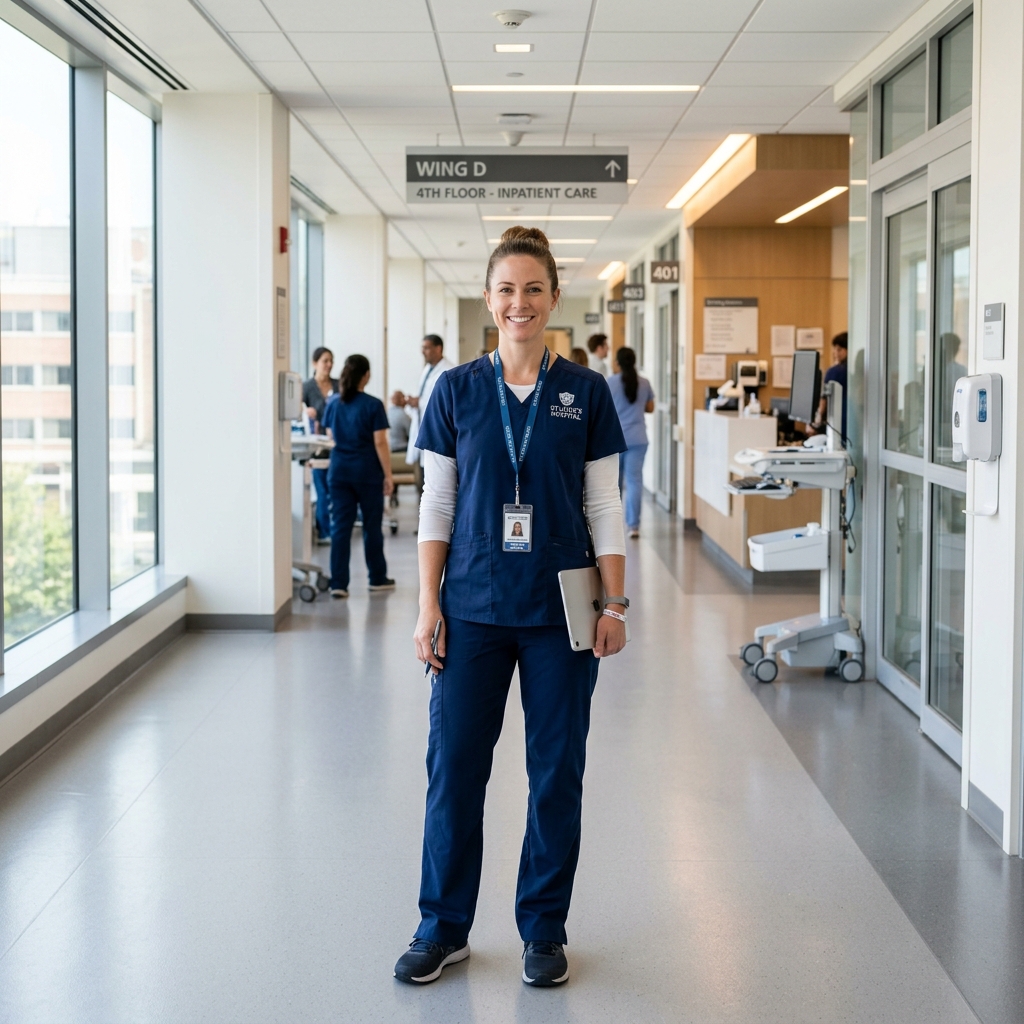
The demand for nurses in the United States is growing rapidly, driven by the aging population and the continued expansion of the healthcare system. This scenario creates concrete Green Card opportunities for international nurses who want to build a career in the US with stability and permanent residency. With adequate planning and validated credentials, nursing is one of the professions with the greatest potential for success in the American immigration process.
The United States faces a structural shortage of nursing professionals that is expected to intensify in the coming years. The retirement of experienced nurses, increased demand for geriatric care and the expansion of medical coverage create a deficit that the domestic market cannot meet alone. This context opens doors for professionals trained abroad, especially through the EB-2 NIW and EB-3 categories, both provided for in INA § 203(b) and regulated in 8 CFR § 204.5.
Several factors support the high demand for nurses in the United States and make the profession strategic from an immigration point of view. So much so that the occupation of Registered Nurse has historically appeared on the Department of Labor’s Schedule A (20 CFR § 656.5), a list of professions pre-certified as in national shortage, which eliminates the conventional PERM step in many cases.
Population aging is the main driver. The baby boomer generation is aging en masse, increasing the need for ongoing, specialized care in hospitals, clinics, nursing homes and home-based services. At the same time, the shortage of professionals worsens as experienced nurses retire without sufficient replacement of new trained professionals.
Expanding access to healthcare also contributes. The growth in medical coverage increases the demand for hospital and outpatient services in all regions of the country, with a particular impact on rural areas and historically underserved communities.
International nurses have two main paths to permanent residency in the United States, each with distinct characteristics and requirements.
The EB-2 NIW (National Interest Waiver), provided for in INA § 203(b)(2)(B), allows professionals to apply for a Green Card on their own, without the need for a sponsoring employer and without PERM. To qualify, the nurse must have an advanced degree (master’s or doctorate in nursing or a related field) or demonstrate exceptional ability, in addition to proving that their work serves the national interest of the United States, according to the tripartite test established in Matter of Dhanasar (AAO, 2016).
This route is especially viable for nurses with postgraduate degrees, scientific publications, experience in clinical research, work in public health or specialization in high demand areas. The national interest argument is strengthened when the professional demonstrates willingness to work in regions designated as Health Professional Shortage Areas (HPSA) by HRSA.
The EB-3, provided for in INA § 203(b)(3), is the most traditional route for nurses and is based on a job offer. An American hospital, clinic, or healthcare institution sponsors the professional and files the I-140 petition with USCIS. Because Registered Nurse is on Schedule A, the employer can submit ETA Form 9089 directly with the I-140, without the labor market testing required in standard PERM.
The advantage of the EB-3 is that it does not require an advanced degree, as a bachelor’s degree in nursing is sufficient. The disadvantage is dependence on the sponsoring employer and, in some cases, longer processing times as per the Department of State’s Visa Bulletin. Even so, many American hospitals maintain active international nurse recruitment programs, making this route accessible to qualified professionals, with salaries equal to or higher than the prevailing wage determined by the DOL.
Before starting any immigration process, nurses trained abroad need to validate their professional credentials in the United States. This step is essential to legally exercise the profession and significantly strengthens the immigration petition.
Validation involves the evaluation of the foreign diploma by an accredited agency, with the CGFNS (Commission on Graduates of Foreign Nursing Schools) being the reference. The CGFNS verifies the equivalence of training to US standards and issues the VisaScreen Certificate, a document required under INA § 212(a)(5)(C) for most foreign healthcare professionals applying for an employment-based visa.
In addition to evaluating credentials, nurses must obtain a professional license in the American state where they intend to work. Each state has its own Board of Nursing and specific requirements, although all require passing the NCLEX-RN exam. Registration documentation usually includes proof of registration with the professional council in the country of origin, such as COFEN in the case of professionals trained in Brazil, or the equivalent body in each jurisdiction.
The NCLEX-RN (National Council Licensure Examination for Registered Nurses) is the official licensing exam for nurses in the United States. Administered by the NCSBN (National Council of State Boards of Nursing), it assesses the technical and clinical skills necessary for the safe exercise of the profession.
The exam uses a computerized adaptive format (CAT), in which the difficulty of the questions adjusts according to the candidate’s performance. Areas assessed include basic and complex physiological care, patient safety, pharmacology, care management and psychosocial integrity.
Candidates can take the NCLEX-RN at Pearson VUE testing centers in several countries. Adequate preparation is essential, and there are several resources available, from preparatory courses to official question banks.
Proof of proficiency in English is another important requirement. The most accepted exams are the TOEFL iBT and IELTS Academic. Minimum scores vary depending on the institution and state, but in general the required standards are compatible with effective professional communication in a hospital environment.
Mastery of English is not just a bureaucratic requirement. It is essential for patient safety, communication with multidisciplinary teams and professional integration in the American healthcare system.
The international nurse’s path to a Green Card involves multiple steps that must be planned in an integrated manner. The typical sequence includes: credential evaluation by CGFNS, passing the NCLEX-RN, proving English proficiency, defining the immigration route (EB-2 NIW or EB-3), preparing documentation and submitting the I-140 petition to USCIS, with a current fee of US$715, plus the Asylum Program Fee applicable to the employer.
The total period varies depending on the route chosen, the candidate’s profile and current processing times. Professionals who start preparing credentials in parallel with immigration planning tend to significantly optimize the total schedule, especially when the vacancy offered falls under Schedule A.
Nursing remains one of the most in-demand professions in the United States, and the current scenario offers qualified international nurses a real opportunity for permanent residency, with professional stability and quality of life.
Learn more about EB-2 NIW
- Category
- EB-2 NIW Green Card
- Self-petition
- Allowed (no sponsor needed)
- PERM
- Waived
- Processing
- 12-36 months
Tags
About the author

Victoria Harper
Editor-in-Chief
As a journalist and lead editor at Visto n’ Visa, Victoria helps ensure that immigration topics are covered in a clear, trustworthy, and easy-to-understand way. Her focus is on delivering useful, human, and relevant content for people exploring new paths abroad.