English
 Português
 Español


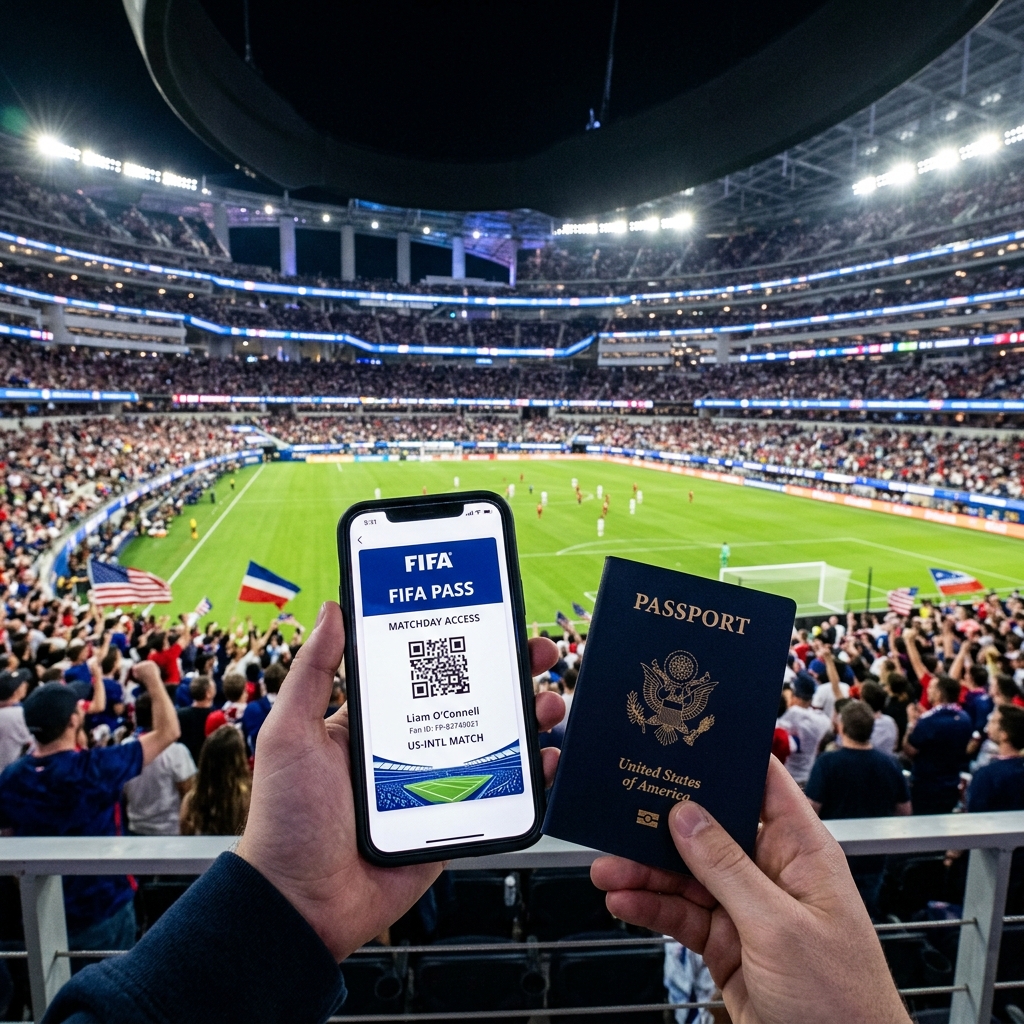
The 2026 FIFA World Cup will be the largest edition in the tournament’s history: 48 teams, 104 matches, and 16 host cities spread across the United States, Canada, and Mexico, from June 11 to July 19. To enable the entry of millions of international fans, the U.S. government created the FIFA PASS, a priority visa interview scheduling system that allows holders of official tickets to move ahead in the consular queue. The program, announced in November 2025 at a White House event attended by President Donald Trump, Secretary of State Marco Rubio, and FIFA President Gianni Infantino, has been operational since January 20, 2026.
What Is the FIFA PASS
The FIFA PASS (Priority Appointment Scheduling System) is a free and voluntary service that grants holders of 2026 World Cup tickets priority access to schedule interviews for the B-1/B-2 visa at U.S. consulates. The system is especially useful for fans from countries where regular consular interview wait times exceed several months.
It is essential to understand that the FIFA PASS is not a visa and does not guarantee approval. The system only brings forward the interview date – all regular requirements remain in effect: DS-160 form, payment of fees, in-person interview, and security screening. As Secretary Rubio stated: “Your ticket is not a visa; it does not guarantee admission to the U.S.”
Who Needs the System
The FIFA PASS is intended for international travelers who meet two criteria simultaneously: they require a B-1/B-2 visa to enter the United States and have purchased tickets through FIFA’s official website. Citizens of countries participating in the Visa Waiver Program (VWP) – including Japan, South Korea, Australia, the United Kingdom, and most European Union nations – do not need the FIFA PASS and can apply for ESTA authorization directly.
Brazilians are not part of the Visa Waiver Program and need a B-1/B-2 visa to enter the U.S. The FIFA PASS is, therefore, a valuable tool for Brazilian fans who wish to attend the matches in person. The same applies to citizens of dozens of other countries in Latin America, Africa, and Asia that are not part of the waiver program.
Step-by-Step Application Process
The process for using the FIFA PASS follows a specific sequence that requires attention to detail:
- Purchase your ticket through the official fifa.com website
- Access your FIFA ticket account and fill out the FIFA PASS opt-in form
- Wait at least one hour for data transfer to the U.S. visa system
- Access the State Department website to start your application
- Fill out the DS-160 form online with all personal and travel information
- Pay the applicable visa fees
- Schedule your interview through the provided priority channel
A critical detail: the name and passport number must be identical on all documents – physical passport, DS-160 form, and scheduling system profile. Minor errors such as an extra space, a missing character, or different surname formatting can prevent eligibility verification in the system.
B-1/B-2 Visa Fees
The MRV (Machine Readable Visa) fee for the B-1/B-2 visa is US$185. The One Big Beautiful Bill Act, enacted in July 2025, created an additional Visa Integrity and Border Security Fee of US$250 for virtually all non-immigrant visa categories. With the implementation of this fee, the total cost would rise to US$435 per applicant.
As of April 2026, the implementation guidance for the Visa Integrity Fee has not yet been published by the Bureau of Consular Affairs, and consulates are not yet charging this additional amount. The confirmed cost at the time of application is US$185. For a family of four, the minimum cost in government fees is US$740 – an amount that could more than double when the additional fee comes into effect.
ESTA as an Alternative
Citizens of countries participating in the Visa Waiver Program can apply for ESTA (Electronic System for Travel Authorization) as an alternative to the B-1/B-2 visa. ESTA costs US$40.27 as of January 2026 – consisting of a US$4.00 processing fee and a US$36.27 authorization fee. The process is entirely online and, once approved, the authorization remains valid for two years or until the passport expires, allowing stays of up to 90 days.
If the application is denied, only the US$4.00 processing fee is charged. All travelers pay the same amount, regardless of age. ESTA is the fastest and most economical option for citizens of eligible countries.
Travel Ban and the World Cup
Presidential Proclamation 10998 restricts entry into the United States for citizens of 39 countries. Initially applied to 19 nations in June 2025, the list was expanded to 39 in December of the same year, effective January 1, 2026. Four teams qualified for the World Cup are directly affected: Haiti, Senegal, Ivory Coast, and Iran.
Athletes, coaching staff, support professionals, and immediate family members of sports delegations are expressly exempt from the restriction. Diplomats, permanent residents, and people whose travel serves the U.S. national interest also fall under the exceptions. Fans of these nationalities, however, will not be able to travel to the U.S. to attend the matches unless they have a valid visa issued before the proclamation’s cutoff dates. For Haiti, which qualified for the World Cup for the first time in over 50 years, the situation is especially delicate.
Host Cities and Schedule
The United States will host 78 of the 104 matches, including all games from the quarterfinals onward. The 11 U.S. host cities are Miami, Houston, Dallas, Atlanta, Boston, Philadelphia, New York/New Jersey, Los Angeles, San Francisco, Seattle, and Kansas City. Mexico will host 13 matches in Mexico City, Guadalajara, and Monterrey, while Canada will host another 13 in Toronto and Vancouver.
The official opening will be on June 11, 2026, at the Azteca Stadium in Mexico City. The final is scheduled for July 19 at MetLife Stadium in New Jersey. With the tournament less than two months away, fans who have not yet started the visa process should act immediately: the DS-160 form can take days to complete correctly, and even with the FIFA PASS, the consular interview must be scheduled well in advance. It is recommended to have a passport valid for at least six months beyond the planned return date and to gather supporting documents proving ties to the country of origin to present at the interview.
Learn more about B-1/B-2
- Duration
- Up to 6 months
- Extension
- Possible (up to 6 months)
- Work
- Not permitted
- Processing
- 2-8 weeks
About the author

Victoria Harper
Editor-in-Chief
As a journalist and lead editor at Visto n’ Visa, Victoria helps ensure that immigration topics are covered in a clear, trustworthy, and easy-to-understand way. Her focus is on delivering useful, human, and relevant content for people exploring new paths abroad.