English
 Português
 Español


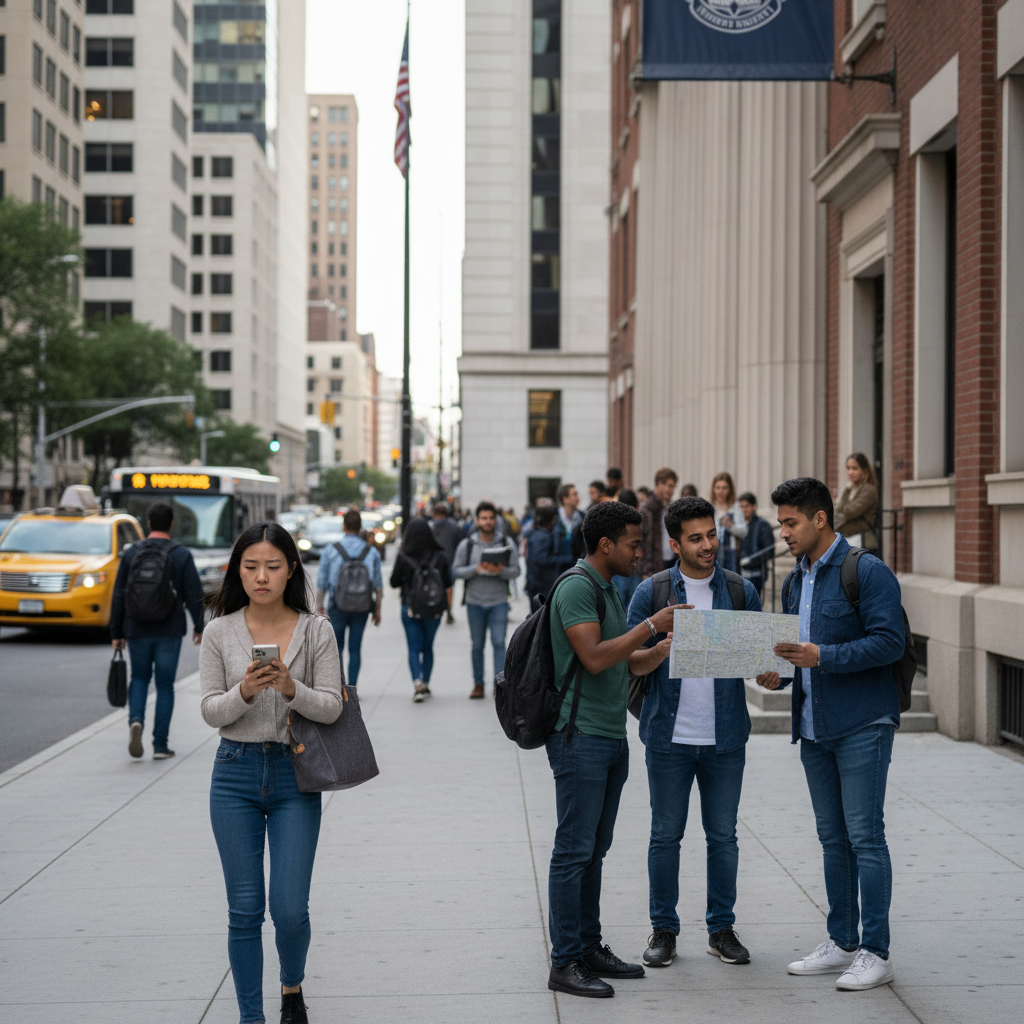
International students preparing to enroll in American universities in 2026 are facing a consular landscape significantly more demanding than just a few years ago. Since mid-2025, the State Department has consolidated an expanded social media review process for F-1, M-1, and J-1 visa applicants, with more detailed guidelines on immigrant intent and ties to educational institutions. Anyone planning to pursue an academic experience in the United States needs to understand this new layer of scrutiny before scheduling their interview.
The Three Categories and Their Uses
The F-1 visa is for academic students enrolled in regular bachelor’s, master’s, doctoral, or English as a Second Language programs at SEVP (Student and Exchange Visitor Program)-certified schools. It is the most common category among those pursuing undergraduate or graduate studies in the United States.
The M-1 covers vocational and technical studies, such as aviation courses, professional culinary programs, or training in specific trades. It is less commonly used but relevant for those seeking practical certifications at accredited vocational schools.
The J-1 serves a broad range of exchange programs under sponsorships designated by the State Department, including au pair, summer work and travel, intern, trainee, visiting professor, and researcher. Each subcategory has its own rules, but all share the cultural and educational component as the central element of eligibility.
Social Media Screening
Since 2019, the DS-160 form has already requested social media identifiers used in the previous five years. What changed in 2025 was the depth of this verification: consular officers and State Department analysts began actively reviewing content publicly posted by applicants, not just recording usernames in the system.
The scrutiny aims to identify statements that may indicate intent to violate visa terms, ties to designated organizations, evidence of document fraud, or content considered hostile to American interests. Public posts on Instagram, X, TikTok, Facebook, LinkedIn, YouTube, and similar platforms fall within the scope of analysis.
What Consular Officers Evaluate
The set of criteria guiding the consular decision goes far beyond digital content. The interview remains the primary assessment tool, and the officer must be convinced on four key points before approving issuance.
First, the authenticity of the academic program: the institution is SEVP-certified, the I-20 or DS-2019 is correctly issued, and the intended course aligns with the applicant’s background. Second, financial capacity: the applicant can cover tuition, housing, and personal expenses during the stay, as demonstrated through bank statements, sponsorship letters, or confirmed scholarships.
Third, ties to the home country: there are sufficient family, professional, asset, or educational ties to indicate intent to return after completing the program. This is the nonimmigrant intent test, one of the most sensitive points in the process. Fourth, consistent digital conduct: the applicant shows consistency between what they declare on the DS-160, the I-20, and what they post on social media.
How to Prepare for the Interview
Preparation should begin weeks before scheduling and involves both documentary and digital review. On the documentary side, organize your passport, confirmed DS-160 form, SEVIS fee receipt, signed I-20 or DS-2019, financial documents, and any academic history that supports the intended program.
On the digital side, conduct an honest audit of what is publicly visible on your social media. Old posts that could be interpreted as endorsing violence, terrorist acts, hate speech, or intent to remain illegally in the United States should be carefully evaluated. Deleting recent content to conceal your positions is a risky strategy, as officers may interpret a sudden cleanup as an attempt at fraud.
Fees and Timelines in 2026
The MRV (Machine Readable Visa) fee for F, M, and J visas remains around $185 for most applicants, charged before scheduling. The SEVIS fee is separate: $350 for F and M, and $220 for J in sponsored programs.
Waiting up to two weeks for an interview has become the exception at many consular posts. In São Paulo, Rio de Janeiro, and Recife, waits of 60 to 180 days have been frequent during peak periods, especially between May and August, when students prepare to start the fall semester. Anyone needing to travel before the program begins should schedule well in advance.
Options in Sensitive Cases
Applicants whose visas were denied under section 214(b) (presumption of immigrant intent) may reschedule and try again, strengthening evidence of ties to their home country. Denials under other sections, such as 212(a)(6)(C) for documentary misrepresentation or 212(a)(3) for security concerns, require specialized legal analysis and, in some cases, a waiver application.
For those already in the United States on an active F-1, program changes, school transfers, and SEVIS extensions require strict coordination with the institution’s DSO (Designated School Official). Errors in this process can result in loss of status and future immigration bars.
The Geopolitical Weight of Scrutiny
The intensification of vetting in 2025 took place amid tensions between the federal government and American universities over topics such as campus protests, national security, and alleged foreign intelligence activities in research programs. Students in sensitive fields, such as advanced engineering, biotechnology, semiconductors, and quantum computing, may face extended Administrative Processing under category 221(g), with additional requests for information about academic advisors, research funding, and prior institutions.
Despite the more restrictive climate, the United States continues to receive, year after year, the largest contingent of international students in the world, with more than one million enrollments at American institutions in recent cycles. The journey requires preparation, transparency, and, in most cases, patience with consular timelines. The path remains open for those who arrive at the process well-documented and with clear intentions.
Learn more about F-1
- Duration
- Duration of studies
- OPT (STEM)
- Up to 3 years of work
- CPT
- Work during studies
- Processing
- 2-8 weeks
About the author

Victoria Harper
Editor-in-Chief
As a journalist and lead editor at Visto n’ Visa, Victoria helps ensure that immigration topics are covered in a clear, trustworthy, and easy-to-understand way. Her focus is on delivering useful, human, and relevant content for people exploring new paths abroad.