English
 Português
 Español


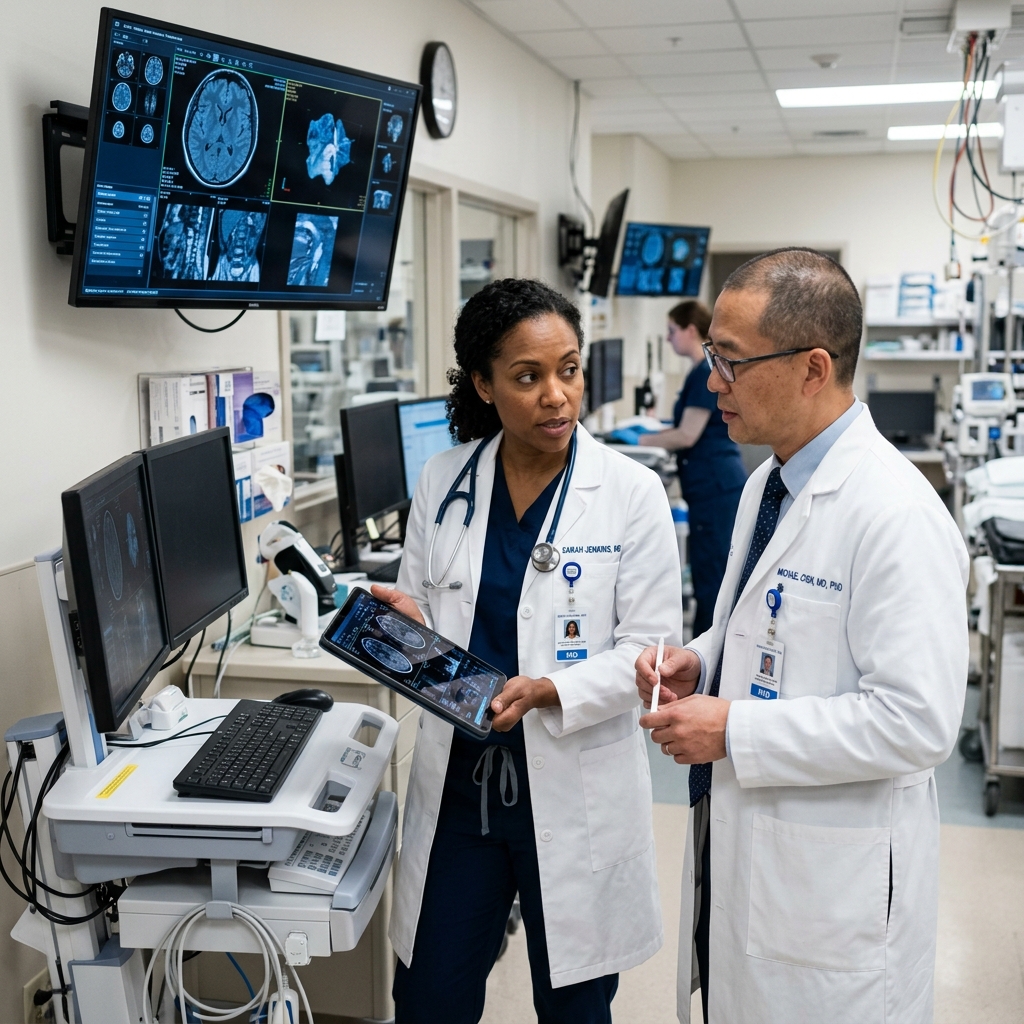
The healthcare sector holds a strategic position in the United States, a country facing a chronic physician shortage, especially in rural areas and high-demand specialties. For physicians with strong medical training and relevant experience, the EB-2 NIW (National Interest Waiver) Green Card represents a concrete pathway to permanent residence in the U.S. without depending on a job offer or employer sponsorship.
The EB-2 NIW allows the professional to self-petition, arguing that their work in medicine serves the national interest of the United States. In a landscape where the demand for medical services consistently exceeds the supply of professionals, qualified physicians find particularly favorable ground for building that argument.
The EB-2 NIW in Medicine
The EB-2 NIW is a subcategory of the EB-2 immigrant visa, intended for professionals with an advanced degree (master’s, doctorate, or equivalent) or exceptional ability in their field. The distinguishing feature of the NIW is the waiver of the job offer and labor certification requirements, meaning the physician does not need a U.S. hospital or clinic to sponsor the petition.
For physicians, the demonstration of national interest rests on three pillars, as established in Matter of Dhanasar (2016): the proposed endeavor must have substantial merit and national importance; the petitioner must be well positioned to advance it; and it must be beneficial to the United States to waive the job offer requirement.
Why Physicians Stand Out
Physicians trained abroad have characteristics that naturally strengthen an EB-2 NIW petition. Medical education typically involves a rigorous program followed by specialized residency training, which meets or exceeds the advanced degree requirements of the EB-2 category. In addition, the clinical, surgical, or research experience accumulated over a career provides robust evidence of technical competence.
The U.S. context is particularly favorable for healthcare professionals. According to projections by the Association of American Medical Colleges (AAMC), the United States faces a projected deficit of tens of thousands of physicians in the coming decades, with particularly acute shortages in primary care and surgical specialties. This scarcity reinforces the argument that the contribution of qualified foreign physicians serves the national interest.
Practice areas that tend to strengthen the case include family medicine, geriatrics, psychiatry, oncology, cardiology, emergency medicine, and public health, sectors where demand is especially high.
Requirements and Specific Evidence
While each case is evaluated individually, a strong evidentiary package for physicians typically includes the following elements:
- Medical degree and documentation of medical residency or specialty training
- Active professional license or registration from the relevant medical authority
- Clinical, academic, or research experience documented with impact metrics
- Scientific publications in medical journals, book chapters, or contributions to clinical protocols
- Participation in medical conferences, symposia, or committees of national or international relevance
- Expert recommendation letters from colleagues, supervisors, or researchers who can attest to the relevance and impact of the petitioner’s work
- A detailed professional plan describing how the physician intends to contribute to U.S. healthcare
For physicians who intend to practice medicine clinically in the U.S., it is important to note that clinical practice requires passing the USMLE (United States Medical Licensing Examination) and completing a U.S. medical residency. However, those requirements are independent of the EB-2 NIW immigration process. The Green Card and the medical license are parallel tracks that can be pursued simultaneously.
National Interest Argument
The central point of any NIW petition is demonstrating that waiving the job offer requirement benefits the United States. For physicians, this argument can be built around several axes: documented shortages of professionals in the petitioner’s specialty, the intent to practice in underserved areas (Health Professional Shortage Areas, or HPSAs), contributions to medical research, development of clinical protocols, or innovations in treatment.
The professional plan must be specific and connected to the physician’s prior career trajectory. Generic statements about improving American healthcare are not sufficient. USCIS expects to see a concrete plan with defined lines of work, an identified target population, and anticipated outcomes articulated in a plausible manner.
Physicians with research experience have an additional advantage, since publications, citations, and participation in clinical trials constitute objective and quantifiable evidence of academic and scientific impact.
Process Steps
The EB-2 NIW process for physicians follows the standard flow for this category. It begins with the preparation of the complete evidentiary package, including supporting documents, recommendation letters, and the professional plan. Form I-140 (Immigrant Petition for Alien Workers) is then submitted to USCIS with all supporting documentation and applicable government fees.
After approval of the I-140, the applicant proceeds to adjustment of status (Form I-485, if already in the U.S.) or to consular processing (if residing abroad). Premium processing is available for the I-140, allowing expedited review upon payment of an additional fee.
The Green Card obtained through the EB-2 NIW grants permanent residence to the physician, their spouse, and children under 21, allowing them to live and work freely in any U.S. state. For physicians, that geographic freedom is especially valuable, since demand for healthcare professionals varies considerably across regions and states.
Learn more about EB-2
- Category
- EB-2 Green Card (2nd priority)
- PERM
- Generally required
- Requirement
- Advanced degree or equivalent
- Processing
- 1-5 years
Tags
About the author

Victoria Harper
Editor-in-Chief
As a journalist and lead editor at Visto n’ Visa, Victoria helps ensure that immigration topics are covered in a clear, trustworthy, and easy-to-understand way. Her focus is on delivering useful, human, and relevant content for people exploring new paths abroad.