English
 Português
 Español


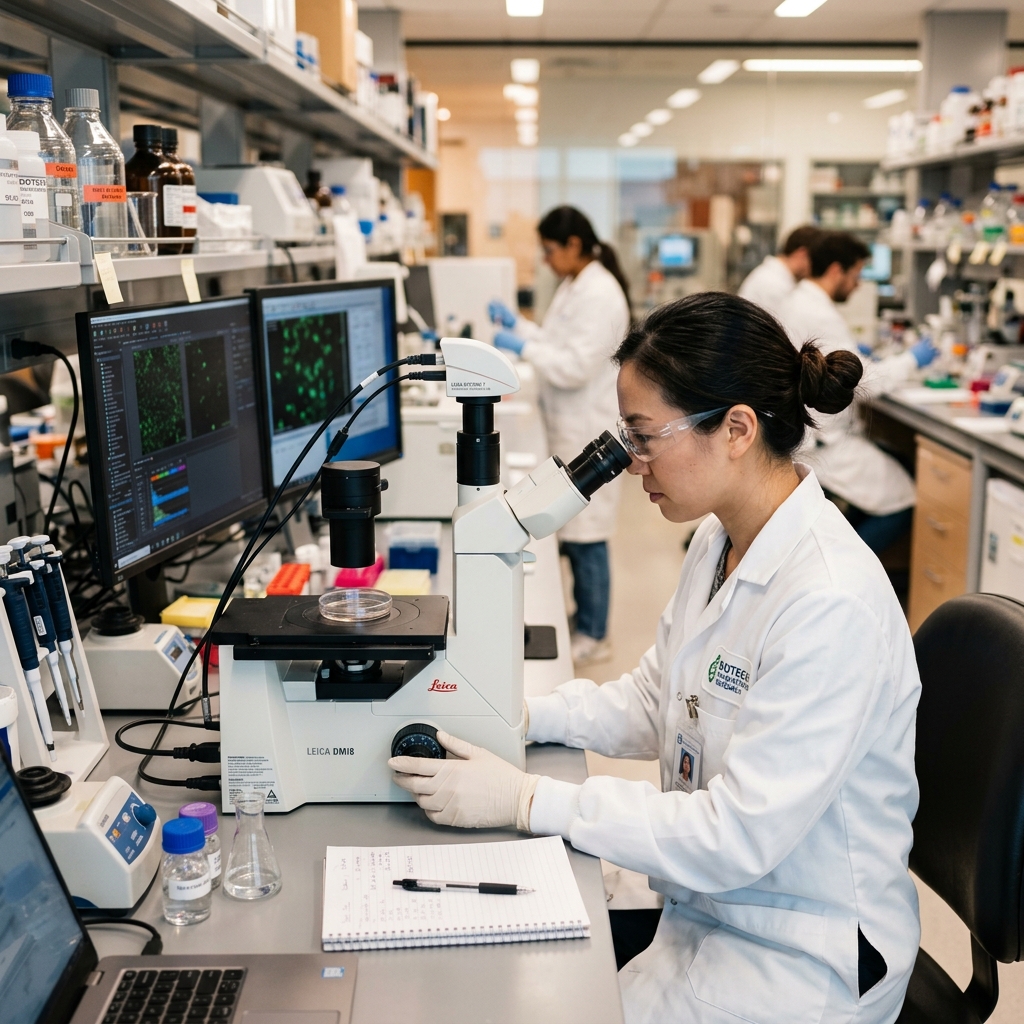
International scientists and researchers with an established academic trajectory find the EB-2 NIW one of the most strategic ways to obtain a Green Card in the United States. The category, provided for in INA § 203(b)(2)(B), allows self-petition, does not require a job offer and labor certification (PERM), and is especially suitable for professionals whose scientific production demonstrates a relevant impact on the American national interest.
The United States’ research and innovation ecosystem is one of the most dynamic in the world, and the country maintains immigration policies that seek to attract high-level talent. For researchers with publications in indexed journals, active ORCID, relevant h-index, participation in significant projects and documented academic recognition, the EB-2 NIW represents a concrete opportunity for permanent residency with full professional autonomy.
The EB-2 NIW (National Interest Waiver) is a subcategory of the EB-2 immigrant visa that waives two traditional requirements of the American immigration process: a formal job offer from an American company and labor certification (PERM). Instead, the applicant must demonstrate that his or her presence in the United States serves the country’s national interest, in accordance with the precedent Matter of Dhanasar, 26 I&N Dec. 884 (AAO 2016).
To qualify, a researcher must demonstrate that they have an advanced degree, master’s degree, doctorate, or equivalent, or documented exceptional ability above the profession’s average, in accordance with 8 CFR § 204.5(k). Additionally, it must satisfy the three Dhanasar criteria: that the proposed work has substantial merit and national importance, that the candidate is well positioned to advance that work, and that waiving the job offer and PERM benefits the United States.
Scientists and researchers have natural advantages in building the EB-2 NIW case, as their professional activity generates objective and quantifiable evidence of impact. The ideal profile for this category includes professionals who can document at least some of the following elements.
Publications in indexed journals are one of the pieces of evidence most valued by USCIS. The number of articles, the impact factor of the journals and, especially, the index of citations received (h-index, total citations in Google Scholar, Scopus, Web of Science) demonstrate that the researcher’s work is recognized and used by the scientific community. Citations by researchers from American institutions are particularly relevant in arguing national interest. Keeping ORCID updated with the complete production record is recommended practice for the dossier.
Involvement in research projects funded by recognized agencies, such as NIH, NSF and DOE in the United States, or funding agencies in the country of origin (such as CNPq, CAPES, FAPESP, CONACYT, CONICET, ANID, CONICYT and equivalents in other countries), demonstrates that the candidate’s work has been evaluated and considered meritorious by competitive funding bodies. Leading research projects or components further strengthens the case.
Registered patents or patent applications demonstrate that the candidate’s research generated results with practical applicability and potential for economic or technological impact. Even patents in the analysis phase can be included as supplementary evidence, with documentation from the USPTO or the corresponding national patent office.
Academic awards, invitations to speak at relevant conferences, participation in journal editorial committees, peer review of articles for prestigious publications and competitive grants are evidence of recognition that complement the researcher’s profile.
Letters of recommendation are fundamental strategic components. The ideal is to gather between four and six letters from experts in the candidate’s field, including independent recommenders, professionals who know the candidate’s work through their publications and contributions, but who do not have a direct personal or professional relationship. Each letter must specifically address how the candidate’s research contributes to the national interest of the United States, citing specific work, measurable results, and impact in the field.
The formal EB-2 NIW process follows defined steps that require organization and careful planning.
The first step is the preparation of the I-140 petition (Immigrant Petition for Alien Worker), which must be accompanied by all supporting documentation: diplomas with credentials evaluation by an agency recognized by NACES, detailed academic curriculum, complete list of publications with impact metrics, letters of recommendation, evidence of professional recognition and a structured plan for operating in the United States.
The organization of evidence must follow a clear narrative logic, connecting each document to one or more of the Dhanasar criteria. The dossier needs to tell a coherent story about a researcher whose work is of interest to the United States.
The action plan describes how the researcher intends to continue contributing to scientific and technological advancement in the United States. It should include research objectives, areas of activity, target institutions or sectors, and measurable goals.
After submission to USCIS, processing time varies depending on the service center (Nebraska or Texas) and current demand. The premium processing option is available for the EB-2 NIW I-140, with an initial decision in 45 calendar days for an additional fee to the Form I-907.
With the approval of the I-140 petition, the researcher moves on to the final stage of obtaining the Green Card. If you are already in the United States with a valid and eligible visa (such as J-1 without 212(e), H-1B, or O-1), you can request adjustment of status using Form I-485. If you are outside the country, you will undergo consular processing at an American embassy or consulate via NVC and Form DS-260.
The Green Card grants permanent residence and allows the researcher to work at any institution, change research areas, undertake a business or act as a consultant without immigration status restrictions.
The EB-2 NIW offers benefits particularly relevant to academic and scientific careers:
For international researchers with solid scientific production and documentable impact, the EB-2 NIW remains one of the categories most aligned with the academic trajectory, offering professional autonomy and immigration stability in the United States.
Learn more about EB-2
- Category
- EB-2 Green Card (2nd priority)
- PERM
- Generally required
- Requirement
- Advanced degree or equivalent
- Processing
- 1-5 years
Tags
About the author

Victoria Harper
Editor-in-Chief
As a journalist and lead editor at Visto n’ Visa, Victoria helps ensure that immigration topics are covered in a clear, trustworthy, and easy-to-understand way. Her focus is on delivering useful, human, and relevant content for people exploring new paths abroad.