English
 Português
 Español


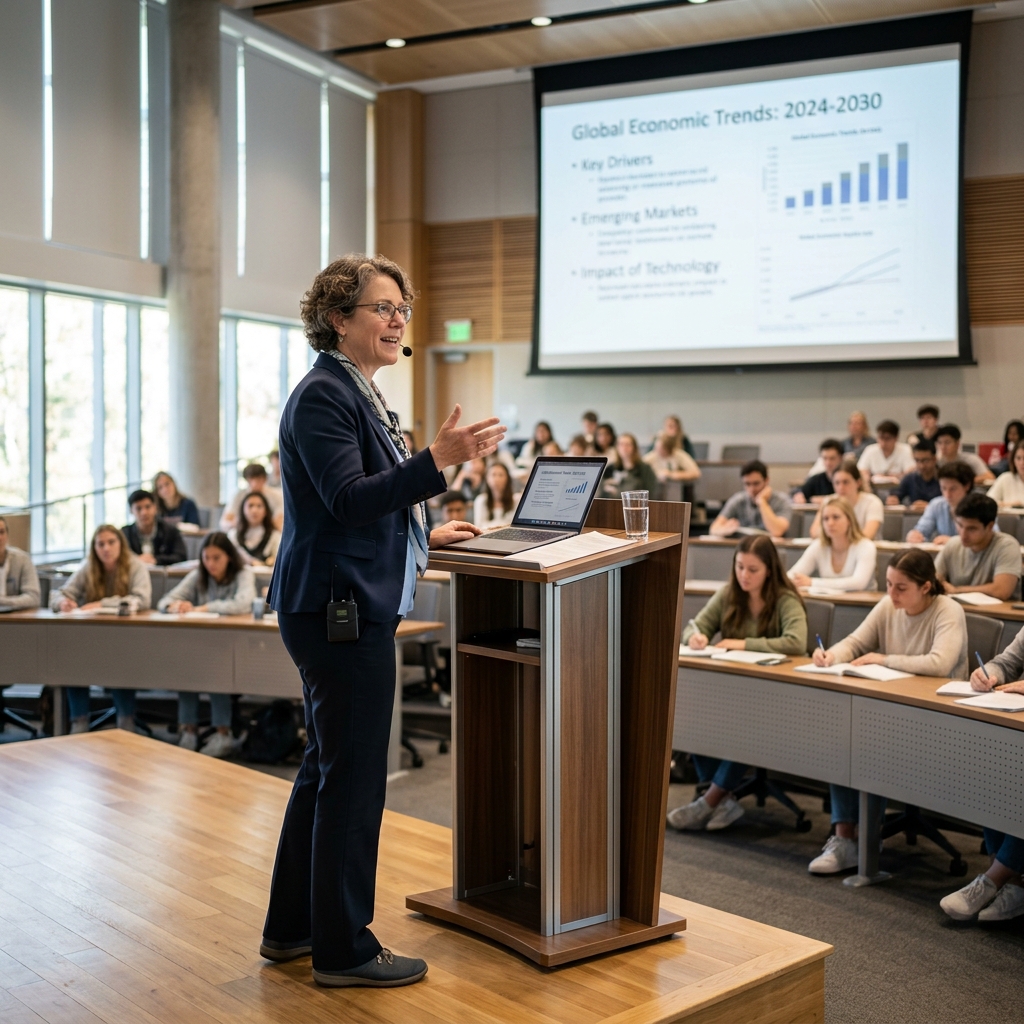
Educators and university professors possess a particularly strong profile for the EB-2 NIW (National Interest Waiver), a Green Card category that allows self-petitioning without the need for a sponsoring employer. Education is recognized as an area of national interest by the United States, and professionals engaged in academic research, development of innovative teaching methodologies, and the training of a qualified workforce find in this category a viable path to permanent residence.
The EB-2 NIW is especially attractive for academics because it rewards precisely the type of contribution that professors and researchers build throughout their careers: publications, impactful projects, training of the next generation of professionals, and the advancement of knowledge in their areas of specialization. This guide details how education professionals can structure their application strategically.
What Is the EB-2 NIW
The EB-2 NIW is a subcategory of the second employment-based immigrant visa preference that waives two traditional requirements: a formal job offer in the United States and labor certification (PERM). This waiver is granted when the applicant demonstrates that their professional work is in the U.S. national interest.
The evaluation follows the framework established in Matter of Dhanasar, which requires three demonstrations: that the proposed endeavor has substantial merit and national importance, that the applicant is well positioned to advance that endeavor, and that it is in the interest of the United States to waive the traditional requirements. For educators, the national interest argument can be built around the impact on training qualified professionals, advancing research, and improving the American educational system.
Who Can Qualify
To qualify for the EB-2 NIW as an educator or university professor, the applicant must meet the basic requirements of the EB-2 category. This means holding an advanced degree, such as a master’s, doctorate, or equivalent, or demonstrating exceptional ability in the field of education.
Beyond academic qualifications, it is essential to demonstrate that the applicant’s presence in the United States will benefit the national interest. For education professionals, this can be evidenced through a variety of contributions:
- Development of innovative teaching methodologies that can be replicated or adapted at American institutions
- Relevant research with demonstrated academic impact through publications and citations
- Scientific publications in recognized and indexed journals
- Contributions to educational policy or academic curricula
- Projects aimed at improving education in underserved or underrepresented communities
- Work in teacher training or programs that expand access to education
The central point is to demonstrate that the applicant’s work has substantial merit, national importance, and that the professional has the real capacity to execute it. Professors with a doctorate and a consistent research record start from a naturally strong position for this demonstration.
Required Documentation
While each case has its own particularities, documentation for the EB-2 NIW for educators typically includes the following elements:
- Undergraduate and graduate diplomas, accompanied by academic equivalency evaluations when issued outside the United States
- Complete academic transcripts
- A detailed curriculum vitae focused on publications, research projects, advisees, and academic impact
- Recommendation letters from recognized experts in the field, preferably independent ones
- A list of publications with citation metrics and impact data
- Evidence of awards, recognitions, or participation as a peer reviewer for journals and conferences
- A detailed plan of work in the United States, articulating how the research and teaching will benefit the country
The strategic organization of this evidence is one of the most decisive factors for the success of the petition. USCIS evaluates the evidentiary record qualitatively, and the way evidence is presented and connected to the national interest narrative directly influences the adjudicator’s perception.
Strategies for Educators
University professors and researchers can adopt specific strategies to strengthen their EB-2 NIW application. The field of education offers multiple avenues for demonstrating national interest, and the key is to select and articulate the most impactful evidence.
A Solid Professional Plan
The plan of work in the United States must be specific, realistic, and clearly connected to the national interest. Rather than generic statements about ‘contributing to American education,’ the applicant should detail the research area they intend to develop, the institutions or communities that will benefit, and how their expertise fills an identifiable gap in the American educational system.
Strong Technical Letters
Recommendation letters should preferably come from recognized authorities in the applicant’s academic field. Letters from independent experts, those who know the applicant’s work through their publications or reputation but have no direct working relationship with them, are particularly valued by USCIS. Each letter should specifically address the national impact of the applicant’s work.
Measurable Impact
Quantitative data significantly strengthens the petition. The number of publications, citation index, journal impact factor, number of students trained, research project outcomes, grants obtained, and reach of programs developed are all examples of metrics that translate academic impact into terms understandable to adjudicators without a background in the field.
Narrative Coherence
The petition must present a coherent narrative connecting the applicant’s academic history, their proven achievements, and their proposed work in the United States. The clearer the connection between past trajectory and future national benefit, the more persuasive the argument will be before USCIS.
After I-140 Approval
With I-140 petition approval, the next step depends on the applicant’s location. Professionals already in the United States with valid status can apply for adjustment of status using Form I-485, provided a visa number is available according to the Visa Bulletin. Applicants abroad will proceed through consular processing at the U.S. embassy or consulate with jurisdiction over their location.
Spouses and unmarried children under 21 can be included as dependents in the process, allowing the entire family to obtain permanent residence. The EB-2 NIW represents, for educators and university professors, not only an individual professional opportunity, but a concrete possibility to transform an academic career into a structured and permanent international life project.
Learn more about EB-2
- Category
- EB-2 Green Card (2nd priority)
- PERM
- Generally required
- Requirement
- Advanced degree or equivalent
- Processing
- 1-5 years
Tags
About the author

Victoria Harper
Editor-in-Chief
As a journalist and lead editor at Visto n’ Visa, Victoria helps ensure that immigration topics are covered in a clear, trustworthy, and easy-to-understand way. Her focus is on delivering useful, human, and relevant content for people exploring new paths abroad.