English
 Português
 Español


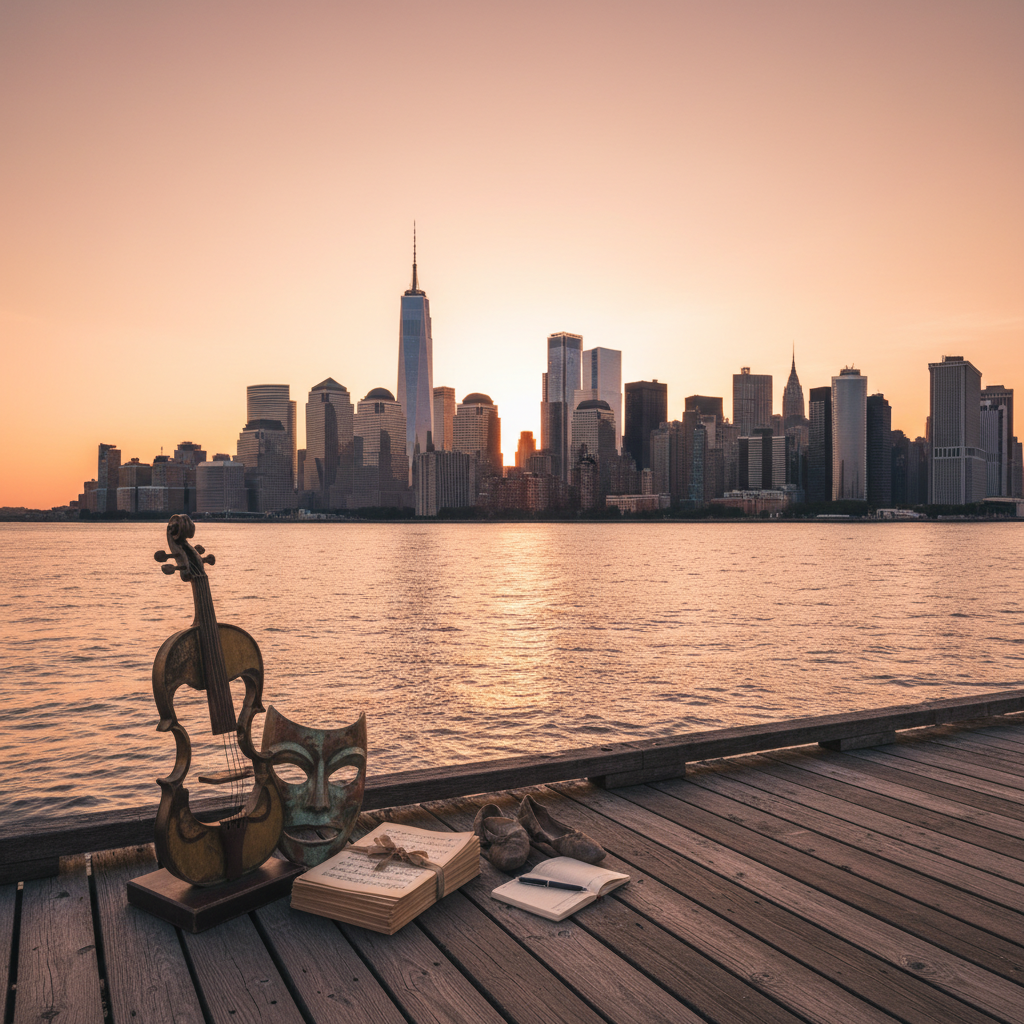
When musicians, composers, theater directors, and visual artists seek a path to permanent residency in the United States, most assume the EB-2 NIW is out of reach. The category has existed for decades associated with engineers, doctors, and scientists, and the stereotype is so strong that even experienced immigration attorneys frequently direct artists exclusively toward the EB-1A, overlooking an alternative that has been generating consistent approvals in recent years. The reality documented by USCIS is broader: the EB-2 NIW is a category defined by qualitative criteria, not by professional field, and the AAO’s 2016 decision in Matter of Dhanasar formalized an analytical framework that applies to any endeavor with substantial merit and national importance, including cultural work.
What the EB-2 NIW Requires
The EB-2 category with National Interest Waiver waives two traditionally mandatory steps for employment-based green cards: a job offer from a U.S. employer and the PERM labor certification process. In exchange for this flexibility, which allows self-petition, the applicant must convince USCIS that their work benefits the national interest of the United States to the extent that it is reasonable to waive the protection of the domestic labor market.
The three-prong test established in Matter of Dhanasar is the roadmap:
- The proposed endeavor has substantial merit and national importance;
- The petitioner is well positioned to advance that endeavor;
- On balance of factors, it is beneficial to the United States to waive the job offer and labor certification requirements.
Before applying the test, the applicant must meet the basic EB-2 requirement: an advanced degree (master’s or higher) or a bachelor’s degree followed by at least five years of progressive experience in the field, or qualify as having exceptional ability by demonstrating exceptional ability in the sciences, arts, or business through at least three of the six regulatory evidentiary criteria.
How Artists Fit Within Dhanasar
Prong 1: Merit and Importance
The first prong is where most artists begin to doubt themselves. The question is not whether artistic work is important in a generic sense, but whether it has demonstrable substantial merit and national relevance — not just to a local community. USCIS expressly accepts that substantial merit can exist in areas such as business, entrepreneurship, science, technology, culture, health, or education.
For a musical theater composer, for example, national importance can be built around:
- Contribution to the American cultural ecosystem, with Broadway and regional theaters as federally recognized economic and cultural infrastructure;
- Artistic educational programs in schools, aligned with Department of Education priorities and state cultural literacy initiatives;
- Works addressing publicly relevant themes (refugee policy, climate change, immigrant integration), citing federal reports and official initiatives that recognize these issues;
- Economic impact of the cultural sector, measurable through Bureau of Economic Analysis data on arts and cultural production.
The petitioner does not need to prove that their individual work will change the country. They must demonstrate that the field in which they work is nationally important and that their specific contribution materially fits within that field.
Prong 2: Well Positioned
The second prong evaluates the likelihood that the petitioner will advance the proposed endeavor. For artists, compelling evidence typically includes:
- Detailed portfolio: recordings, published scores, audiovisual records of productions, verifiable credits in theater programs and production sheets;
- Educational background: degrees from recognized conservatories, master’s degrees from prestigious programs such as Music Direction for Musical Theatre, Graduate Musical Theatre Writing, Thornton School of Music, or equivalents;
- Independent letters of recommendation — that is, from professionals with no direct relationship to the petitioner — from Broadway music directors, artistic directors of regional theaters, tenured professors, and specialized critics;
- Service as a juror or evaluator at festivals, competitions, and artist-in-residence programs;
- Detailed professional plan describing projects, anticipated partnerships, engaged institutions, and a realistic timeline.
The AAO clarified in Dhanasar that the second prong does not require a guarantee of success — it requires a demonstrable path. A musician already working on a Broadway production, with letters from recognized peers and a coherent plan for their upcoming works, meets that standard.
Prong 3: Favorable Balance
The third prong closes the argument by explaining why it makes sense to waive PERM. For artists, the balance is built on two points: the impracticability of labor certification for highly individualized creative work — there is no generic job posting for a composer with a unique authorial voice — and the direct benefit that the artist’s permanent presence brings to American audiences, institutions, and students.
Documentation That Decides the Case
Recommendation letters are, in practice, the heart of the process. Successful EB-2 NIW petitions typically gather between 8 and 18 letters, balanced between those with direct knowledge of the petitioner’s work (independent advisors) and nationally recognized figures in the field. Each letter must address specific facts — which work, which context, and what observable impact — rather than generic praise.
Other critical documents:
- Cover letter or business plan articulating the proposed endeavor in verifiable terms;
- Evidence of citations, reviews in recognized publications, awards, and competitive grants;
- Documentation of awards, festivals, and selection for prestigious residencies;
- For musical theater professionals, official production credits, Actors’ Equity Association records where applicable, and contracts with recognized institutions;
- Objective reach metrics, including premieres, venues, measured audiences, and completed educational programs.
Timeline and Premium Processing
In 2026, average I-140 EB-2 NIW processing times without premium varied significantly across service centers, frequently exceeding many months. Premium Processing for EB-2 NIW has been available since 2023 and guarantees a regulatory decision within 45 calendar days upon payment of an additional fee via Form I-907. Since USCIS fee schedules are adjusted periodically, always confirm current amounts on the official portal before filing.
After I-140 approval, the path to a green card depends on visa availability in the EB-2 category based on country of birth. For those born in countries without significant backlogs, the next step can be completed quickly via Adjustment of Status (Form I-485) within the U.S. or Consular Processing abroad. For those born in countries with long backlogs — particularly India and China — the wait for a current priority date can take years, and this factor should be modeled from the very start of the process.
EB-2 NIW versus EB-1A for Artists
Many consultants recommend the EB-1A as the only viable route for artists, and that recommendation makes sense for some profiles: the EB-1A has no significant backlog in most countries and carries a more restrictive standard (extraordinary ability). But for the mid-career artist — competent, well-trained, with a solid trajectory yet without the sustained international recognition required by the EB-1A — the EB-2 NIW is typically the more realistic path. There is no legal barrier to petitioning simultaneously in both categories, and many petitioners obtain the EB-2 NIW first and then use the approved I-140 as a basis to pursue the EB-1A.
Mistakes That Cost Approvals
- Defining the endeavor in generic terms such as “being a successful composer”: the endeavor must be specific, executable, and tied to identifiable national interests;
- Collecting letters only from mentors and close colleagues, since USCIS values letters from independent figures who know the work by reputation;
- Underestimating Prong 1 and spending all the effort on Prong 2: national importance must be built with federal, state, or sector-specific sources;
- Confusing educational background with the merit of the endeavor, since being enrolled in a prestigious program is evidence of qualification, not impact;
- Presenting a vague professional plan without a timeline, partnerships, or concrete expected deliverables.
The EB-2 NIW has ceased to be the exclusive territory of STEM researchers. For artists with an articulated trajectory, a clear plan, and rigorous documentation, it is a legitimate and growing route — as long as the petition is crafted with the legal precision the category demands.
Learn more about EB-2 NIW
- Category
- EB-2 NIW Green Card
- Self-petition
- Allowed (no sponsor needed)
- PERM
- Waived
- Processing
- 12-36 months
About the author

Victoria Harper
Editor-in-Chief
As a journalist and lead editor at Visto n’ Visa, Victoria helps ensure that immigration topics are covered in a clear, trustworthy, and easy-to-understand way. Her focus is on delivering useful, human, and relevant content for people exploring new paths abroad.