English
 Português
 Español


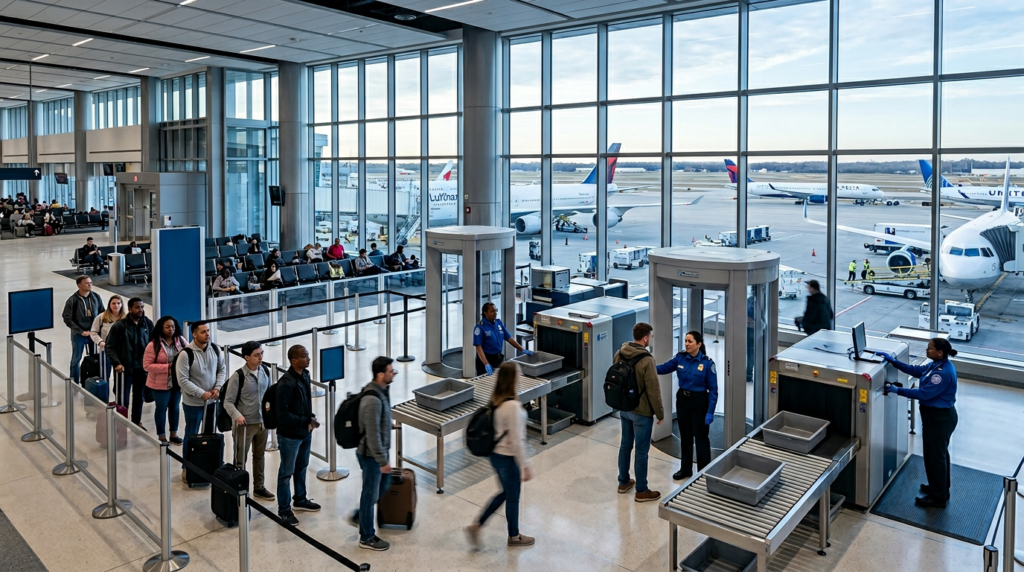
During the critical moments of the Covid-19 pandemic, border control policies and the screening of international passengers underwent intense transformations. In 2020, the United States implemented emergency measures that included the relaxation of certain screening protocols for already authorized travelers, seeking to balance the need to protect public health with the gradual return of economic activities. Although these adaptations were relevant at the time, the current scenario in 2026 is markedly different, with standardized entry protocols for all travelers.
At that time, agencies such as the Centers for Disease Control and Prevention (CDC) announced modifications that allowed, for example, American citizens, permanent residents, and holders of special visas to be exempt from some health control requirements. This relaxation was directed at passengers coming from countries with a high incidence of Covid-19, such as Brazil, China, the United Kingdom, and Iran, but without changing the decree that imposed restrictions on those who, for example, had recently stayed in certain nations. This measure, although temporary, had profound implications for both international mobility and the aviation sector.
Initial Context and Implementation
In September 2020, amid a situation of high uncertainty and health risk, the CDC announced that, from a specific date, travelers falling under the exceptions would not need to comply with certain health control prerequisites upon arriving in the United States. This decision was robust in offering a relaxation of procedures, resulting in a temporary adaptation of screening criteria for groups considered low risk. In practice, the measure allowed people who were already authorized to enter the country, such as citizens or permanent residents, to avoid more extensive bureaucratic processes.
The implementation of these changes generated intense debates among experts and the public. On one hand, the relaxation was seen as a strategy to reduce bottlenecks and resume part of the mobility affected by the pandemic. On the other hand, there were fears that the reduction of specific controls could increase the risk of contagion if the measures were not accompanied by a careful assessment of epidemiological risk. Thus, authorities faced the challenge of adjusting protocols in an environment of rapid change and incomplete information about the evolution of the virus.
Developments and Impact on Mobility
The relaxation of screening protocols had a direct impact on the aviation sector and the traveler experience. Airlines began to adopt internal measures to follow the new guidelines, which, in many cases, helped to resume passenger flow. The adaptation allowed some travelers, especially those with differentiated status, to avoid additional steps in health verification, contributing to a faster entry process.
Even so, the change did not eliminate the complexity of existing regulations, as other aspects, such as the decree restricting the entry of people who had been in certain countries for a period of 14 days, continued to apply. This coexistence of relaxed measures with strict rules clearly illustrated the difficulties of balancing health security with the need to maintain the flow of international travel in a crisis scenario.
Evolution of Post-Pandemic Protocols
With the expansion of vaccination campaigns and the improvement of epidemiological indicators, a process of reviewing entry protocols in the United States began. From 2022 onwards, the measures specifically implemented to respond to the health crisis began to be gradually replaced by more standardized and universal procedures. In 2026, the model adopted by the US is based on updated guidelines that no longer segment travelers according to origin, but assess aspects such as vaccination history and health status in a homogeneous way.
This transition reflects not only the evolution of knowledge about Covid-19, but also the ability of governments to adapt to new realities. The process of normalizing protocols allowed for improved predictability of border controls, benefiting both travelers and the authorities responsible for health security. The legacy of the emergency measures of 2020, therefore, lies in the learning about the need for rapid and flexible responses in crisis contexts.
Lessons and Reflections for the Future
The global crisis triggered by Covid-19 was decisive in highlighting the importance of quickly adapting to changes in international health conditions. The temporary measures adopted in 2020, including the relaxation of screening protocols, demonstrated that, in times of emergency, it is possible to adjust procedures to meet specific demands without fully compromising collective security.
Furthermore, the episode highlighted the relevance of maintaining transparency and constantly updating the information provided to travelers. The combination of security and international mobility began to be managed through strategies involving both government agencies and collaboration with health entities and insurers. This experience strengthened the need for public policies based on evidence and cooperation between various governmental and social spheres.
Guidelines for Travelers in 2026
Although the emergency relaxations implemented in 2020 are no longer in effect, the lessons from that period remain valuable for those wishing to travel safely. In 2026, entry protocols in the United States and other destinations have been standardized, but there are still aspects that require constant checking of official information.
To ensure a smooth and safe travel experience, travelers should follow some fundamental recommendations:
- Regularly consult the official websites of health and immigration authorities;
- Check updated guidelines with airlines;
- Ensure that all documentation, especially proof of vaccination and health tests, is complete;
- Plan the trip with enough time for adjustments in case of changes in requirements.
These guidelines aim to minimize unforeseen events and reinforce the importance of staying informed, considering that protocols may be adjusted as the global scenario evolves.
Global Perspectives and Final Reflections
The episode of screening relaxation for flights during the Covid-19 pandemic constitutes an important milestone in the history of immigration and mobility policies. In that context, the use of emergency measures was essential to face unprecedented challenges, demonstrating that government responses can and should be adjusted quickly when the situation demands it. However, the experience also highlighted the need to return to more uniform procedures as soon as the crisis passes, ensuring security without compromising the efficiency of international flow.
Currently, in 2026, the entry protocols implemented in the United States are based on lessons learned and a more standardized approach, which considers both security aspects and the facilitation of mobility. This evolution allows for better predictability, which benefits not only travelers but also the air transport sector and regulatory agencies. The legacy of the 2020 measures is, therefore, a strong reminder of the importance of agile and adaptable public policies capable of responding to dynamic challenges.
Finally, it is essential that travelers continue to seek updated information from official sources and remain alert to changes in established guidelines. The learning gained during the public health emergency period served to improve control mechanisms and provide greater security at borders, contributing to a more efficient and resilient global mobility system. Thus, the history of emergency relaxations becomes a guide for the future, where adaptation and prevention go hand in hand for public health and the free movement of people.
About the author

Victoria Harper
Editor-in-Chief
As a journalist and lead editor at Visto n’ Visa, Victoria helps ensure that immigration topics are covered in a clear, trustworthy, and easy-to-understand way. Her focus is on delivering useful, human, and relevant content for people exploring new paths abroad.