English
 Português
 Español


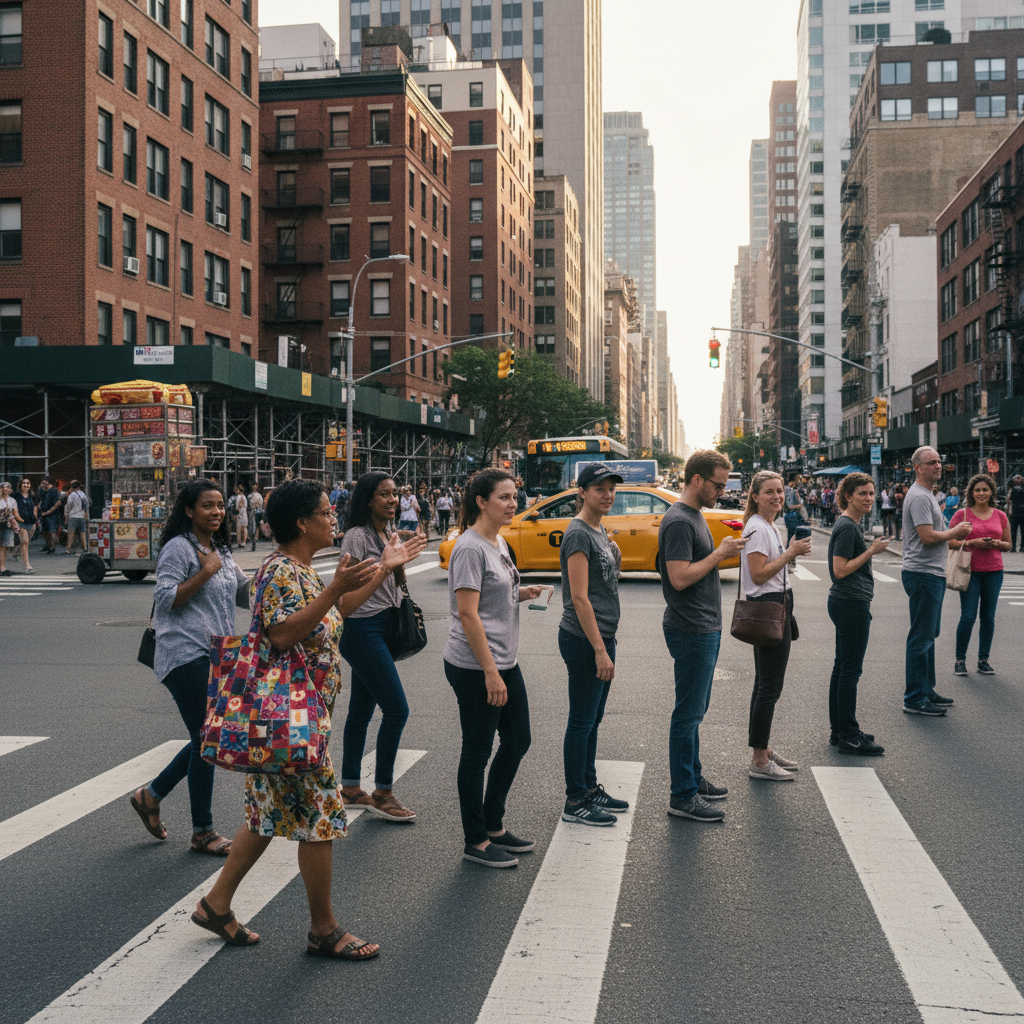
With about two million Brazilians living in the United States, the US is home to the largest Brazilian diaspora community in the world. Cities like Boston, Miami, and New York have the largest populations, but the Brazilian presence is spread across virtually every state. Despite this robust community, the process of cultural adaptation remains one of the biggest challenges for newcomers. Understanding the differences between the Brazilian and American ways of life is not just a curiosity: it is a tool for emotional and professional survival.
Culture shock affects immigrants of all backgrounds, but Brazilians face particularly stark contrasts. Research conducted with the Brazilian community in Massachusetts revealed that 35.3% of immigrants show depressive symptoms, a rate almost ten times higher than the Brazilian average. Among the associated factors are limited English proficiency, social isolation, and difficulty fitting into unfamiliar cultural norms. Preparing for these differences is the first step toward a healthier transition.
Communication and Social Interaction
The most immediate difference Brazilians notice is the communication style. In the US, communication is direct and to the point. An American coworker will say “I disagree” without beating around the bush, while a Brazilian would tend to soften the disagreement with indirect phrases. This frankness is not rudeness: it is the cultural norm. Interpreting this objectivity as hostility is one of the most common adaptation mistakes.
Small talk, superficial and brief conversation, is another important social code. Questions like “How are you?” do not require detailed answers: the expected response is a brief “Good, thanks.” Brazilians used to long, personal conversations with strangers may find this behavior odd, but mastering small talk greatly facilitates integration at work and in the neighborhood.
Physical contact is another point of contrast. In Brazil, hugs, kisses on the cheek, and touches on the arm are natural greetings. In the US, personal space is valued and physical contact is generally reserved for close relationships. A firm handshake is the standard greeting in professional contexts, and even among friends, hugging is less frequent than in Brazil.
Punctuality and Professional Life
Punctuality in the United States is not a preference: it is a requirement. Arriving five minutes late to a work meeting can damage your professional reputation in a lasting way. In job interviews, being late is practically a dealbreaker. The practical recommendation is to arrive five to ten minutes before the scheduled time for any formal appointment.
The American work environment also differs in hierarchical structure. Although respect for leadership exists, relationships tend to be more horizontal than in Brazil. Interns may participate in meetings with directors and give their opinions, something uncommon in many Brazilian companies. On the other hand, the culture of work-life balance varies greatly between sectors: while tech companies may offer flexible hours, sectors like finance and law require long hours.
Performance evaluation is frequent and based on objective metrics. Brazilians used to promotions based on length of service or personal relationships may be surprised by a system that prioritizes measurable results. Documenting your achievements and proactively communicating them to your manager is an essential skill in the American market.
Individualism and Community Life
American culture values individual autonomy much more intensely than Brazilian culture. Decisions such as career choice, housing, and lifestyle are seen as exclusively personal responsibilities. American parents encourage their children to leave home at 18, something that in Brazil happens much later, usually after college or marriage.
This emphasis on independence is reflected in social relationships. American friendships may seem more superficial to Brazilians used to intense, long-term bonds. An American neighbor may be cordial for years without ever inviting you over for dinner. This does not mean rejection: the concept of friendship and intimacy simply operates on different levels.
Family in Brazil functions as an emotional and financial safety net. In the US, although family ties exist, it is common for relatives to live in different states and see each other only on holidays like Thanksgiving and Christmas. For Brazilians, building a support network to replace constant family proximity is a practical necessity, not a luxury.
Rules, Laws, and Coexistence
Respect for rules in the United States is strict and non-negotiable. Traffic laws, codes of conduct in public spaces, condo rules, and workplace norms are strictly followed and actively enforced. The concept of “jeitinho” does not exist in American culture, and attempts to circumvent rules can result in fines, lawsuits, and even immigration problems.
Practical examples illustrate the seriousness: parking in a disabled spot without authorization results in fines that can exceed $500. Driving under the influence leads to jail time, legal costs of thousands of dollars, and a criminal record that can affect your immigration status. Noise after 10 p.m. in residential areas can result in a police call from neighbors. Brazilians need to internalize that these rules are applied consistently, regardless of who you know.
Financial Differences in Daily Life
The American financial system has particularities that catch Brazilians off guard. The credit score is a number that defines practically your entire financial life: renting an apartment, financing a car, getting a credit card, and even buying insurance. American credit bureaus do not recognize international financial history, which means that even a successful entrepreneur in Brazil starts from scratch in the US.
To build credit, the most recommended strategy in 2026 is to apply for a secured credit card, which requires a security deposit instead of a credit history. With the approval of VantageScore 4.0 by the FHFA in July 2025 for home loans, rent payments, utility bills, and phone bills now count toward your credit score, a significant change that directly benefits newly arrived immigrants. With consistent payments, it is possible to reach a score considered good (670 to 739) in 12 to 24 months.
Tipping is another striking difference. In restaurants, a tip of 18% to 20% of the total bill is not optional: it is an expected part of the server’s compensation. Bars, delivery services, hairdressers, and rideshare drivers also expect tips. In Brazil, the 10% service charge is optional; in the US, not leaving a tip is considered a serious social offense.
Taxes in the US are not included in the prices displayed on shelves. The sales tax varies by state and city, so the amount you pay at the register will be higher than the tagged price. Filing an income tax return is mandatory and more complex than in Brazil, with an annual deadline in April.
Mental Health and Culture Shock
Culture shock is not weakness: it is a documented psychological reaction that affects most immigrants. Symptoms include irritability, intense homesickness, difficulty concentrating, insomnia, and a sense of not belonging. Research with the Brazilian community in the US shows that low English proficiency and social isolation are the main risk factors for mental health problems.
Seeking professional support is a smart decision, not a sign of weakness. Many Brazilian communities in the US have psychologists and therapists who provide services in Portuguese. Community organizations in cities with a large Brazilian presence, such as Framingham (MA), Newark (NJ), and Pompano Beach (FL), offer support groups and integration events that can make a huge difference in the first few months.
Practical Adaptation Strategies
- Invest in English before you arrive: fluency is the single factor that most accelerates adaptation. Focus on conversational English and everyday vocabulary, not just formal grammar.
- Build a mixed network: maintain connections with the Brazilian community for emotional support, but make friends with Americans and immigrants from other backgrounds to broaden your cultural perspective.
- Learn the financial system early: open a bank account, apply for an ITIN if you don’t have an SSN, and start building credit in the first few months.
- Observe before judging: many American behaviors that seem cold or strange make sense within the cultural context. Give yourself time to understand before criticizing.
- Maintain your cultural identity: adaptation is not abandonment. Celebrate Brazilian holidays, cook food from home, keep in touch with family. The balance between preserving your roots and embracing the new culture is the healthiest path.
Cultural adaptation is a continuous process that can take months or years. There is no single formula, and each person finds their own pace. What the experience of millions of Brazilians in the US shows is that preparation, open-mindedness, and a willingness to learn make this journey not only viable but deeply transformative.
About the author

Victoria Harper
Editor-in-Chief
As a journalist and lead editor at Visto n’ Visa, Victoria helps ensure that immigration topics are covered in a clear, trustworthy, and easy-to-understand way. Her focus is on delivering useful, human, and relevant content for people exploring new paths abroad.