English
 Português
 Español


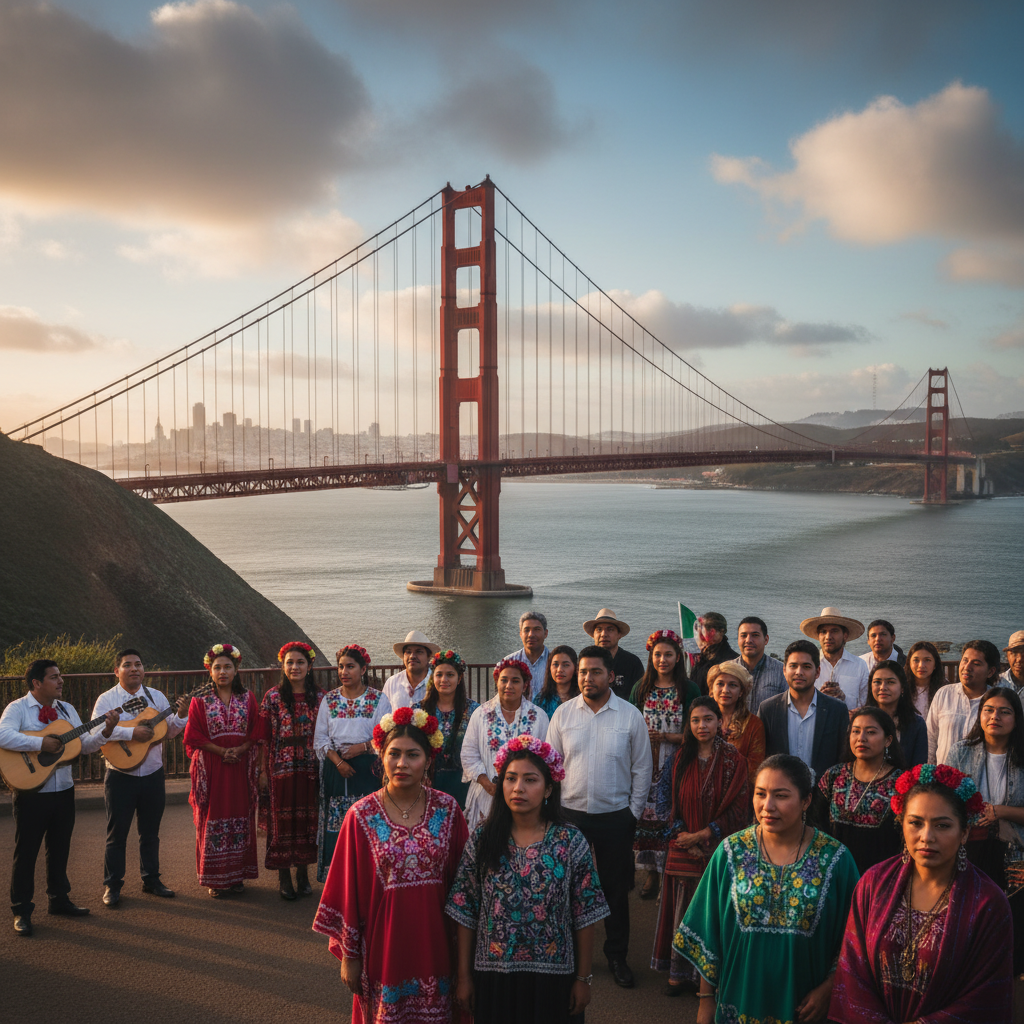
Cinco de Mayo is probably one of the most misunderstood dates on the American calendar. Amid stylized sombreros, discounted margaritas, and Mexican flags hanging in fast food chains, the historical context that turned a 19th-century battle into a central symbol of Mexican-American identity gets completely lost. For those considering life in the United States or already in the process of adapting, understanding what the date truly means helps navigate a society where cultural traditions coexist with their own commercialization.
Cinco de Mayo marks the Mexican Army’s victory over French troops at the Battle of Puebla on May 5, 1862. It has nothing to do with Mexican Independence, which occurred more than 50 years earlier, on September 16, 1810 — the true national holiday celebrated across Mexico with military and civic ceremony.
The Historical Context of the Battle of Puebla
In 1861, Mexico was going through a severe economic crisis and temporarily suspended payments on its foreign debt. France, the United Kingdom, and Spain responded by sending naval forces to Veracruz to collect on behalf of creditors. Spain and the UK agreed to negotiate and withdrew. France, under Napoleon III, took the opposite course: it used the crisis as a pretext to try to install a friendly government and extend European influence on the American continent. About six thousand French soldiers landed with the mission of conquering the country and installing Austrian Archduke Maximilian of Habsburg as Emperor of Mexico.
On May 5, 1862, in Puebla, approximately two thousand Mexican soldiers led by General Ignacio Zaragoza faced a larger, better-equipped French army — considered at the time one of the most powerful military forces in the world. The battle lasted from dawn to early evening. The result was an unexpected victory that resonated far beyond the battlefield.
Why the Victory Carried Symbolic Weight
- It showed that resistance against a European power was possible even at a numerical and technological disadvantage
- It created a sense of national pride during a period of political and economic instability
- It signaled that Mexico would not be occupied without organized resistance
- It had indirect repercussions on the U.S. Civil War by complicating efforts to forge an alliance between France and the Confederate States
France resumed its offensive the following year, occupied Mexico City in 1863, and installed Maximilian. Mexican resistance, backed by the United States after the end of the Civil War, led to the French withdrawal and Maximilian’s execution in 1867. The victory at Puebla, though tactical, became the cornerstone of a narrative of resistance.
Why the Date Is Bigger in the United States Than in Mexico
Here lies the central paradox. In Mexico, Cinco de Mayo is not a national holiday. It is officially commemorated in Puebla, with military parades and battle reenactments, and to a lesser extent in Veracruz. Outside those regions, the date is seen as a historical event worthy of classroom mention, but without the popular festivity comparable to September 16 celebrations.
In the United States, the picture is diametrically opposite. The celebration began among Mexican communities in California as early as 1863, almost in real time, as an act of cultural affirmation and a celebration of resistance to European imperialism. It gained momentum over the decades and was catapulted in the 1960s and 1970s by the Chicano Movement, when Mexican-American activists transformed the date into a symbol of the struggle for civil rights, equality, and cultural recognition.
How the Holiday Became a Commercial Phenomenon
Starting in the 1980s, beer and tequila brands and Mexican restaurant chains identified enormous commercial potential in the date. Massive advertising campaigns associated Cinco de Mayo with alcohol consumption and Mexican food, scaling the holiday to national reach and generating billions of dollars in annual sales. Today, Cinco de Mayo drives more retail beer sales in the U.S. than the Super Bowl in some categories.
This process has brought ambiguity. Mexican-American community leaders criticize the historical hollowing-out, cultural appropriation through caricatured costumes, and the use of the date as a pretext for parties that have little connection to the community that originated the celebration. At the same time, national visibility strengthens the public presence of Mexican culture and opens space for critical reflection.
What the Date Means to Different Audiences
For Mexicans living in Mexico, Cinco de Mayo carries historical weight but is rarely a reason to celebrate outside of Puebla. For Mexican immigrants in the United States, it is a date of cultural affirmation — a public reminder that the community is an essential part of the American social fabric. For second- and third-generation Mexican-Americans, it functions as a bridge to their roots, especially for young people building bicultural identities.
For non-Mexican Latinos, the date becomes a celebration of broader Hispanic identity, though this generates debates about the erasure of specific distinctions. For American society at large, it becomes an opportunity for exposure to Latino culture — with quality that varies enormously depending on the event and its organizers.
Popular Traditions Around the Country
Celebrations vary from city to city, but some elements are recurring.
Parades and Processions
Los Angeles, Chicago, San Antonio, Denver, and Houston organize parades that mobilize thousands of people, with floats, marching bands, folk dance groups like Ballet Folklórico, schools, and community organizations. In some cities, parades last for hours and connect with the programming of larger festivals.
Food Festivals
Tacos, tamales, mole poblano (a dish historically associated with Puebla), guacamole, churros, agua fresca, margaritas, and Mexican beer dominate squares and streets. Food festivals bring together local chefs, food trucks, and community stalls, often with the participation of immigrant entrepreneurs who use the date to boost their businesses.
Music and Dance
Mariachi, norteño bands, cumbia ensembles, and regional Mexican DJs perform on public stages. Performances of Jarabe Tapatío, the Dance of the Viejitos, and other folk traditions connect the celebration to Mexican cultural heritage.
Educational Activities
Museums, cultural centers, and schools offer workshops, exhibitions, and lectures on the Battle of Puebla, the history of Mexican immigration in the United States, and the role of the Latino community in shaping the country. These spaces are particularly valuable for newly arrived immigrants who want to understand the cultural context in depth.
How to Participate Respectfully
Those who arrive in the United States as immigrants find in this date an opportunity to learn and participate — provided they are careful not to fall into the traps of empty commercialization. Some practices help:
- Avoid caricatured costumes: oversized sombreros, fake mustaches, and stylized ponchos are seen by many Mexican-Americans as superficial racialization
- Prioritize spending at establishments owned by Mexican or Latin American proprietors
- Learn the historical context before celebrating — through readings, documentaries, and museums
- Support events organized by cultural and community institutions, not just bar promotions
- Distinguish Cinco de Mayo from Mexican Independence Day (September 16) in conversations with American colleagues
Key Cities for the Celebration
Los Angeles, California
For years, the city hosted Fiesta Broadway, considered one of the largest celebrations in the world, featuring shows, traditional food, craft fairs, and rides in downtown Los Angeles. Current programming includes various community events spread throughout the city.
San Antonio, Texas
Focused on authentic Mexican culture, with programming centered on Historic Market Square. Mariachi performances, folk dances, and traditional cuisine dominate the agenda.
Denver, Colorado
A two-day event at Civic Center Park draws hundreds of thousands of attendees, featuring a chili cook-off, live music, and the famous chihuahua race — a quirky tradition that has become a trademark of the local celebration.
Chicago, Illinois
Programming is concentrated in La Villita (Little Village) and Douglas Park, with a parade, cultural performances, and children’s activities, reflecting the strong Mexican presence in the neighborhood.
San Diego, California
Old Town and the Gaslamp Quarter come alive with art, music, dance, and food promotions. Located about 18 miles from the Tijuana border, the celebration has a particularly vibrant binational character.
What the Date Teaches About Integration in the U.S.
Cinco de Mayo serves as a mirror of how American society functions. It shows how a single date can carry completely different meanings inside and outside of borders, how consumer capitalism absorbs and redefines cultural symbols, and how immigrant communities resist erasure while simultaneously opening space for intercultural dialogue.
For those in the process of global mobility, this kind of critical reading of the cultural calendar is part of the adaptation process. The United States is not a single homogeneous cultural country: it is a mosaic of communities, each with its own dates, symbols, and internal tensions. Knowing how to move between these layers — celebrating with respect, consuming with awareness, and participating with curiosity — is one of the distinguishing factors between those who truly live in the United States and those who simply have an American address.
When the next Cinco de Mayo arrives, it is worth remembering that behind the margarita lies a battle from 1862, a civil rights movement from the 1960s, and millions of family stories built between two countries. That is the story worth celebrating.
About the author

Victoria Harper
Editor-in-Chief
As a journalist and lead editor at Visto n’ Visa, Victoria helps ensure that immigration topics are covered in a clear, trustworthy, and easy-to-understand way. Her focus is on delivering useful, human, and relevant content for people exploring new paths abroad.