Visto n' Visa
Blog
Notícias e artigos
Destinations
Careers
Immigrants

Want to live and work in Peterborough?

Personalized immigration plan with eligible visas, costs, and next steps for your goal!

If you are not eligible, you will know exactly why and what to do to improve your approval chances.

Save up to 12 hours in meetings

No pointless assessments.

Save up to 90%

Save money on vague or unfocused consultations

Avoid Fraud and Mistakes

One mistake can cost you your visa

Total Impartiality

Zero commercial bias

Decide with peace of mind

No toxic urgency

Fast and Accurate

Answers in minutes, no guesswork

All about Peterborough

University city beside Kawartha Lakes

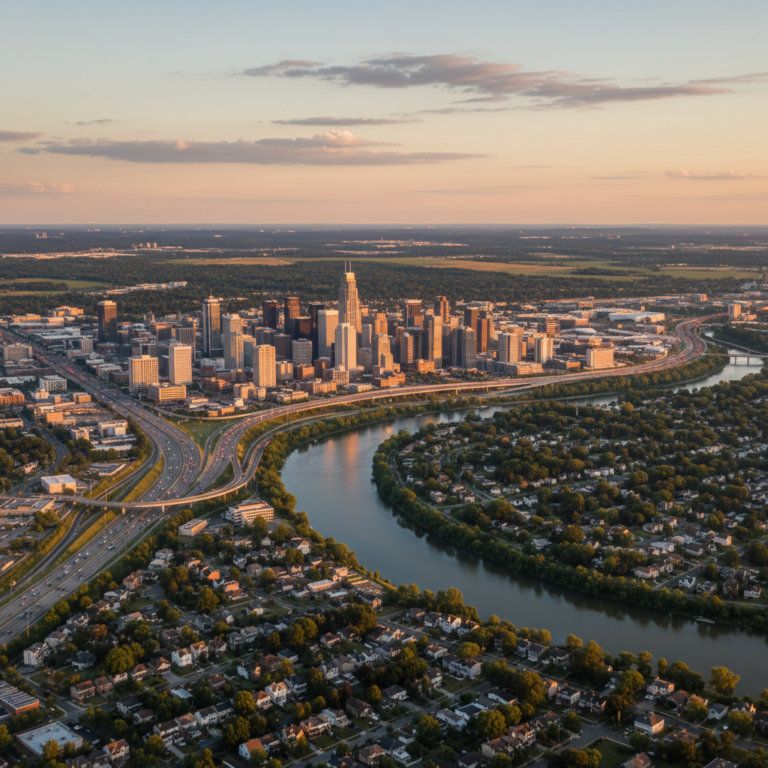
Peterborough sits about an hour and a half from Toronto, nestled between the Otonabee River and the entrance to the Trent-Severn Waterway. A mid-sized city with just over 85,000 residents, it moves at a relaxed pace, balances affordable and costly aspects of living, and carries a strong university presence thanks to Trent University and Fleming College.

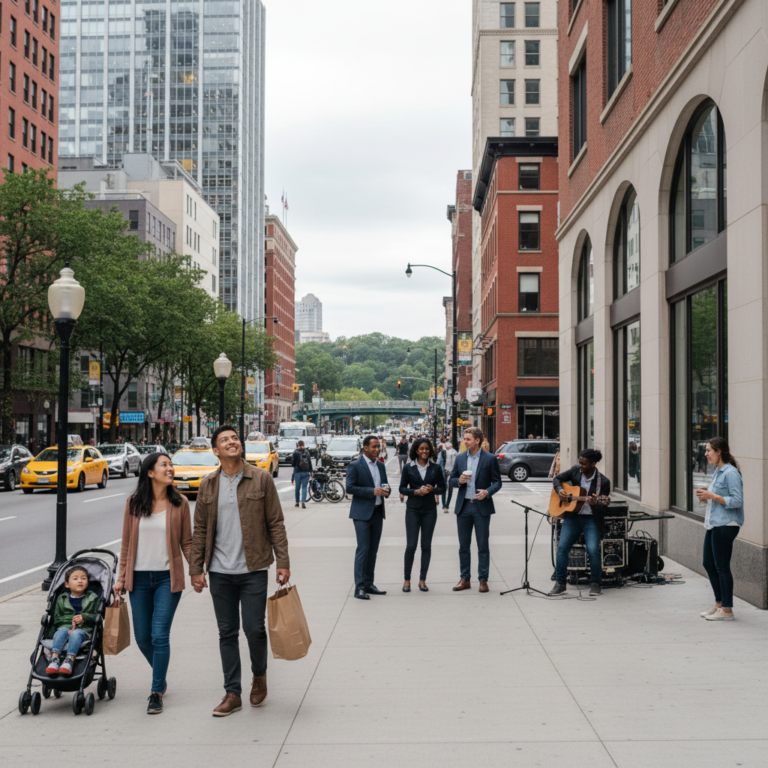
The downtown core features walkable commercial streets, low-rise brick buildings from the late nineteenth century, and a scene of cafes, brewpubs, and farmers markets that shape everyday life. Newcomers are often struck by the quiet at first, but quickly settle into a neighborhood culture where people greet each other on the street and trails and lakes are close at hand.

For those considering immigration, Peterborough offers a clear proposition: lower housing costs than the Greater Toronto Area, a job market anchored in health, education, and manufacturing, and a quality of life with nature right outside the door. The downsides are limited public transit and long, cold winters.

42.8901°, -71.9412°

Who Lives in Peterborough

A predominantly anglophone, Canadian-born population, with growing immigrant communities driven by Trent students and refugee resettlement.

Peterborough has historically been a predominantly white Anglo-Canadian city, with strong Irish and Scottish roots visible in street names and old parishes. In recent years, however, the profile has shifted: the arrival of international students and the New Canadians Centre resettlement program have brought Syrian, Eritrean, South Sudanese, Indian, Chinese, and Filipino communities.

The Indigenous community is also an essential part of the city. Curve Lake and Hiawatha First Nation are located just to the north, and Trent houses one of Canada's largest Indigenous Studies programs, which is reflected in public events, ceremonies, and the visible presence of Anishinaabe and Haudenosaunee peoples downtown.

English is the dominant language in virtually all settings. French appears in federal services and immersion schools, and in neighborhoods closest to Trent it is common to hear Mandarin, Punjabi, Arabic, Tagalog, and Tigrinya. Christianity (Catholic and Protestant) still predominates, but there is a mosque, a gurdwara, and Hindu temples in the area.

Languages spoken
  • English
  • French
  • Mandarin
  • Punjabi
  • Arabic
  • +2 more
Main religions
  • Christianity (Catholic)
  • Christianity (Protestant)
  • Islam
  • Hinduism
  • Sikhism
  • +1 more

Cost of Living: More Affordable Than Toronto, Far From Cheap

Peterborough is one of the more accessible options in southern Ontario, but rent and grocery costs have risen considerably over the past decade as residents flee the GTA.

Compared to Toronto, Hamilton, or Ottawa, Peterborough is easier on the budget, especially for housing. A one-bedroom apartment downtown costs significantly less than in the Greater Toronto Area, and houses in neighborhoods like Monaghan or East City still fit middle-class budgets. Utilities, internet, and car insurance follow the Ontario standard, which is not cheap.

Groceries add up: Loblaws, Sobeys, No Frills, and Costco (in nearby Whitby, about 45 minutes away) are the usual stops. The Peterborough Farmers' Market on Saturdays helps with fresh produce. Dining out at a downtown pub runs at mid-sized Canadian city prices, and local brewpubs like Publican House offer fair value.

The major consideration is transportation. Without a car, life becomes complicated outside the central corridor and Trent campus, and maintaining a vehicle through winter (snow tires, insurance, fuel) is a fixed expense. The provincial OHIP health plan covers the essentials, but dental and vision come out of pocket or through a private employer plan.

102Cost index (US = 100)2% above US average
CategorySingleCoupleFamily (2 + 2)
iHousing$1,334$1,648$2,120
iFood$314$628$1,139
iTransport$299$549$707
iHealthcare$62$126$220
iChildcare$1,374
iOther$424$707$942
Monthly total$2,433$3,658$6,502

Source: U.S. BLS Consumer Expenditure Survey 2023 + BEA Regional Price Parities 2023 · Estimates in USD, monthly.

Where to Live in Peterborough

A market dominated by single-family homes and some downtown towers, with rental pressure driven by students and migration from the Greater Toronto Area.

The Downtown core and the area around George Street concentrate apartments, lofts in historic buildings, and the most walkable lifestyle. East City, across the Otonabee River, is traditional and family-oriented, with good access to parks. Monaghan Ward, to the west, is a quiet residential area with well-regarded schools and slightly lower rental costs.

Trent students tend to settle in West End, near the university, and in sublets downtown. Those working at Fleming College often look for housing in neighborhoods like Talwood or Park Hill. Those seeking complete quiet and large yards can look to Lakefield (a neighboring village) and rural suburbs to the north, though a car is always required.

The rental market is tight: low vacancy, waitlists in new buildings, and a common requirement of income proof equivalent to three times the rent plus an employment letter. Newcomers without Canadian credit history almost always need a guarantor, an additional deposit, or assistance from organizations like the New Canadians Centre to connect with landlords.

Recommended neighborhoods
  • Downtown
  • East City
  • Monaghan Ward
  • West End
  • Old West End
  • +1 more

Working in Peterborough

A diversified economy for a mid-sized city, with significant weight in health, education, manufacturing, government, and tourism.

The largest employers are Peterborough Regional Health Centre, Trent University, Fleming College, and the city government. Manufacturing still has a historical presence through General Electric (with reduced operations in recent years), Ventra Plastics, and food industry players like Quaker Oats, which has operated in the city for over a hundred years.

The technology sector is small but growing, with a local hub supported by the Innovation Cluster. Construction heats up alongside housing demand, and retail at Lansdowne Place Mall and Portage Place generates service jobs. In summer, tourism in the Kawarthas and along the Trent-Severn Waterway opens seasonal positions at inns, marinas, and restaurants.

Newcomers tend to fare best with recognized credentials in health (PSW, nursing) and regulated trades (electrician, plumber, welder), along with roles in logistics and customer service. Foreign credential recognition goes through WES and provincial professional colleges. Fluent English is practically a requirement outside kitchen and cleaning work.

Dominant sectors
  • Healthcare
  • Education
  • Manufacturing
  • Municipal and Provincial Government
  • Retail and Tourism
  • +1 more
Major employers
  • Peterborough Regional Health Centre
  • Trent University
  • Fleming College
  • City of Peterborough
  • Quaker Oats
  • +2 more

Education in Peterborough

A city with a strong university presence for its size, offering public K-12 options, a community college, and a research university.

Elementary and secondary education is divided between the Kawartha Pine Ridge District School Board (public secular) and the Peterborough Victoria Northumberland and Clarington Catholic District School Board (public Catholic). There are also French-language schools through Conseil scolaire Viamonde and some private options. Schools such as Adam Scott Collegiate and Thomas A. Stewart have good local reputations.

Trent University, on the Symons Campus beside the Otonabee River, is the city's flagship institution. It is known for humanities, environmental sciences, Indigenous Studies, nanotechnology, and a tutorial model reminiscent of British universities. Fleming College, with its Sutherland Campus to the south, offers strong technical programs in health, natural resources, policing, and the arts.

For immigrants, both institutions have international offices, family support, and partnerships with English-language programs such as LINC, offered by the New Canadians Centre. Trent also houses the Trent-ESL program for academic English preparation, a common option for those arriving on study permits before applying to regular programs.

Notable universities
  • Trent University
  • Fleming College — Sutherland Campus
  • Trent-ESL

Healthcare in Peterborough

Care concentrated at Peterborough Regional Health Centre and community clinics, with OHIP covering permanent residents after a waiting period.

Peterborough Regional Health Centre (PRHC) is the regional reference hospital, with an emergency room, maternity ward, cardiology, oncology, and an intensive care unit. It serves not only the city but the entire Kawarthas, Hastings, and Northumberland region, which accounts for waits in some specialties.

Primary care is the longstanding bottleneck: there is a shortage of family doctors accepting new patients. Walk-in clinics, Health Care Connect, and teams like the Peterborough Family Health Team help address this gap. Health811 (call 811) provides 24-hour guidance from registered nurses. For minor emergencies, the Urgent Care centre keeps patients out of a crowded ER.

Permanent residents are entitled to OHIP, with a waiting period of up to three months depending on the situation, so a temporary private plan is recommended upon arrival. International students have UHIP (at Trent, through a specific plan). Mental health services are provided by organizations such as the Canadian Mental Health Association, Haliburton, Kawartha, Pine Ridge.

Safety in the City

A city considered safe by Canadian standards, with small pockets of crime linked to precarious housing and the opioid crisis downtown.

Peterborough follows the mid-sized Canadian city pattern: low violent crime, a quiet nightlife, and residential neighborhoods with few major concerns. The Peterborough Police Service patrols the city, and the Crime Severity Index has fluctuated above the provincial average in some years, driven mainly by property offenses and issues concentrated around the downtown area.

The most sensitive area is downtown at night, around George Street and Simcoe Street, where the opioid and housing crisis produces open drug use and petty theft. It is not an area prone to violence against pedestrians, but caution is warranted, especially for those walking home late. Residential neighborhoods such as Monaghan, East City, and the northern part of Park Hill are considered very safe.

Women, LGBTQ+ individuals, and recent immigrants generally report feeling comfortable in daily life, with isolated incidents of verbal racism more common in smaller surrounding communities than within the city itself. In an emergency, 911 dispatches police, fire, and ambulance services in English and French.

Safer neighborhoods
  • Monaghan Ward
  • East City
  • Park Hill
  • West End (around Trent)
  • Lakefield
Areas to avoid
  • Area around the bus terminal on Simcoe Street at night
  • Isolated stretches of George Street after 11 p.m.

Getting Around

A car-dependent city with a limited municipal bus network and road connections to Toronto, but no passenger rail service.

Peterborough Transit operates buses throughout the city, with a central terminal on Simcoe Street and routes reaching Trent and Fleming. Frequency drops considerably in the evenings and on weekends, and coverage in more distant neighborhoods is sparse. Cycling works well in summer, with bike paths along the Otonabee and the Trans Canada Trail, but winter removes most cyclists from the streets.

To reach Toronto, the main option is the GO Bus, which connects Peterborough to the Oshawa GO Train station, along with intercity buses from carriers like FlixBus. Highway 115 connects directly to the 401. No passenger rail currently operates, though there has been long-standing discussion about restoring a line to Toronto.

The local Peterborough Airport (YPQ) is small and serves general aviation, charter, and training operations. Regular commercial flights depart from Toronto Pearson (YYZ) and Billy Bishop (YTZ), about 90 minutes to two hours away by car. For immigrants, having an Ontario driver's license and a personal vehicle makes life considerably easier.

Airports
  • YPQ — Peterborough Airport (regional)
  • YYZ — Toronto Pearson International (approximately 1.5 hours by car)
  • YTZ — Billy Bishop Toronto City
  • Bike infrastructure

Culture and Daily Life

A small city with an above-average cultural scene, driven by its university, theaters, summer festivals, and proximity to Indigenous culture of the Kawarthas.

Peterborough's downtown is home to Market Hall Performing Arts Centre, Showplace Performance Centre, and The Theatre on King, sustaining a continuous calendar of theater, live music, and comedy. The Art Gallery of Peterborough and The Canadian Canoe Museum, dedicated to the history of the canoe, lend a cultural weight rare for a city of this size.

In summer, the city fills with Peterborough Musicfest, a free festival at Del Crary Park on the shores of Little Lake, featuring concerts twice a week. Peterborough Folk Festival and Pride downtown also animate the calendar. In winter, small pub events, local hockey from the Peterborough Petes (OHL), and the Festival of Lights along the waterfront keep spirits up.

On the food front, the city does not have a signature cuisine of its own, but thrives on the Canadian pub food trio: hearty poutine, chicken wings, and farmer's breakfast. Brewpubs like Publican House and Smithworks are reliable stops. The butter tart, a classic Ontario dessert, appears at any self-respecting cafe in the region.

Notable dishes
  • Butter tart
  • Poutine
  • Peameal bacon sandwich
  • Lake-fried pickerel (walleye)
  • Maple syrup with pancakes
  • +1 more
Annual events
  • Peterborough Musicfest
  • Peterborough Folk Festival
  • Peterborough Pride
  • Festival of Lights
  • Peterborough Garlic Festival
  • +1 more

What to See and Do

The city combines engineering heritage, museums unique to Canada, and direct access to the Kawarthas' lakes and trail system.

The signature landmark is the Peterborough Lift Lock, a hydraulic lock built in 1904 considered the highest of its kind in the world, part of the Trent-Severn Waterway. Watching boats being raised from the observation platform is a classic experience. The Canadian Canoe Museum, in its new location beside the canal, holds the world's largest collection of canoes and kayaks.

Downtown, the Art Gallery of Peterborough occupies a historic building beside Little Lake, next to Del Crary Park, which is ideal for picnics. Hutchison House Museum, Peterborough Museum & Archives, and the Hunter Street Café District round out the urban itinerary with history, food, and bars.

For nature enthusiasts, Jackson Park with its PCVS trail, Beavermead Park on the lakeshore, and the Petroglyphs and Kawartha Highlands provincial parks are a short drive away. In winter, the Trent Nature Areas become cross-country ski corridors, and frozen lakes are used for skating and ice fishing.

  1. 1Peterborough Lift Lock
  2. 2The Canadian Canoe Museum
  3. 3Art Gallery of Peterborough
  4. 4Peterborough Museum & Archives
  5. 5Hutchison House Museum
  6. 6Trent-Severn Waterway
Parks & green spaces
  • Jackson Park
  • Beavermead Park
  • Del Crary Park
  • Nicholls Oval Park
  • Millennium Park
  • +1 more

Immigrant Communities

A city with relatively low immigration by Ontario standards, but with a robust support network through the New Canadians Centre and growth driven by students and refugees.

Peterborough does not have the diversity of the Greater Toronto Area, but the past two decades have changed the landscape. Syrian, Eritrean, South Sudanese, and more recently Ukrainian refugees have joined established communities of Indian, Chinese, Filipino, British, and Dutch origin. International students at Trent and Fleming reinforce this diversity, especially during the academic year.

The main institutional gathering point is the New Canadians Centre Peterborough, which offers settlement services, LINC English classes, employment support, and events like the Multicultural Canada Day Festival. Churches, the mosque (Masjid Al-Salaam), and temples serve as informal networks. Facebook groups organized by nationality help locate specific markets, salons, and food.

For consular services and documents, nearly everything is handled in Toronto, where most diplomatic missions are located. Immigrants in Peterborough typically combine trips to the GTA for consular services, visas, and passport renewals, with the advantage of having the New Canadians Centre to guide them through immigration and citizenship processes locally.

11,000
Foreign-born residents
estimated
Top countries of origin
  • United Kingdom
  • India
  • China
  • Philippines
  • Syria
  • Netherlands
  • Eritrea
  • Ukraine
Foreign consulates
  • Consulates in Toronto (regional reference)
  • Consulate General of India in Toronto
  • Consulate General of China in Toronto
  • Consulate General of the Philippines in Toronto
  • British Consulate in Toronto
  • +1 more
Community organizations
  • New Canadians Centre Peterborough
  • Kawartha World Issues Centre
  • Community Race Relations Committee of Peterborough
  • Peterborough Immigration Partnership
  • YWCA Peterborough Haliburton

Latest posts

Straight from the blog

There are no posts specifically about Peterborough yet. In the meantime, check out our latest posts.