Visto n' Visa
Blog
Notícias e artigos
Destinations
Careers
Immigrants

Want to live and work in Grand Falls-Windsor?

Personalized immigration plan with eligible visas, costs, and next steps for your goal!

If you are not eligible, you will know exactly why and what to do to improve your approval chances.

Save up to 12 hours in meetings

No pointless assessments.

Save up to 90%

Save money on vague or unfocused consultations

Avoid Fraud and Mistakes

One mistake can cost you your visa

Total Impartiality

Zero commercial bias

Decide with peace of mind

No toxic urgency

Fast and Accurate

Answers in minutes, no guesswork

Who Lives in Grand Falls-Windsor: A Traditional Community Slowly Diversifying

Predominantly white, with English, Irish, and Scottish roots. Immigration remains limited, concentrated in hospital and industry workers.

The population is predominantly white, with English, Irish, and Scottish roots, reflecting the island's historical settlement patterns. Catholics, Anglicans, and United Church members are the most common denominations. The local accent is Newfoundland, lighter than what is heard in St. John's.

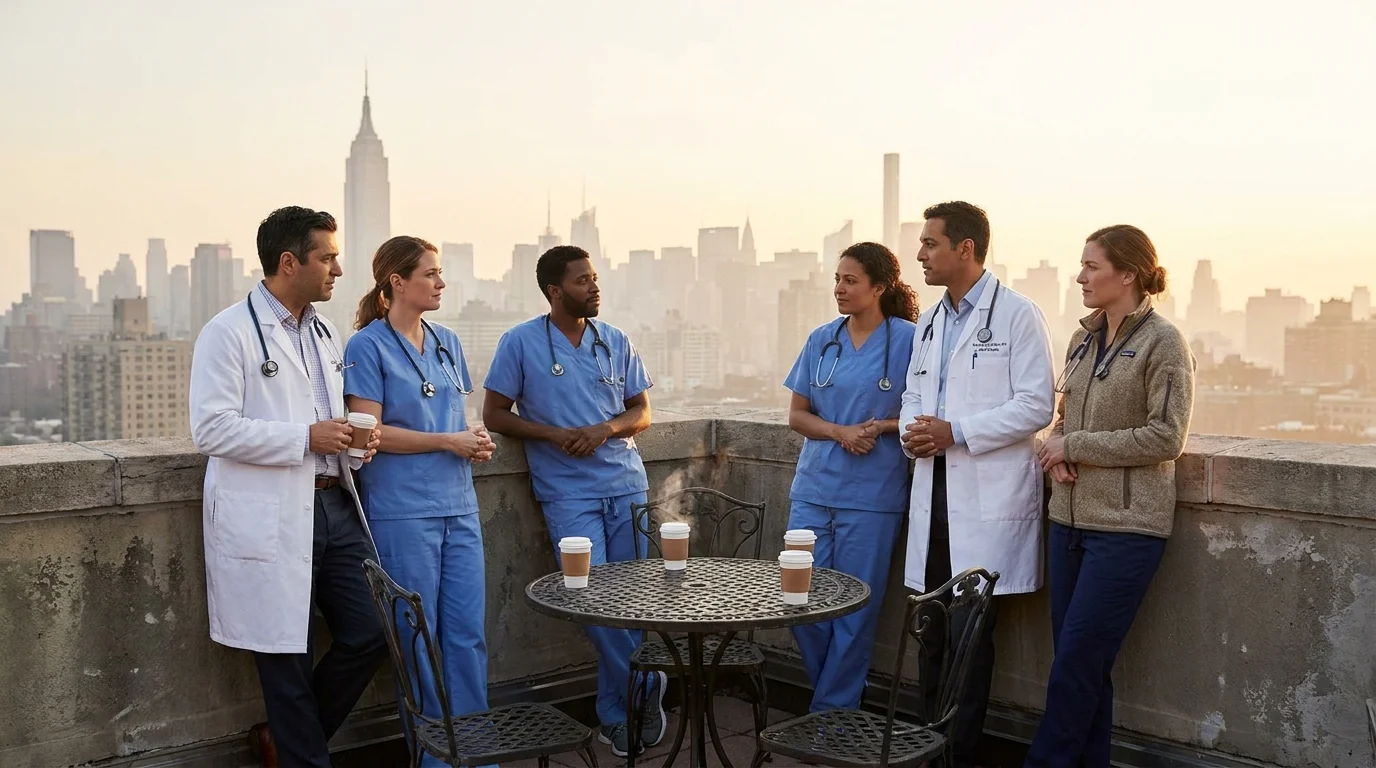
Immigration remains limited compared to the east coast. The most visible immigrants are health professionals at the Central Newfoundland Regional Hospital, particularly doctors and nurses from the Philippines, India, and African countries. The Atlantic Immigration Program has brought several families to fill vacancies in the hospital and industry.

A Brazilian community is essentially nonexistent in Grand Falls-Windsor. Brazilians on the island are almost always found in St. John's or near Memorial University. Those who move to the interior typically do so through a specific immigration program, and the support network is online.

Languages spoken
  • English (light Newfoundland accent)
  • Tagalog (Filipino health professionals)
  • Hindi and Malayalam
  • Arabic (minorities)
Main religions
  • Anglican
  • United Church of Canada
  • Roman Catholic
  • Pentecostal
  • No religion (growing)

Cost of Living in Grand Falls-Windsor: Among the Lowest in Canada

Very affordable housing, with utility costs at provincial standards. Living well on a modest income is possible.

Grand Falls-Windsor is one of the least expensive cities to live in Canada. A one-bedroom apartment rents for between CAD 800 and 1,100. A three-bedroom house for rent ranges from CAD 1,200 to 1,700. To buy, three-bedroom homes in decent neighborhoods sell for between CAD 180,000 and 300,000.

Groceries, fuel, and energy follow provincial standards, which are higher than in much of the rest of Canada. Winter heating costs are significant given the cold, prolonged climate. Electricity is provided by Newfoundland and Labrador Hydro.

Families with a combined income of CAD 65,000 live comfortably. The cost of living allows municipal workers, teachers, and technical professionals to build financial stability in ways that would be impossible in larger urban centers. Immigrants arriving through the Atlantic Immigration Program to work at the hospital find very favorable financial conditions.

Housing in Grand Falls-Windsor: Spacious Homes at Very Low Prices

Traditional homes in both former villages, with residential neighborhoods on either side. Buying is financially accessible; renting is too.

The housing stock consists of homes built from the 1950s to the 1990s, with medium lots, two stories, and backyards. Traditional neighborhoods in Grand Falls include areas near High Street and Hill Road, with homes dating from the paper mill era. In Windsor, streets such as Carmelite Road and neighborhoods close to the Exploits River feature older, charming houses.

Newer construction is found in developments such as Wedgewood and areas around the Exploits Valley Mall. Modern homes with a finished basement and double garage sell for amounts that in Toronto would cover only the down payment on a small apartment.

Rentals are plentiful and affordable. For newly arrived immigrants, securing housing is straightforward. Some homes even come partially furnished. Proof of employment and references are sufficient. To purchase, Canadian bank financing typically requires a down payment of 5% to 20%, depending on credit score.

Recommended neighborhoods
  • High Street area (Grand Falls, historic)
  • Carmelite Road (Windsor, traditional)
  • Wedgewood (newer development)
  • Cromer Avenue area (near retail)
  • Junction Heights (residential hillside)
  • +1 more

Job Market in Grand Falls-Windsor: Healthcare, Nearby Mining, Regional Retail

The regional hospital is the largest employer. Forestry and mining in the region still provide employment. Retail serves the island's interior.

The Central Newfoundland Regional Hospital, under Central Health, is the city's largest employer. It serves the entire central region and part of the north of the island. Doctors, nurses, technicians, and administrative staff make up the largest professional contingent. Vacancies for foreign health professionals are frequently available through the Atlantic Immigration Program.

The forestry industry, formerly represented by the AbitibiBowater paper mill, lost significance after the plant closed in 2009. Today, smaller activities in wood and forest products continue, but on a reduced scale. The region has gold mining and mineral exploration operations that employ part of the population.

Retail, construction, schools, and municipal services round out the picture. Small and medium local businesses account for a significant share of employment. Remote work expanded during the pandemic: skilled professionals are beginning to relocate to the region for its low cost of living while keeping jobs with companies from other provinces.

Dominant sectors
  • Healthcare and hospital services
  • Regional retail
  • Mining (in the region)
  • Forestry and lumber
  • Primary and secondary education
  • +1 more
Major employers
  • Central Newfoundland Regional Hospital (Central Health)
  • Marathon Gold (regional mining)
  • Government of Newfoundland and Labrador (regional offices)
  • Sobeys, Dominion, and Walmart
  • College of the North Atlantic (Grand Falls-Windsor campus)

Education in Grand Falls-Windsor: Public Schools and a Technical College

The public system covers all levels. The College of the North Atlantic has a local campus. University is available only in Corner Brook or St. John's.

The Newfoundland and Labrador English School District public system serves the city with elementary, intermediate, and high school options. Exploits Valley High and Exploits Valley Intermediate are the main institutions. Schools are mid-sized relative to the city's population, and teachers often know families personally.

The College of the North Atlantic has a campus in Grand Falls-Windsor, offering technical programs in areas such as nursing, mechanics, information technology, and business administration. It is a popular option for those seeking professional training without leaving the city.

For university degrees, students must go to Corner Brook (Grenfell Campus) or St. John's (Memorial University). Most local youth who pursue university degrees move to one of those two cities. Immigrant families have free access to the public school system.

Notable universities
  • College of the North Atlantic (Grand Falls-Windsor campus)

Healthcare in Grand Falls-Windsor: A Major Regional Hospital and Interior Reference Center

The Central Newfoundland Regional Hospital is the main medical center for the island's interior. Coverage under the provincial MCP after residency.

The Central Newfoundland Regional Hospital is one of the province's main hospitals, serving the entire central region. It has an emergency department, maternity ward, general surgery, oncology, and specialized outpatient clinics. Patients from Gander, Lewisporte, Botwood, and dozens of smaller communities come to Grand Falls-Windsor for treatment.

Provincial residents are entitled to the Medical Care Plan (MCP) after three months. Finding a family doctor is a common challenge, but the hospital has an active international recruitment program, which opens positions through the Atlantic Immigration Program. Foreign health professionals arrive in the city regularly.

Highly specialized cases, such as transplants or complex neurosurgery, are referred to St. John's. For everyday health needs, the local hospital handles them. Supplemental employer-provided insurance for dental and optical care is standard. For immigrants during the MCP waiting period, temporary private insurance is advisable.

Healthcare index64.0 / 100
  • Life expectancyyears at birth
    81.6yrs
  • Doctors per 1kpracticing physicians
    2.8
  • Health spendper capita, per year
    $6,187
  • Public systemoverall quality rating
    Good

Safety in Grand Falls-Windsor: A Peaceful Interior City

A quiet city with a low crime rate. A close-knit community where neighbors know each other, and serious incidents are rare.

Grand Falls-Windsor has the profile of a quiet small town. Violent crimes are rare, and when they occur they generally involve acquaintances. Police reports typically list minor thefts, vandalism at schools and parks, and occasional weekend disturbances as the main incidents.

Policing is carried out by the Royal Newfoundland Constabulary. Residential neighborhoods are extremely safe. Children ride bikes in the street, neighbors look out for one another, and the sense of community is strong. Nightlife is limited, so the typical nighttime risks associated with larger cities are virtually nonexistent.

The greatest real risk is winter: heavy snowstorms, ice on roads and sidewalks. The Trans-Canada Highway can be dangerous in poor conditions. Winter tires are effectively mandatory. Falls on icy sidewalks are a common reason for emergency room visits.

2.0
Homicides per 100k
per year
Safety index
70.0
Crime index
30.0
Safer neighborhoods
  • Cromer Avenue area
  • Lincoln Road
  • High Street (Windsor)
  • Junction Heights
  • Bayview
Areas to avoid
  • Areas around the former decommissioned paper mill
  • Isolated stretches of the Trans-Canada Highway at night

Transportation in Grand Falls-Windsor: Car Essential, Trans-Canada Highway Nearby

No consistent public transit. The Trans-Canada Highway runs near the city, connecting to St. John's, Corner Brook, and the ferry. Regional airport in Gander.

There is no urban bus system. A car is required for daily life in the city. The Trans-Canada Highway runs along the southern edge of Grand Falls-Windsor, providing quick access to the rest of the island. St. John's is approximately four hours by car; Corner Brook is three and a half hours.

The regional airport is in Gander, 45 minutes away by car via the Trans-Canada. It offers flights to Halifax, Toronto, St. John's, and some seasonal connections. International flights require a connection. Deer Lake (YDF) is an alternative, two hours by car.

In winter, driving between cities requires extra caution. Winter tires are effectively mandatory. Heavy snowstorms can close the Trans-Canada for hours. Those working in mining or industry in other parts of the province often make frequent road trips, and the routine includes monitoring weather forecasts.

10 min
Avg commute
40
Walkability
Airports
  • YQX — Gander International Airport (approximately 100 km away)

What the Climate Is Like Living in Grand Falls-Windsor

An inland town in central Newfoundland. The climate is humid continental, with warmer summers than the coast, long winters, and heavy snowfall.

Summers are warmer than in St. John's due to the inland location away from the moderating influence of the ocean. From June through August, highs typically range between 22 and 25 degrees Celsius, with overnight lows around 11 degrees. The town is surrounded by boreal forest and the Exploits River, making it well suited for canoeing, hiking, and salmon fishing.

Winters are severe. From December through March, lows commonly fall between 12 and 18 degrees below zero Celsius. Without the buffering effect of the sea, the area experiences colder temperatures than the coast, though also more sunshine. Homes are equipped with central oil or wood heating, and strong thermal insulation is standard.

Annual precipitation is approximately 1,100 millimeters, split between summer rain and winter snow. Total seasonal snowfall can reach nearly four meters. Cross-country skiing and snowmobiling are common winter activities for residents. Layered clothing, a heavy parka, and insulated boots are essential throughout the winter months.

Sunny days / year170 days
Avg high (°F)
  • 41°J
  • 38°F
  • 49°M
  • 58°A
  • 72°M
  • 81°J
  • 82°J
  • 82°A
  • 77°S
  • 66°O
  • 58°N
  • 49°D
Avg low (°F)
  • -1°J
  • -8°F
  • M
  • 18°A
  • 26°M
  • 33°J
  • 43°J
  • 44°A
  • 35°S
  • 26°O
  • 14°N
  • D
Rainfall (")
  • 3"J
  • 3"F
  • 2"M
  • 3"A
  • 3"M
  • 3"J
  • 3"J
  • 3"A
  • 4"S
  • 3"O
  • 4"N
  • 3"D

Culture in Grand Falls-Windsor: Salmon Festival, Hockey, and Community Life

The Exploits Salmon Festival and activities along the river define summer. In winter, hockey and curling. Newfoundland identity intact and visible in local festivities and dinners.

The Exploits River is the cultural axis of the city. The Salmon Festival, held in July, is one of the largest music festivals in Atlantic Canada, attracting national bands and tens of thousands of visitors. Atlantic salmon fishing on the river is a local tradition, regulated by the province.

In winter, youth and adult hockey keeps arenas such as Joe Byrne Memorial Stadium busy. Curling has an active club. Hiking the trails at Mary March Provincial Park Museum and along the Exploits River is common summer recreation.

Newfoundland culture appears in Jiggs' dinner gatherings, church socials, music sessions with fiddle and accordion, and in the everyday accent. The Salmon Festival brings an intense cultural scene for one week each year. The rest of the time, cultural life is more domestic. For major concerts and theater, everyone heads to St. John's.

2
Major museums
Notable dishes
  • Fish and brewis
  • Jiggs' dinner
  • Toutons
  • Moose burgers
  • Salt fish cakes
  • +2 more
Annual events
  • Exploits Salmon Festival
  • Beothuk Festival
  • Mid-Winter Bivver
  • Grand Falls-Windsor Winter Carnival
  • Central Newfoundland Folk Festival
  • +1 more

What to See and Do While Living in Grand Falls-Windsor

Grand Falls-Windsor is a mid-sized town in central Newfoundland, with a cultural life tied to the Exploits River, a heritage rooted in the paper industry, and traditional music festivals.

The Salmonid Interpretation Centre is the local landmark. Situated on the banks of the Exploits River, it features underwater viewing windows where Atlantic salmon can be observed ascending the rapids in summer. The Mary March Provincial Museum tells the story of the Beothuk people and British colonization of central Newfoundland.

Everyday leisure revolves around Joe Byrne Memorial Stadium for junior hockey, the Gordon Pinsent Centre for the Arts for theatre, and the Exploits Valley Salmon Festival in July, featuring traditional Newfoundland folk music performances. The Royal Canadian Legion and Exploits Valley Mall serve as gathering points for bingo nights, community events, and shopping.

For outdoor activities, Beothuk Park and Notre Dame Provincial Park are popular destinations for canoeing and camping in summer. The area also serves as a base for visits to Terra Nova National Park, roughly two hours by car, or Twillingate, a well-known iceberg-viewing destination from May through June.

  1. 1["Mary March Provincial Museum"
  2. 2"Exploits River Salmon Interpretation Centre"
  3. 3"Loggers' Life Provincial Museum"
  4. 4"Beothuk Trail"
  5. 5"Centennial Field"
  6. 6"Salmonid Interpretation Centre"
Nightlife3.0 / 10
Parks & green spaces
  • ["Centennial Field"
  • "Exploits River walking trail"
  • "Corduroy Brook Nature Trail"
  • "Beothuk Park"
  • "Sir Robert Bond Park (regional)"]

Latest posts

Straight from the blog

There are no posts specifically about Grand Falls-Windsor yet. In the meantime, check out our latest posts.