Visto n' Visa
Blog
Notícias e artigos
Destinations
Careers
Immigrants

Want to live and work in Colorado?

Personalized immigration plan with eligible visas, costs, and next steps for your goal!

If you are not eligible, you will know exactly why and what to do to improve your approval chances.

Save up to 12 hours in meetings

No pointless assessments.

Save up to 90%

Save money on vague or unfocused consultations

Avoid Fraud and Mistakes

One mistake can cost you your visa

Total Impartiality

Zero commercial bias

Decide with peace of mind

No toxic urgency

Fast and Accurate

Answers in minutes, no guesswork

Inside Colorado

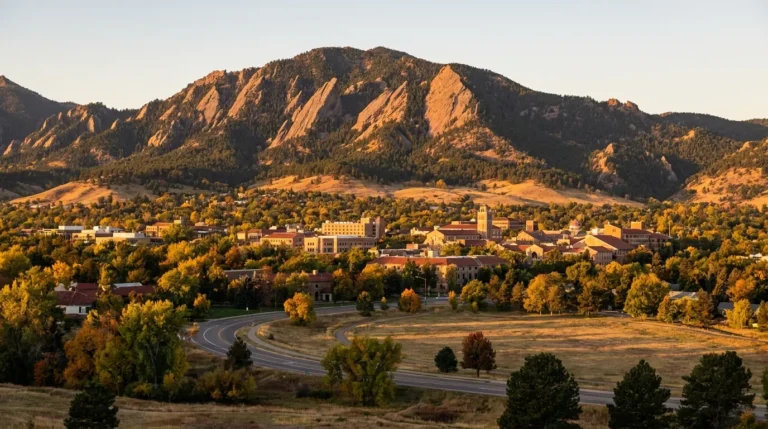
Mountains, skiing, clean air, and an active life. Modern cities and grand nature.

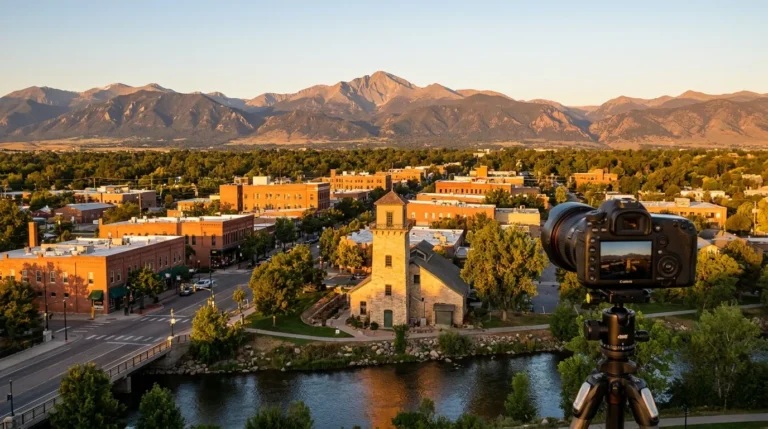
Colorado is located in the western US, in the heart of the Rocky Mountains. The main cities are Denver (the largest, the capital), Colorado Springs (the second city, with a strong military presence), Aurora (a Denver suburb), Boulder (a college town), Fort Collins, and Pueblo. Mountain towns like Aspen, Vail, Telluride, and Breckenridge are world-famous for skiing.

It is a state with a high quality of life, clean air, sunshine year-round (more than 300 days per year), and proximity to nature. Hiking, skiing, snowboarding, mountain biking, trout fishing, and camping are part of the routine. Denver, at 1,600 meters elevation (the mile-high city), is a modern city with craft breweries, award-winning restaurants, and an active cultural scene.

For immigrants, Colorado attracts with its lifestyle, jobs in technology, aerospace, healthcare, energy, and legal cannabis. The Hispanic community is large (about 22%), with strong Mexican heritage. Brazilians are few, concentrated in Denver and Boulder. The cost of living has risen significantly in Denver and Boulder, making Colorado Springs and Fort Collins more affordable alternatives.

Population
5,839,926
Average monthly salary
67,500 USD/mo
39.0598°, -105.3111°

Featured places

Top 10 places in Colorado

The places most sought-after by immigrants in this region.

Colorado's demographics: white majority, strong Hispanic presence

About 68% white, 22% Hispanic, with Native American, Asian, and African American communities. The state attracts people from across the US.

Colorado is a state of migrants. Most of the white population came from other American states in recent decades, especially from California, Texas, and the Northeast. The Hispanic presence is historical: the southern part of the state (Pueblo, Trinidad, San Luis Valley) has Mexican and Hispanic families that have lived there for generations, since before Colorado was part of the US.

In Denver, there are established Hispanic neighborhoods (Westwood, Globeville, Federal Boulevard) with restaurants, markets, and Mexican festivals. The Native American community is small but present, with the Ute Mountain Ute and Southern Ute reservations in the southwest. Refugees from various origins (Ethiopians, Vietnamese, Somalis, Afghans) have settled in Aurora.

Asians are growing fast in Boulder, Fort Collins, and Denver, especially Indians and Chinese linked to technology and universities. Brazilians have a small presence in Denver and Boulder. There is a German, Dutch, and Scandinavian community in smaller cities in the north. The most commonly heard languages after English are Spanish, Mandarin, and Vietnamese.

5,839,926
Population
37 yrs
Median age
22/km²
Density
$87,600
Median income
per year
Urban population86.0%
Foreign-born10.0%
Languages spoken
  • English
  • Spanish
  • Mandarin and Cantonese
  • Vietnamese
  • Hindi
  • +2 more
Main religions
  • Christian (Catholic, evangelical, Mormon)
  • No religion (high proportion)
  • Mormon (LDS)
  • Buddhist and Hindu (growing)
  • Catholic (among Hispanics)

Cost of living in Colorado: Denver and Boulder are expensive, smaller cities more affordable

Denver has risen sharply over the past 10 years. Boulder is among the most expensive inland US cities. Colorado Springs and Pueblo remain accessible.

In Denver, a one-bedroom apartment rents for between US$1,700 and US$2,200 per month. Boulder is more expensive (US$2,000 to US$2,800), with limited supply. In Colorado Springs, US$1,200 to US$1,600. Fort Collins is around US$1,400 to US$1,800. Pueblo is one of the cheaper options (US$900 to US$1,200).

Supermarkets King Soopers, Safeway, Whole Foods, Costco, and Sprouts compete. A meal at a casual restaurant costs US$14 to US$22. Craft breweries are everywhere, especially in Denver and Fort Collins. Gasoline is slightly above the national average.

The state income tax is a flat 4.4%. Sales tax varies by municipality (in Denver, with local additions, it reaches 8.81%). The big financial issue is housing: buying a home in Denver and Boulder has become difficult for median-income families. Salaries need to be between US$90,000 and US$130,000 for a family to live well in the metro area.

102Cost index (US = 100)2% above US average
CategorySingleCoupleFamily (2 + 2)
iHousing$1,331$1,536$1,946
iFood$389$778$1,413
iTransport$512$870$1,126
iHealthcare$287$573$1,075
iChildcare$1,864
iOther$870$1,567$2,202
Monthly total$3,389$5,324$9,626

Source: U.S. BLS Consumer Expenditure Survey 2023 + BEA Regional Price Parities 2023 · Estimates in USD, monthly.

Housing in Colorado: hot market in big cities, options in smaller towns

Homes in Denver and Boulder are expensive. Suburbs like Highlands Ranch and Castle Rock offer options. Cities like Colorado Springs and Fort Collins are alternatives.

In Denver, homes in good neighborhoods (Highlands, Wash Park, Cherry Creek, Stapleton/Central Park) sell for US$600,000 to US$1.5 million. More affordable neighborhoods (Park Hill, Sloan's Lake, Berkeley) range from US$500,000 to US$800,000. Boulder averages above US$1 million, with limited supply.

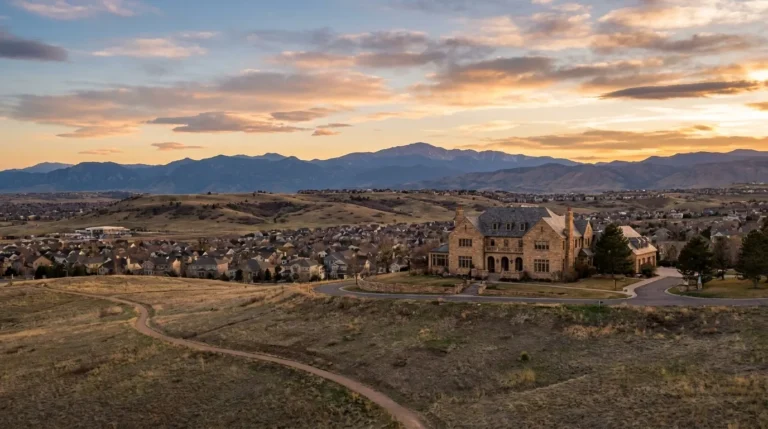
Suburbs like Highlands Ranch, Castle Rock, Lone Tree, Centennial, and Parker offer family homes of 3-4 bedrooms for US$600,000 to US$900,000. In Colorado Springs and Fort Collins, homes in good neighborhoods go for US$450,000 to US$700,000. Pueblo is the cheapest option, with homes from US$250,000 to US$400,000.

To rent, standard requirements apply: proof of income (3x the rent), credit history, references. In Denver and Boulder, competition is strong. Those arriving without an American credit score often pay 2-3 months upfront or need a cosigner. Recommended neighborhoods in Denver: Cherry Creek, Wash Park, Stapleton/Central Park, Highlands. In Colorado Springs: Briargate, Old Colorado City, Northgate. In Fort Collins: Old Town, Fort Collins Country Club.

Purchase price (m²)
  • Center$5,200/m²
  • Outside$3,400/m²
6.5×
Price-to-income
7.0%
Mortgage rate (20y)
Recommended neighborhoods
  • Cherry Creek (Denver)
  • Wash Park (Denver)
  • Stapleton/Central Park (Denver, families)
  • Highlands Ranch (Denver suburbs)
  • Castle Rock (between Denver and Colorado Springs)
  • +4 more

Job market in Colorado: technology, aerospace, energy, healthcare, and cannabis

Denver and Boulder are technology hubs. Aerospace in Colorado Springs and Denver. Legal cannabis created a new industry. Healthcare and energy also strong.

Colorado has a diversified economy. Technology is strong in Denver and Boulder, with Google, Amazon, Apple, IBM, Oracle, Twilio, and hundreds of startups. Boulder in particular has a vibrant ecosystem of software, hardware, biotech, and clean tech. Average software engineering salaries range from US$110,000 to US$160,000 per year.

The aerospace sector is traditional, especially in Colorado Springs (home of NORAD, Space Force, Air Force Academy) and Denver (Lockheed Martin Space, Sierra Nevada, Maxar). Energy has a strong presence (oil, gas, wind, solar), with Halliburton, ConocoPhillips, and various renewable energy companies headquartered in Denver.

Legal cannabis (recreational since 2014) created a billion-dollar industry, with cultivation, dispensaries, and related companies. Healthcare generates jobs through UCHealth, Kaiser Permanente, Children's Hospital Colorado, and Anschutz Medical Campus. Mountain tourism (skiing, climbing, outdoor sports) employs many in winter. Agriculture and cattle ranching in the eastern part of the state.

$67,500
Avg net salary
per month
$30,326
Minimum wage
per month
3.7%
Unemployment
67.7%
Labor force
Dominant sectors
  • Technology and software
  • Aerospace and defense
  • Energy (oil, gas, renewables)
  • Healthcare
  • Tourism and skiing
  • +3 more
Major employers
  • Lockheed Martin Space (Denver)
  • Sierra Nevada Corporation
  • United Launch Alliance (Centennial)
  • Maxar Technologies
  • UCHealth
  • +5 more

Education in Colorado: strong suburban schools, recognized public universities

Boulder, Highlands Ranch, and Fort Collins have top schools. CU Boulder, Colorado School of Mines, and CSU are the main public institutions.

Children have the right to free public school. Districts like Cherry Creek (Denver), Douglas County (Highlands Ranch, Castle Rock), Boulder Valley, Poudre (Fort Collins), and Academy 20 (Colorado Springs) have well-rated schools. In older urban areas and small interior towns, schools vary more.

The University of Colorado Boulder (CU Boulder) is the leading public institution, strong in earth and atmospheric sciences, aerospace, journalism, and business. Colorado School of Mines in Golden is a reference in mining engineering, geophysics, and energy. Colorado State University (CSU) in Fort Collins is strong in agriculture, veterinary science, and biotechnology.

The University of Denver (private) has respected programs in law (Sturm College of Law) and business. The United States Air Force Academy in Colorado Springs trains Air Force and Space Force officers. Tuition at public universities for in-state residents is around US$12,000 to US$14,000 per year. Out-of-state students pay more than triple.

Literacy98.0%
Tertiary education43.2%
478
PISA score (avg)
$13,200
Private school
per year
Notable universities
  • University of Colorado Boulder
  • Colorado School of Mines (Golden)
  • Colorado State University (Fort Collins)
  • University of Denver (private)
  • United States Air Force Academy (Colorado Springs)
  • University of Colorado Denver
  • Anschutz Medical Campus (Aurora)
  • Naropa University (Boulder, alternative)

Healthcare in Colorado: quality hospitals, with altitude and an active lifestyle

UCHealth, Centura Health, and Kaiser Permanente dominate. Boulder and Denver have top hospitals. The outdoor lifestyle brings accidents and altitude requires adaptation.

Colorado has good hospitals. UCHealth (University of Colorado network) has University of Colorado Hospital and Children's Hospital Colorado at Anschutz Medical Campus in Aurora, a regional reference in transplants, oncology, and pediatrics. Centura Health and Kaiser Permanente operate large networks in Denver, Boulder, Colorado Springs, and Fort Collins.

As in all of the US, there is no universal public system. Employer-based insurance is the standard. Colorado expanded Medicaid under the ACA, so low-income families have coverage. The state also created the Colorado Option, a more affordable regulated plan, sold on the state health exchange.

Altitude is a unique factor: Denver sits at 1,600 meters, and mountain towns can exceed 2,500 meters. New arrivals may feel shortness of breath, headaches, and fatigue in the first days. Popular outdoor activities cause accidents (skiing, mountain biking, climbing), and insurance with sports coverage is recommended. Without a plan, a visit to the emergency room can exceed US$2,000.

Healthcare index75.0 / 100
  • Life expectancyyears at birth
    79.6yrs
  • Doctors per 1kpracticing physicians
    2.9
  • Health spendper capita, per year
    $8,700
  • Public systemoverall quality rating
    Good

Safety in Colorado: most neighborhoods peaceful, some growing urban concerns

Suburbs and mountain towns are very safe. Denver and Aurora have areas with increasing theft and drug issues. Boulder and Fort Collins are quite peaceful.

Colorado generally has good safety statistics, but recent years have seen an increase in property crime in Denver and Aurora. Neighborhoods like Highlands Ranch, Castle Rock, Cherry Creek, Stapleton, Cherry Hills Village, and Greenwood Village are very safe. Boulder, Fort Collins, and Louisville also appear in safety rankings.

In Denver, areas like Five Points, Westwood, Federal Boulevard, and East Colfax have higher rates of theft, assault, and drug trafficking. Aurora has problems in some areas, though neighborhoods like Saddle Rock and Tollgate are safe. Car theft has spiked across the state in recent years, especially for Kia and Hyundai models with known vulnerabilities.

For immigrants, the general rule applies: live in recommended neighborhoods, check public school ratings. In the mountains, risks are natural: avalanches, hypothermia, wildlife (black bear, elk). Sports accidents are frequent in skiing, climbing, and hiking. Layering clothing and following local guidelines is essential.

5.4
Homicides per 100k
per year
Safety index
48.0
Crime index
52.0
Safer neighborhoods
  • Highlands Ranch (Denver suburbs)
  • Castle Rock
  • Cherry Hills Village (Denver)
  • Greenwood Village
  • Louisville (Boulder County)
  • Lone Tree
  • Boulder
  • Fort Collins
  • Erie
  • Centennial
Areas to avoid
  • Denver downtown at night (5 Points)
  • North Aurora
  • South Pueblo
  • Southeast Colorado Springs

Transportation in Colorado: Denver has the best public transit in the state

Denver has light rail (RTD) and buses. The rest of the state depends on cars. DEN is one of the largest airports in the world by area.

Denver has the best public transit in the state: RTD Light Rail connecting the center to the airport, suburbs, and Boulder (Flatiron Flyer), plus buses. It is possible to live in neighborhoods like Five Points, Capitol Hill, or Stapleton without a car. In Boulder, bike lanes are excellent and cycling is viable for most trips.

In the rest of the state, a car is essential. Colorado Springs, Fort Collins, Pueblo, and mountain towns all depend on cars. The main highways are I-25 (north-south, connecting Fort Collins, Denver, Colorado Springs, Pueblo) and I-70 (east-west, crossing the mountains to ski resorts). Traffic on I-70 on winter and summer weekends can be very bad.

Denver International Airport (DEN) is one of the world's largest airports by area and one of the busiest in the US. A hub for United Airlines and Frontier, it offers direct flights to Europe, Latin America, Japan, and dozens of US cities. Colorado Springs (COS), Aspen (ASE), Eagle (EGE), and Grand Junction (GJT) serve regional and tourist flights.

11
Metro lines
53
Metro stations
26 min
Avg commute
44
Walkability
Airports
  • DEN (Denver International)
  • COS (Colorado Springs)
  • ASE (Aspen-Pitkin)
  • EGE (Eagle County, near Vail)
  • GJT (Grand Junction)
  • +1 more
  • International airport
  • Bike infrastructure

Colorado's climate: semi-arid, sunshine year-round, and snow in the mountains

More than 300 sunny days per year. Hot, dry summers. Cold winters with significant mountain snow. Large temperature swings in a single day.

Colorado has a semi-arid climate (Koppen BSk at lower elevations and Dfb at higher altitudes). Denver has more than 300 sunny days per year. Summer is hot and dry, with highs around 30-33°C and frequent afternoon thunderstorms. Winter is cold, with January lows between -7°C and -10°C, but the sun is strong and days can reach 10°C.

In the mountains, the climate is completely different. Towns like Aspen, Vail, Breckenridge, and Steamboat Springs have long, snowy winters, with ski seasons running from November to April (or May at high elevations). Accumulated snowfall can exceed 8-10 meters per season. Mountain summers are cool and pleasant, with afternoon storms.

The temperature swing in a single day can be dramatic. In Denver, you can wake to 0°C, reach 18°C in the afternoon, and have snow at night. There are unique weather conditions like the Chinook wind, which can raise temperatures by 20°C in a few hours. The air is dry, so skin and breathing need adjustment. Wildfires occur in summer, especially in dry years.

Sunny days / year245 days
Avg high (°F)
  • 47°J
  • 47°F
  • 56°M
  • 62°A
  • 72°M
  • 84°J
  • 90°J
  • 88°A
  • 80°S
  • 67°O
  • 55°N
  • 46°D
Avg low (°F)
  • 18°J
  • 19°F
  • 27°M
  • 34°A
  • 43°M
  • 53°J
  • 59°J
  • 57°A
  • 48°S
  • 36°O
  • 26°N
  • 18°D
Rainfall (")
  • 0"J
  • 1"F
  • 1"M
  • 2"A
  • 2"M
  • 2"J
  • 2"J
  • 2"A
  • 2"S
  • 1"O
  • 1"N
  • 0"D

Colorado's culture: outdoor sports, craft beer, cannabis, and a blend of tradition and modernity

An active, outdoor lifestyle defines the state. Beer, cannabis, and technology shape the modern image. Hispanic and cowboy culture persist in the south and east.

Colorado culture revolves around the outdoors. Skiing, hiking, climbing, mountain biking, fishing, and camping are part of the identity. Aspen, Vail, Telluride, Breckenridge, and Crested Butte attract skiers from around the world. Rocky Mountain National Park, Mesa Verde, and Great Sand Dunes are popular destinations.

Denver and Boulder have a cosmopolitan scene. Craft breweries (Colorado has hundreds), award-winning restaurants, legal cannabis dispensaries, music festivals, and art define urban life. Red Rocks Amphitheatre, a natural outdoor venue near Denver, is one of the world's most famous stages. Cities like Boulder have a strong alternative culture, with yoga, meditation, and vegetarianism.

In the south and east, there is a Hispanic and cowboy tradition. Pueblo, Trinidad, and the San Luis Valley maintain Mexican culture and festivals. Rodeos, cattle fairs, and country music festivals mark the rural calendar. The Denver Broncos (NFL), Denver Nuggets (NBA), Colorado Avalanche (NHL), and Colorado Rockies (MLB) drive sports life. The Air Force Academy in Colorado Springs also has a strong military cultural presence.

220
Major museums
Notable dishes
  • Green chile (Colorado style)
  • Bison burger
  • Rocky Mountain oysters
  • Denver omelet (with ham, bell pepper, and onion)
  • Palisade peaches (from western Colorado)
  • +3 more
Annual events
  • Aspen Music Festival (June to August)
  • Telluride Film Festival (September)
  • Great American Beer Festival (Denver, October)
  • Denver Broncos football (fall)
  • Bolder Boulder (10K race, Memorial Day)
  • +3 more
UNESCO sites
  • Mesa Verde National Park

Colorado's main economic sectors

Aerospace, technology, energy, ski tourism, healthcare, cannabis, and agriculture sustain the economy. A diversified state with an innovation cluster.

Aerospace is Colorado's strategic sector. Lockheed Martin Space, Sierra Nevada, United Launch Alliance, Northrop Grumman, and Maxar have large operations. Space Force is headquartered in Colorado Springs, along with NORAD, the Air Force Academy, and several bases. There is a unique concentration of satellite, rocket, and space defense companies.

Technology is growing in Denver and Boulder. Google, Amazon, Apple, Oracle, IBM, and hundreds of startups have offices. Boulder is one of the top innovation ecosystems in the US outside California, with a strong focus on software, hardware, biotech, and clean tech. Energy is traditional (oil, gas in the DJ Basin) and growing in renewables (wind, solar).

Ski tourism is huge: Vail Resorts, Aspen Skiing Company, Breckenridge, Steamboat. They generate billions and jobs in winter. Healthcare is a major employer through UCHealth, Centura, Kaiser, and Children's Hospital Colorado. Legal cannabis has become a billion-dollar industry. Agriculture in the east (corn, cattle) and west (fruit, wine) is also important.

  • GDPgross domestic product
    $480.0B
  • GDP per capitaoutput per resident
    $82,200
  • GDP growth (yr)economy expanding
    +3.0%
Top sectors
  • Aerospace and defense
  • Technology and software
  • Energy (oil, gas, renewables)
  • Ski and outdoor tourism
  • Healthcare and biomedicine
  • +3 more

Immigrant communities in Colorado

About 550,000 immigrants live in Colorado, anchored by a deep Mexican presence in Denver and Aurora and growing Ethiopian, Vietnamese and Somali communities.

Colorado is home to about 550,000 foreign-born residents, close to 10% of the state population. The largest group by far is Mexican, with deep roots in the rural north and in Denver, Aurora and Greeley, concentrated in neighborhoods like Westwood and Globeville and along Federal Boulevard. Salvadorans, Guatemalans and more recent Venezuelans live in the same corridors. Aurora has become one of the most important refugee resettlement hubs in the inland West, with visible Ethiopian, Eritrean and Somali communities along East Colfax and Havana Street, where markets, cafes and mosques cluster. Denver's Federal Boulevard hosts a long-established Vietnamese corridor anchored by Buddhist temples and the Far East Center. Boulder and Fort Collins draw Indian and Chinese professionals working in tech and research, and the mountain ski industry employs Mexican and Brazilian workers in hospitality.

The support infrastructure is among the strongest in the inland United States. The Consulate-General of Mexico in Denver covers the entire state and Wyoming; Denver also hosts consulates of Canada, El Salvador, Peru and Guatemala. The Colorado Immigrant Rights Coalition (CIRC) drives policy and litigation work, the African Community Center resettles refugees and runs English classes, and the Rocky Mountain Immigrant Advocacy Network (RMIAN) provides removal defense, including for people detained at the Aurora facility. State universities run immigration law clinics, and a thick web of Hispanic Catholic parishes, Ethiopian Orthodox churches and Buddhist temples acts as a first landing point for new arrivals.

550,000
Foreign-born residents
estimated
Top countries of origin
  • Mexico
  • Ethiopia
  • Vietnam
  • Somalia
  • India
Main immigrant hubs
  • Denver
  • Aurora
  • Colorado Springs
  • Greeley
  • Fort Collins
Foreign consulates
  • Mexican Consulate General in Denver
  • Canadian Consulate General in Denver
  • El Salvador Consulate in Aurora
  • Peruvian Consulate General in Denver
  • Guatemalan Consulate in Denver
Community organizations
  • Colorado Immigrant Rights Coalition (CIRC)
  • African Community Center
  • Rocky Mountain Immigrant Advocacy Network (RMIAN)

Latest posts

Posts about Colorado

Coverage and updates related to this destination.