English
 Português
 Español


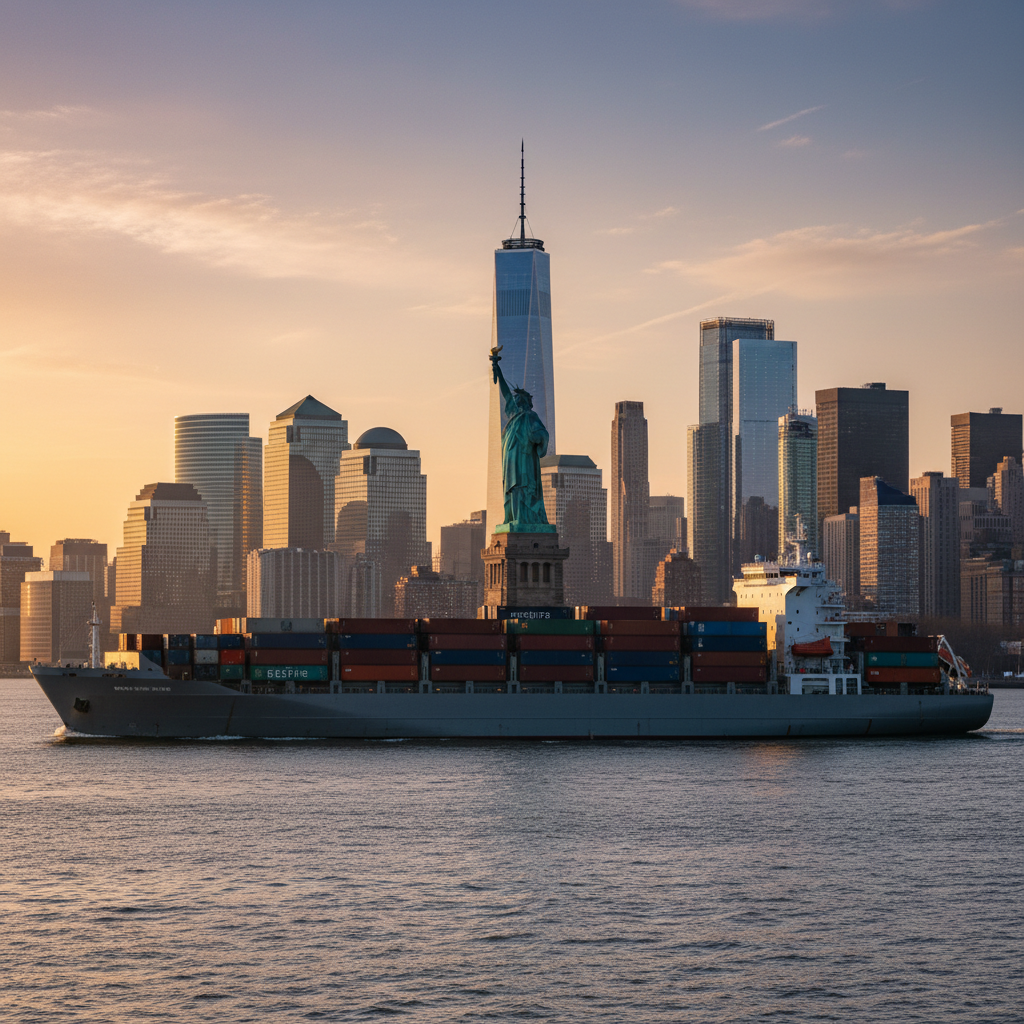
The U.S. maritime sector faces a structural shortage of licensed officers that creates a concrete mobility opportunity for Brazilian offshore professionals. The combination of mass retirements, expansion of offshore wind farms in the Atlantic, new exploration projects in the Gulf of Mexico, and the Ready Reserve Force replenishment program has generated a demand that the American fleet alone cannot meet. For deck and engineering officers with STCW training and sea service experience, the most direct legal path to a green card runs through the EB-2 NIW and EB-1A immigrant visas, both of which are self-petitioned.
The Size of the Gap
Official estimates point to a shortage of approximately 1,800 to 2,000 officers just to keep the Ready Reserve Force at full mobilization readiness. The Maritime Workforce Working Group, affiliated with the Maritime Administration (MARAD), classified the shortage as a national security issue in reports submitted to the Department of Defense. The American maritime academies (Maine Maritime, Massachusetts Maritime, SUNY Maritime, California Maritime, Great Lakes Maritime, and the U.S. Merchant Marine Academy at Kings Point) collectively graduate around 800 officers per year. A significant portion of this group moves to shore-based jobs within the first five years of their careers, drawn by better work-life balance.
Bureau of Labor Statistics projections indicate approximately 9,500 annual job openings through 2032 across the Ship Engineers, Captains, Mates, and Pilots categories, including retirement replacements. The sector is also growing in specific areas: the offshore wind industry, still nascent in the U.S. compared to Europe, is expected to add hundreds of installation, maintenance, and cable-laying vessels over the next decade, all crewed by licensed officers.
Why Brazilian Officers Stand Out
Brazil has one of the world’s largest offshore fleets, with the Campos Basin, pre-salt fields, and operations from Petrobras, Equinor, TotalEnergies, Shell, and Petrogal. Brazilian officers trained through the Merchant Marine (CIAGA, CIABA) with valid STCW endorsements for Officer in Charge of a Navigational Watch (OICNW), Chief Mate, Master, Officer in Charge of an Engineering Watch (OICEW), Second Engineer, and Chief Engineer positions hold directly transferable experience for the U.S. market.
The profile USCIS values includes documented sea time in discharge books, electronic navigation and ECDIS proficiency certificates, Dynamic Positioning (DP) training at classes 1, 2, and 3, multinational crew management, knowledge of deepwater operations, and in particular, experience with FPSOs, drilling rigs, and PSVs. This combination of competencies maps directly to what the U.S. sector seeks to fill licensed officer positions on American-flagged vessels under the Jones Act or on international fleets operated by U.S.-based companies.
The EB-2 NIW Path
The EB-2 National Interest Waiver allows professionals with an advanced degree (master’s degree, or bachelor’s degree plus five years of progressive experience) or with exceptional ability in their field to self-petition for a green card without a job offer and without labor certification (PERM). The legal standard is the three-prong framework established in Matter of Dhanasar (AAO 2016):
- The professional’s proposed endeavor has substantial merit and national importance.
- The professional is well-positioned to advance it, demonstrated by education, experience, track record of success, and a viable plan.
- On balance, waiving the job offer and PERM requirement benefits U.S. interests.
For maritime officers, the national importance prong is particularly strong. The documented Ready Reserve Force shortage, classified as a national security matter by MARAD, reinforces that the candidate’s activity (operating strategic vessels) directly serves a federal government interest. Support letters from long-tenured captains, fleet commanders, and U.S. shipowners typically fit naturally under the third prong, demonstrating that a direct PERM-based hiring would not address the urgency.
As of April 2026, the I-140 petition fee is $715 and premium processing (Form I-907, 45-calendar-day timeframe) costs $2,805. Standard processing times at service centers range between 6 and 13 months for the I-140, and adjustment of status (Form I-485) or consular processing takes an additional 8 to 18 months, depending on the Visa Bulletin’s progress for the EB-2 category and the applicant’s country of birth.
When EB-1A Makes More Sense
The EB-1A, extraordinary ability, is more demanding but offers two decisive advantages: it does not require an advanced degree as a rigid prerequisite, and its Visa Bulletin queue is generally current for Brazilian-born applicants, which shortens the overall timeline. The applicant must demonstrate at least three of the ten criteria listed in 8 CFR 204.5(h)(3): recognized awards, professional associations that admit by achievement, coverage in professional media, service as a peer judge, original contributions of major significance, authorship of articles in field publications, exhibition of work, critical role in distinguished organizations, salary substantially above the norm, and evidence of commercial success in the performing arts.
For a senior officer, meeting three criteria involves documenting Master or Chief Engineer positions at recognized shipowners, industry awards (Brazil Offshore Awards, OTC Distinguished Achievement), participation in technical committees of the IMO, ABS, DNV, or Bureau Veritas, contributions to operational protocols that have become industry references, and salary demonstrably above the category average.
STCW, USCG Licenses, and Equivalency
It is worth clarifying a common misconception: a green card resolves the immigration issue but does not automatically convert a Brazilian STCW license into one issued by the U.S. Coast Guard (USCG). To serve aboard a U.S.-flagged vessel, the officer must obtain a Merchant Mariner Credential (MMC) from the USCG, a process that involves a medical exam, documented sea service, written examinations, and in some cases, equivalency courses at the National Maritime Center. On foreign-flagged vessels operating in the U.S. or on international fleets headquartered in the U.S., a Brazilian license typically suffices.
The ideal approach is to plan the timeline so that I-485 or consular processing concludes in parallel with the start of MMC preparation, avoiding a gap between obtaining the green card and signing the first contract.
Technical Documentation That Matters
Maritime officer petitions tend to be strong when they include: a complete discharge book with all voyages on record, STCW certificates (Basic Safety Training, Advanced Fire Fighting, Medical First Aid, Proficiency in Survival Craft), DP endorsements (IMCA), a list of vessels commanded with dates and gross tonnage, letters from shipowners detailing operational volumes under the candidate’s command, evidence of incident reduction or operational gains under their leadership, and, where applicable, publications in technical journals such as Marine Log, gCaptain, Riviera Maritime, or the proceedings of the Brazilian Society of Naval Engineering.
The Time Window
The shortage will not resolve in the short term. Training a senior officer takes a decade, and U.S. academies are operating near full capacity. Meanwhile, offshore wind projects are securing long-term contracts along the East Coast, the Gulf of Mexico continues at high production levels, and the Merchant Marine is intensifying crew replacements in the Ready Reserve Force. For Brazilian officers with established profiles, 2026 and 2027 present a relatively short queue in the EB-2 NIW for Brazilian-born applicants, with sporadic retrogression but without the historic bottleneck that affects candidates from India and China. The combination of U.S. structural demand, qualified Brazilian supply, and self-petitioned visas makes the coming window the best opportunity of the decade for this career transition.
Learn more about EB-2 NIW
- Category
- EB-2 NIW Green Card
- Self-petition
- Allowed (no sponsor needed)
- PERM
- Waived
- Processing
- 12-36 months
About the author

Victoria Harper
Editor-in-Chief
As a journalist and lead editor at Visto n’ Visa, Victoria helps ensure that immigration topics are covered in a clear, trustworthy, and easy-to-understand way. Her focus is on delivering useful, human, and relevant content for people exploring new paths abroad.